






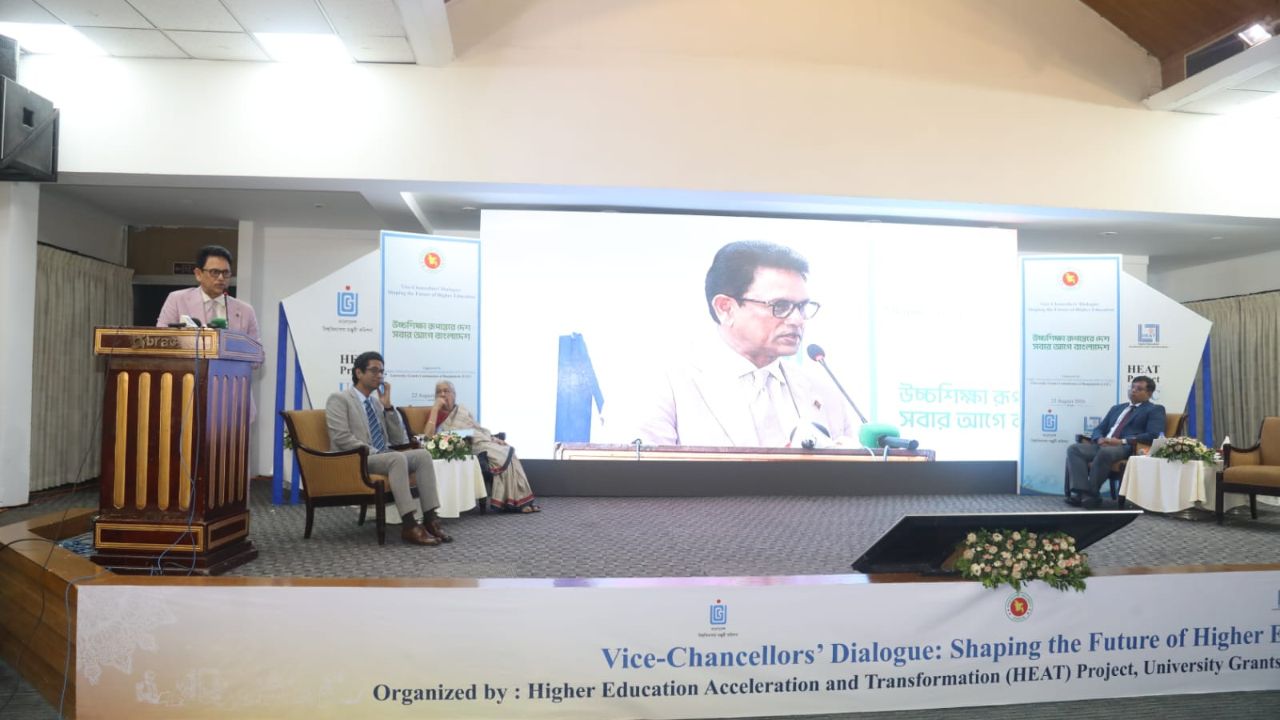
The government will take initiatives to establish a postgraduate university modelled on the developed world to advance higher education, research, and innovation in Bangladesh, Education Minister Dr ANM Ehsanul Hoque Milon announced on Saturday.
Speaking as the chief guest at the concluding ceremony of the two-day “Vice-Chancellors’ Dialogue” held at BRAC CDM in Savar, Milon emphasised the critical role of such an institution.
The dialogue was organised under the Higher Education Acceleration and Transformation (HEAT) project, which is currently being implemented by the University Grants Commission (UGC) of Bangladesh, reads a press release.
The need for a postgraduate institution
The minister noted that although numerous government and private initiatives have led to the establishment of many universities, Bangladesh has not yet built a dedicated postgraduate university.
He pointed out that neighbouring and developed countries have such universities where world-class research is conducted, attracting many Bangladeshi students who go abroad to pursue higher degrees.
To foster local research and innovation, the prime minister has expressed keen interest in establishing a postgraduate university in Bangladesh. The government is committed to providing all necessary support to help new universities align themselves with the standards of the developed world.
Budget and curriculum reforms
Milon highlighted that the prime minister is prioritising education to drive human resource development. The budgetary allocation for the education sector has already been increased to 2 per cent of the Gross Domestic Product (GDP), with plans to raise it to 3 per cent next year and eventually to 5 per cent in a phased manner.
To elevate local higher education to international standards, the minister called for a complete restructuring of the country’s educational system. “University curricula must be updated to align with the demands of the job market,” he said, adding that future employment opportunities and future demands must be carefully considered when opening new departments.
Regulating private universities and boosting research
Addressing the state of private higher education, the minister observed that some private universities in the country are failing to deliver quality education. The UGC has been directed to identify these substandard institutions.
However, to protect the academic interests of students, the government has refrained from taking drastic measures, such as closing them down immediately. He further clarified that the current government has not approved any new private universities.
Meanwhile, the minister instructed the UGC to take the necessary steps to introduce PhD programmes in reputable and quality-ensured private universities. Describing the current funding for research as inadequate, he announced that plans are being drafted to improve the research environment and infrastructure, which the UGC will implement across universities.
Milon also highlighted Bangladesh’s potential in the global education market, drawing comparisons to the United Kingdom, which plans to expand its $35 billion education market to $40 billion by attracting international students.
He urged universities to create a high-quality educational and research environment to attract foreign students, suggesting the creation of a “Research Bank” and advising an investigation into why university enrollment rates remain low among students who pass O-level and A-level examinations.
UGC strategic roadmap and skills development
Presiding over the event, UGC Chairman Professor Dr Mamun Ahmed said that the commission is actively working to elevate national higher education to international standards, in line with the government’s priority sectors. He announced that a draft of a five-year strategic plan has been prepared to address the key challenges of higher education, which will be finalised after consulting stakeholders.
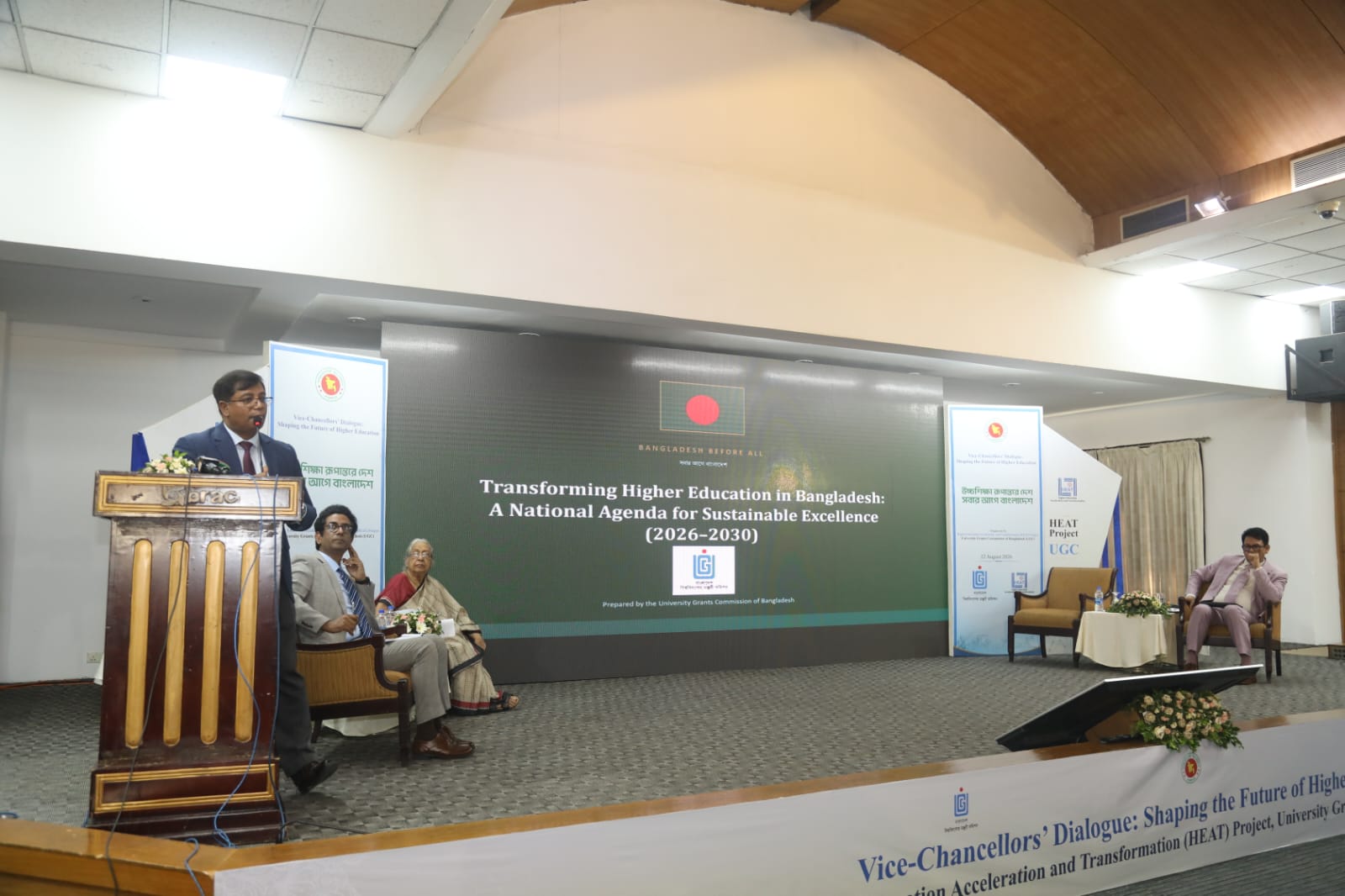
According to Prof Mamun, the primary goal of higher education is to produce graduates equipped with the knowledge and skills demanded by local and international labour markets.
He stressed the importance of modernising curricula and enhancing students’ soft skills, including communication, problem-solving, teamwork, and leadership, while raising them as citizens with strong human values, ethics, and a sense of social responsibility.
To familiarise students with practical industrial and business environments, the UGC will co-ordinate a new initiative to introduce mandatory internships, during which students will also receive financial assistance.
Reflecting on research funding, the UGC Chairman noted that while the government has committed to increasing allocations, funding alone is not enough. He called for maximum utility of funds by ensuring high-quality research, transparency, and accountability, urging that research outcomes be channelled directly into developing the national economy, industrial sectors, and the overall standard of living.
Dialogue sessions and participants
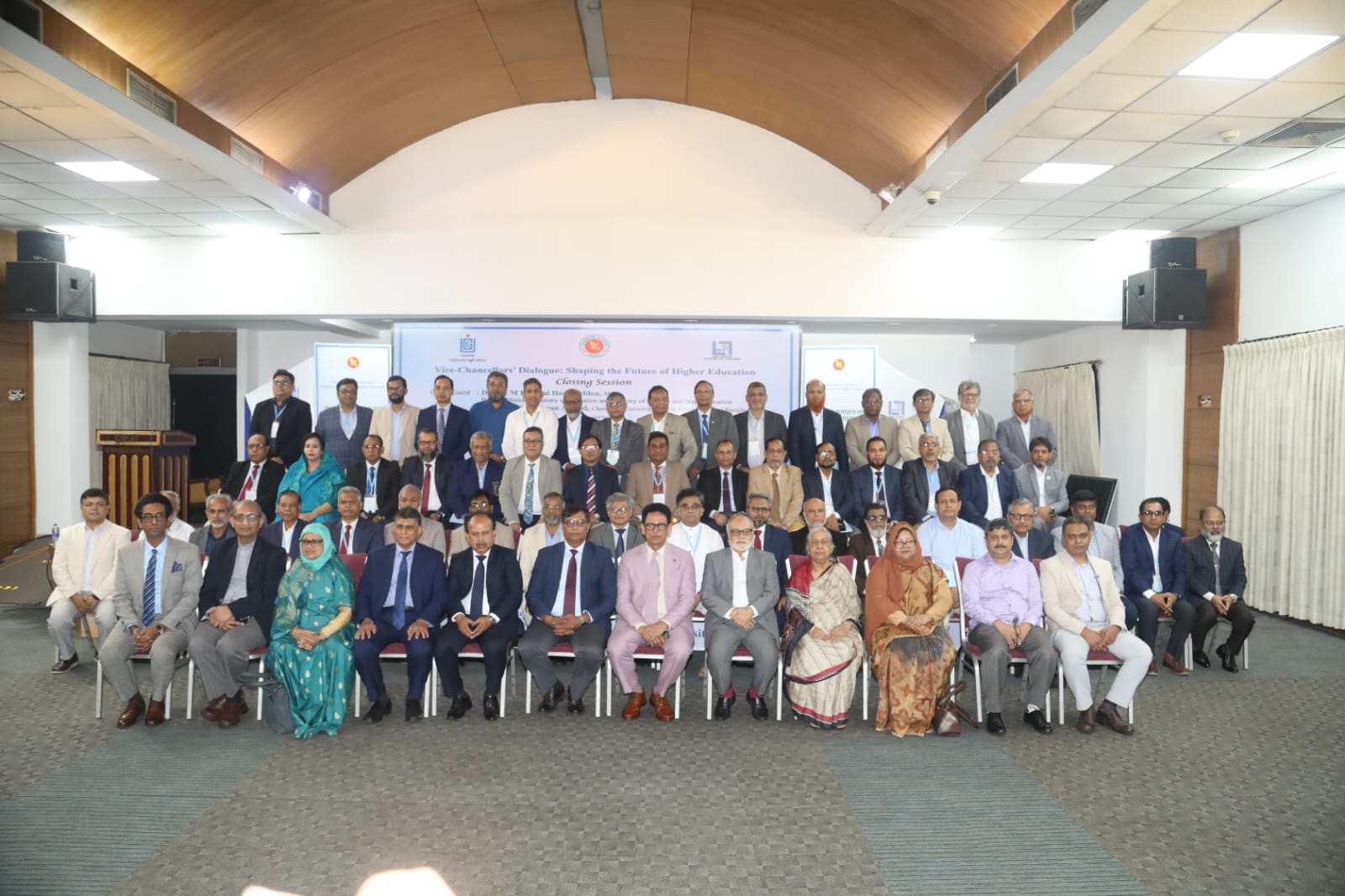
The closing ceremony also featured remarks from Chittagong University Vice-Chancellor Prof Dr Mohammad Al-Forkan, Rajshahi University VC Prof Dr Md Faridul Islam, former chairman of the Bangladesh Public Service Commission Prof Dr ZN Tahmida Begum, and BRAC University VC Prof Dr Syed Ferhat Anwar.
The second day of the dialogue featured four sessions focusing on curriculum reform, student support and employability, financial and procurement management, the role of the HEAT project in higher education transformation, and the strategic plan for higher education.
These sessions were chaired and discussed by UGC Chairman Prof Dr Mamun Ahmed and UGC Members Prof Dr Masuma Habib, Prof Dr Abdullah-al-Mamun, Prof Md Mehdi Hasan Khan, Prof Dr Md Aslam Hossain, and Prof Dr Niaz Ahmed Chowdhury. VCs from various universities, along with experts from the HEAT project and the Bangladesh Research and Education Network (BdREN), actively participated in the open discussions.


