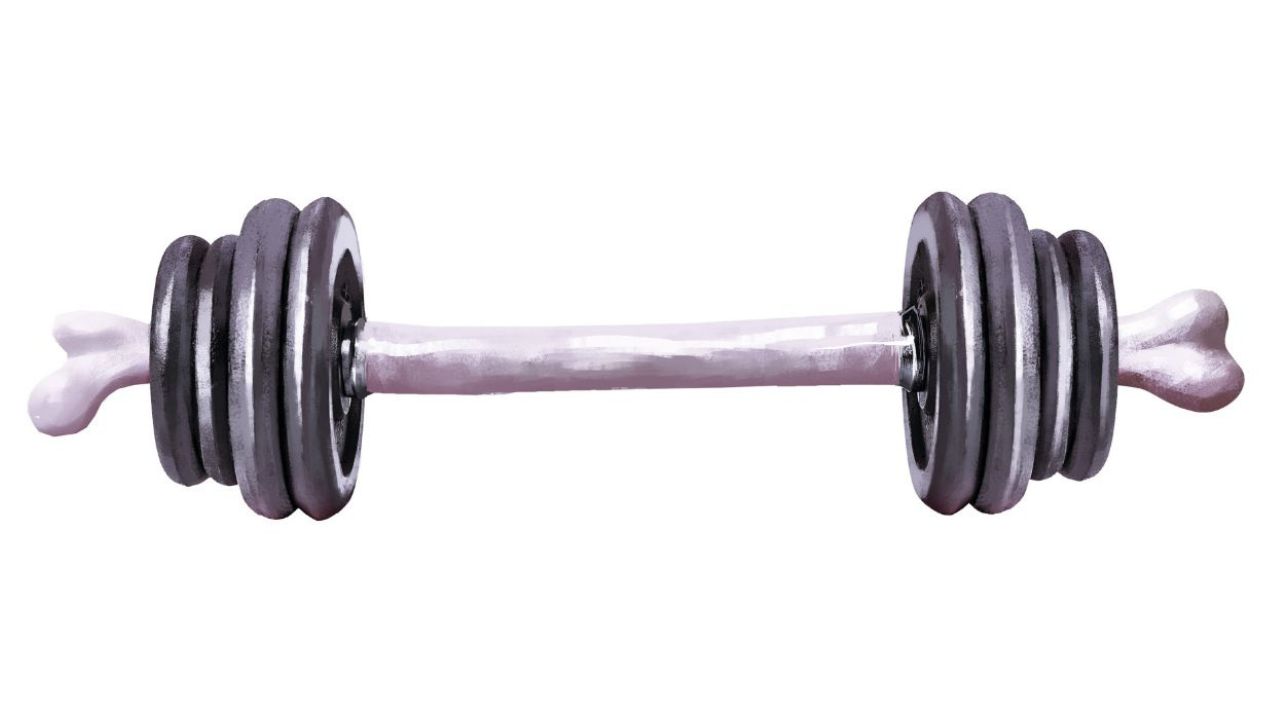



Every year, thousands of young people in Bangladesh walk into neighbourhood gyms chasing a stronger, more confident version of themselves. For many, that pursuit ends not in fitness but in the emergency room — and sometimes, with permanent injuries.
Behind the booming gym culture lies a largely unregulated industry where untrained instructors, ego-driven lifting and the absence of national certification standards are quietly damaging young bodies.
Najmul Alam was a slightly built teenager when social media convinced him that he could build a stronger, more attractive physique. Inspired by fitness influencers, he joined a local gym and began training.
At first, everything seemed to be going well. Then disaster struck — a severe injury that left him with a damaged spine. His life changed overnight. Today, he struggles to carry even a grocery bag, let alone lift weights.
“The injury happened when I went to do leg press,” Najmul told TIMES of Bangladesh. “I thought I could handle more weight based on my leg strength. Some of my peers at the gym also told me I looked fit enough to lift heavier weights and that my muscles would grow faster. Because of that, I took on too much weight right away, and it threw my lower back out of balance.”
The consequences came quickly. “The first two or three times I did it, my back was already imbalanced, and during leg press I felt a sharp pull that forced me to quit the gym altogether,” he said.
Despite following doctors’ advice and attempting a comeback two or three times, the back pain proved too severe. “The doctor eventually scolded me, saying it was better not to continue because the injury could progress to a point where I wouldn’t even be able to walk.”

Najmul’s story is far from unique. Enamul Hoque Hridoy, another recreational lifter, suffered a shoulder injury for strikingly similar reasons — a phenomenon trainers call “ego lifting”.
“A common problem at the gym is that when people are new, they feel the urge to lift heavier weights right away. It’s called ego lifting,” Hridoy explained. “Seeing others around me lifting more got me excited to do the same. While doing a lateral raise for my shoulder, I got injured because I took on more weight than my body could handle.”
His shoulder was left virtually dislocated for three to four weeks, and full recovery took six to seven months. He is only now cautiously resuming his training.
According to Iftekharul Islam, fitness trainer for the Bangladesh Cricket Board (BCB), the root cause of such injuries is a lack of technical knowledge — both among lifters and, more troublingly, among trainers guiding them.



“There are certain criteria, protocols and safety measures involved in gym training,” Islam said. “A well-educated trainer will first ensure your safety — teaching you, for instance, how to properly drop the bar during heavy lifts. They will brief you on all these technical details and check whether you are maintaining proper form.”
He warned against blindly copying others’ routines. “There is a saying — ‘monkey see, monkey do’. People often see something being done and try to replicate it without understanding when or why it was applied that way. Only the trainer who designed it truly understands the context.”
Islam said he had personally handled cases of athletes who left sport permanently because of incorrect technique. “They came in with a dream of pursuing sport, but because of wrong technique and improper guidance, they suffered injuries — spinal cord injuries — from which they could never recover.”
Fitness expert and gymnasium owner Ruslan Hossain placed the blame squarely on the absence of professional guidance.
“Often people do not go to trainers first — they start on their own. Even when they consult trainers, they frequently do not get proper direction. This is largely why injuries happen. Certification is still not in high demand at Bangladeshi gyms; most people simply prioritise experience over qualification,” he said.
Hossain noted that many self-taught trainers have never studied exercise science.
“Having a good physique alone does not make someone a good trainer. That requires study, research and mentorship under an experienced coach,” he said, adding that proper client assessment, including checking for previous injuries, should come before designing any workout plan.
He pointed to internationally recognised certifications such as ACSM (American College of Sports Medicine), which are accessible from Bangladesh and can open opportunities abroad.
In Bangladesh, gymnasiums are issued government licences and registered as private businesses. However, due to the absence of a regulatory authority, it is not possible to determine how many active fitness centres currently operate in the country.
Md Kamruzzaman, general secretary of the Bangladesh Bodybuilding Federation (BBF), acknowledged that no dedicated training institute currently exists for gym trainers, although the Government Physical Education College in Dhaka offers broader, related certification.
He believes Bangladesh needs a specialised training academy for fitness instructors, requiring government initiative.
“If the government takes the initiative, they will assign us the responsibility, and we will carry it out,” he said.
Having lost his own fitness journey to injury, Najmul now urges others to be cautious.
“I miss the gym terribly now… I would say do not follow anyone except an authorised trainer. Following local seniors or gym regulars is simply not advisable — they often get many things wrong.”
Islam echoed the sentiment: “When choosing a trainer, make sure to choose one who truly has strong knowledge in these areas.”
For Bangladesh’s growing population of gym-goers, the message from victims and experts alike is clear: without proper caution, qualified guidance and institutional reform, the pursuit of fitness could continue to leave behind a trail of broken bodies and abandoned dreams.