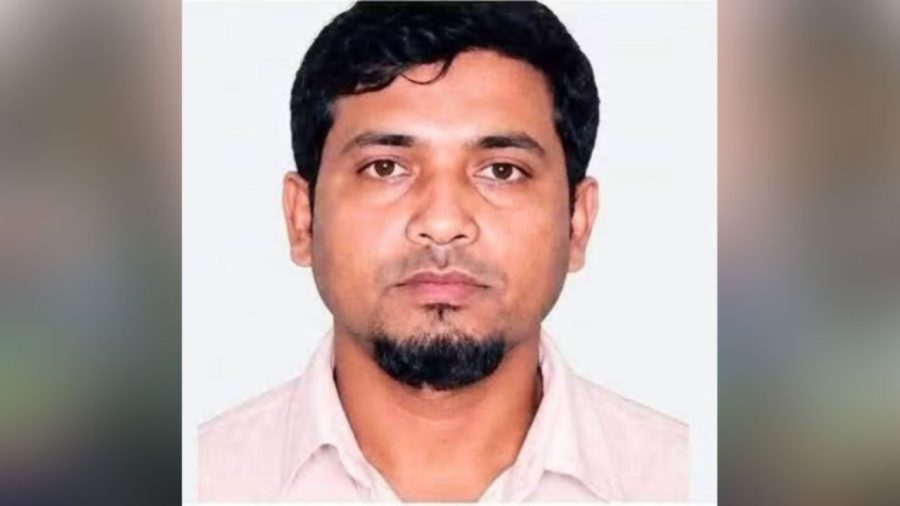



For nearly three years, Nazrul Islam phoned his family from a Saudi prison every Sunday. The routine continued uninterrupted until last week, when the familiar call failed to arrive.
His family later discovered the tragic truth through media reports: Nazrul had been executed.
The Bangladeshi migrant worker was one of two individuals executed in Saudi Arabia on 14 October.
Although his family were aware of his imprisonment, they were kept entirely in the dark regarding the specific charges he faced or whether he had received any legal representation.
They had never contacted the Bangladeshi authorities regarding his detention.
Nazrul, the eldest of four siblings from a modest farming family in Birampur village, Brahmanbaria’s Sultanpur union, travelled to Saudi Arabia on 10 November 2022 to lift his family out of financial hardship.

He secured employment as a cleaner and was assigned duties at the Grand Mosque in Makkah. However, just seven months after his arrival, his family suddenly lost contact with him.
His mother, Rehena Begum, recalled that he eventually managed to place a call from prison to inform them of his detention, though he did not explain why he had been arrested. From then on, he was permitted to speak with his family every Sunday, but the conversations were strictly limited to approximately one minute.
When the calls abruptly ceased last week, his family was left searching for answers, only to learn of his execution through news bulletins.




The other Bangladeshi executed alongside him was a woman named Siti Akhtar. Nazrul’s relatives said that they did not know her, nor were they aware of any connection between the two.
According to Saudi media reports, the pair were executed over allegations of committing immoral acts inside a mosque in Makkah, though specific details of the charges were never disclosed publicly.
Saudi authorities failed to notify the Bangladesh government of the sentences prior to carrying out the executions.
Dhaka has since formally requested comprehensive details from Riyadh.
Expatriates’ Welfare and Overseas Employment Minister Ariful Haque Chowdhury confirmed that while Nazrul was a registered migrant worker, Siti had entered Saudi Arabia on an Umrah visa. Nazrul’s parents remain completely unaware of whether their son was afforded access to legal counsel before his death.
Absence of protection mechanisms
Shariful Hasan, associate director of the BRAC Migration Programme, attributed the tragedy to the lack of a robust government mechanism to support families of Bangladeshis imprisoned abroad.
“Ordinary citizens do not know who to notify or what procedures to follow when a relative is detained overseas. We simply have not established such support systems,” he told TIMES.
He noted that numerous families remain entirely uninformed about relatives languishing in foreign gaols, often discovering their fate only after their deaths.
“Nazrul was permitted to speak for just one minute a week. What meaningful information can anyone convey in such a brief window?” he asked.
Shariful also questioned the state’s capacity and willingness to defend its citizens facing capital punishment abroad.
“Had he been an American, a European, or even an Indian or Sri Lankan national, he would not have been executed so arbitrarily. Foreign powers know Bangladesh lacks the diplomatic weight or resolve to protest effectively. The sad reality is that we ourselves fail to accord our citizens the dignity they deserve,” he remarked.
The news of Nazrul’s execution triggered further tragedy at home.
Upon hearing of his death, his paternal aunt, Abeda Begum, died from a fatal heart attack.
Brahmanbaria Deputy Commissioner Md Sayeed confirmed that the local administration would extend full support to the bereaved family should Nazrul’s remains be repatriated to Bangladesh.