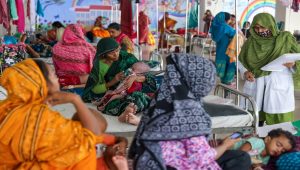
The government knows malnutrition is killing children with measles. Yet, inside the very hospitals meant to save them, the food is still failing them.
While medical staff admit that meals in the measles wards are a slight improvement over standard rations, they warn it is nowhere near enough to heal a sick child.
It is a deadly gridlock of red tape and rigid budgets, where a line on a spreadsheet is currently outweighing a child’s right to survive.
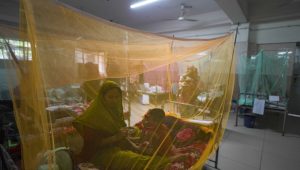
This reality is painfully familiar to Suborna Sultana from Noakhali. Her five-year-old son, Abu Bakar, was initially admitted to the paediatric ward of Dhaka Medical College Hospital with breathing difficulties, but within a few days, he was diagnosed with measles and transferred to the specialised measles unit.
Suborna noted the contrast in care, stating that while the food in the general paediatric ward was practically inedible, the quality in the measles unit was at least somewhat better.
However, medical professionals and nutritionists told TIMES of Bangladesh that “somewhat better” is simply not enough for a recovering child.
Hospital officials counter that their hands are tied by a daily budget of just Tk175 per patient, which must stretch to cover four meals.

Suborna’s experience is not an exception as most of the attendants of the child patients report similar accounts.
Abu Torab Md Abdur Rahim, a professor at Dhaka University’s Institute of Nutrition and Food Science, confirmed that this budget is entirely unrealistic, noting that it is impossible to ensure the necessary nutrition for a child or mother with this allocation at current market prices.
The standard daily menu illustrates the financial strain. It consists of bread, a boiled egg, a banana, and 200ml of milk for breakfast, followed by a lunch of 175g of rice, 95g of fish, 120g of vegetables, and 15g of pulses.

In the afternoon, patients receive biscuits, another banana, and a second boiled egg, while dinner includes 175g of rice, 95g of broiler chicken, 120g of vegetables, and 15g of pulses.
Public health specialist Md Mushtaq Hossain criticised this regimen, stating that these foods are by no means adequate because sick children require daily servings of eggs, milk, fish, and meat to properly recover.

Syed Abdul Hamid, a professor at Dhaka University’s Institute of Health Economics, emphasised that nutrition is a fundamental, non-negotiable part of patient care.
He stated that it is the absolute responsibility of hospital authorities to ensure a patient is treated, fed, and properly nourished upon admission, adding that monitoring their nutritional intake is an essential part of hospital supervision.
Despite these expert warnings, the policy gap remains unaddressed.
When asked about the situation, SM Mahmudur Rashid, assistant director (Hospitals) at the Directorate General of Health Services (DGHS), admitted that no separate initiative has been taken regarding the nutrition of measles patients, and he could not confirm whether any such measures would be introduced in the future.
Nutrition a serious crisis
Bangladesh faces a severe nutritional crisis, with Unicef’s 2024 report, Child Food Poverty: Nutrition Deprivation in Early Childhood, revealing that two out of three children under five, nearly one crore, live in food poverty.


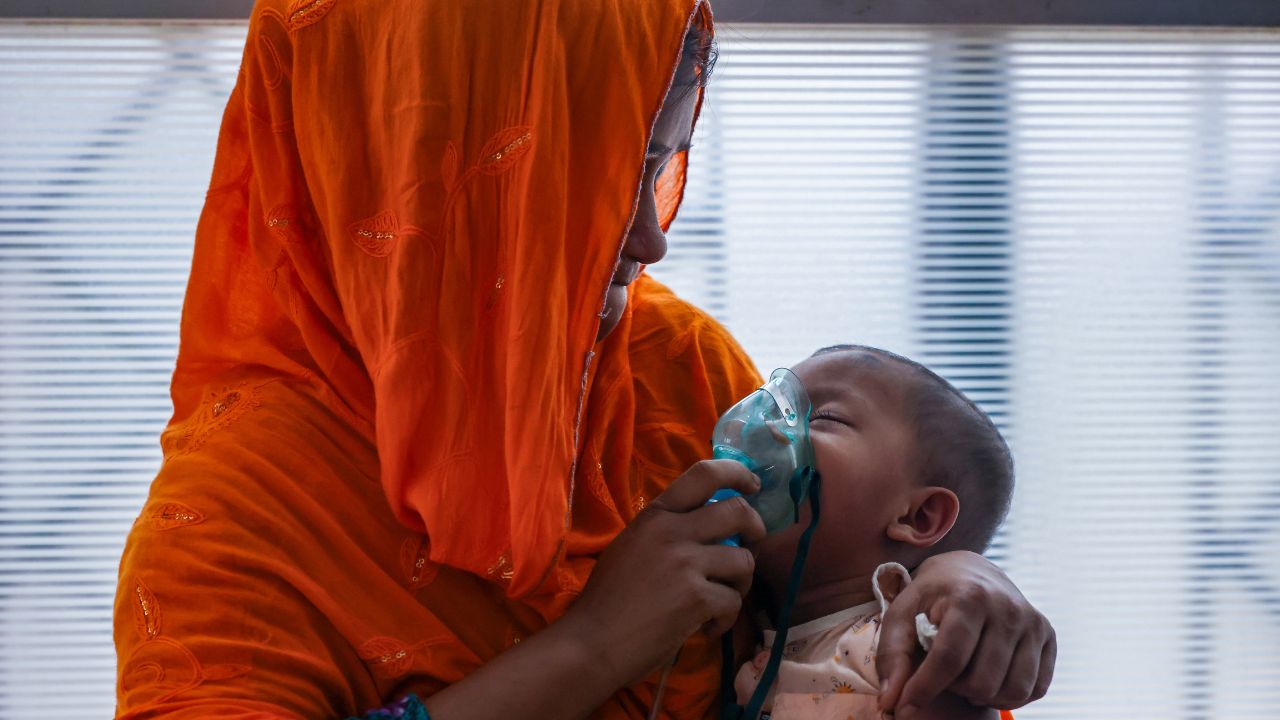
Health Minister Sardar Sakhawat Hossain admitted at a Dhaka seminar that most mothers of affected children are malnourished, identifying this deficiency as a primary driver of measles fatalities because it leaves vulnerable children highly susceptible to fatal secondary infections like pneumonia.
Professor Syed Abdul Hamid highlighted these deadly stakes, noting that deceased measles patients were already suffering from acute malnutrition; since infants rely entirely on breast milk, a malnourished mother inherently deprives her child.
The crisis has escalated since March, claiming lives daily and spreading to adults.
The DGHS recorded 11 fatalities in the 24 hours leading to Monday morning, pushing the total death toll to 475. While the government launched vaccination programs, critics allege the response lacks urgency. Until recently, symptomatic children were housed with other patients.

Although the DGHS finally ordered separate measles isolation wards, sources reveal hospitals still fail to provide adequate dietary support for affected children and mothers.
Medical experts stress that proper diet is as critical as medicine.
Dr Atiqul Islam from Bangladesh Shishu Hospital and Institute told TIMES that measles severely weakens immunity, meaning children require extra nutrition, particularly animal proteins like fish, eggs, meat, and dairy, to repair tissue and restore immunity.
He emphasised that breastfeeding mothers must also consume nutrient-rich food due to the direct correlation between maternal intake and child immunity.
Professor Abu Torab Md Abdur Rahim echoed this, warning that a malnourished mother inevitably leads to a malnourished breastfed infant. Because contagious measles rapidly ravages undernourished bodies, Rahim advised that breastfeeding mothers must receive a diet rich in fruits alongside essential animal proteins.
Lack of financial ability
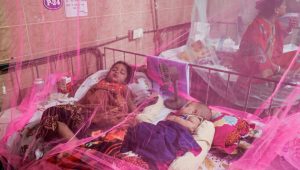
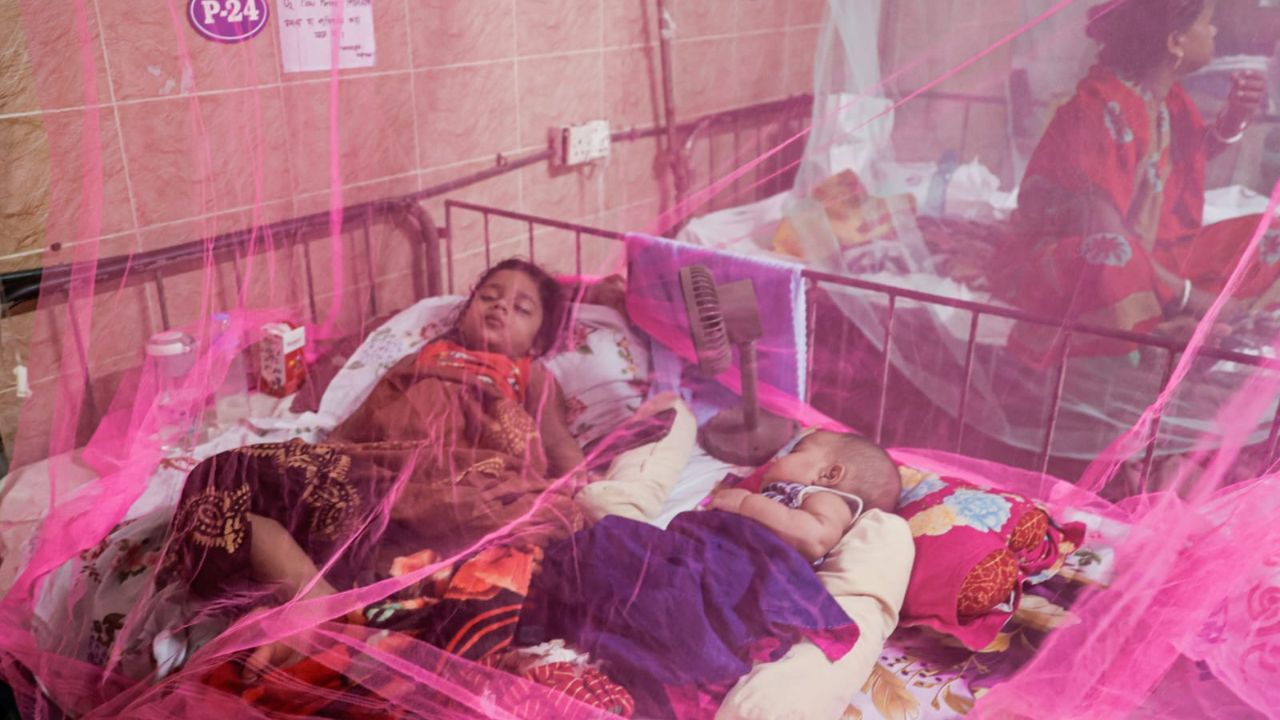
A visit to any government or autonomous hospital makes it painfully clear that the vast majority of families affected by measles come from low-income backgrounds. For these families, purchasing extra nutritious food out of pocket is financially impossible.
Furthermore, families traveling from outside Dhaka are forced to rely on cheap local eateries if they venture out for meals, raising serious concerns regarding food hygiene and quality.

Suborna, a mother staying at Dhaka Medical College Hospital with her son, explained that she relies entirely on the meals provided by the hospital, as she cannot afford to buy any food from outside.
She added that the medical staff have not provided her with any specific dietary plan or guidance either. The desperation is echoed by other parents; the mother of five-year-old Ibrahim shared that her child had been relying solely on intravenous saline for two days, unable to tolerate any solid food.
Discrimination in food
Compounding these financial hardships are allegations of systemic discrimination regarding how food is distributed within hospitals. While patients in the general wards are served low-quality meals, relatively better food is reserved for those staying in private cabins.
Farida Yasmin, a service supervisor at Dhaka Medical College Hospital, defended the practice, stating that because cabin patients pay additional rent, they are provided with separate and comparatively better meals.

Public health expert Mushtaq Hossain strongly criticised this inequality, describing it as a deeply ingrained structural failure. He noted that the system ironically favours those who already have means, leaving the most vulnerable and undernourished patients with the worst food.
Hossain argued that because measles is currently ravaging the lower classes, the crisis is being neglected, adding that if such an epidemic were affecting the wealthy, the government would have intervened with comprehensive, free services.
DHGS orders isolation
In response to the escalating crisis, the Hospital and Clinics Branch of the Directorate General of Health Services issued an urgent notification ordering the immediate setup of separate cabins or wards for the treatment of confirmed and suspected measles patients.
The directive mandates that every private hospital and clinic establish dedicated isolation units, staffed by an adequate number of doctors and healthcare workers to guarantee round-the-clock medical attention.

Specialist physicians have also been instructed to conduct ward rounds every morning and afternoon, seven days a week, including public holidays. To curb the highly contagious virus from spreading further, the directive strictly limits patient company, allowing a maximum of one guardian or visitor to remain with the infected patient at any given time.
11 more children die
The measles crisis has deepened as 11 more children lost their lives to the disease and its symptoms within a 24-hour period from Monday morning to Tuesday morning. Of these fatalities, two were laboratory-confirmed measles cases, while the remaining nine presented with severe symptoms of the virus. This data was released on Tuesday afternoon by the Health Emergency Operation Centre and Control Room of the DGHS.
The directorate also confirmed 1,337 new cases within the same 24-hour window, comprising 1,264 suspected cases and 73 laboratory-confirmed infections.

Since 15 March of this year, the scale of the outbreak has grown significantly, with the total number of suspected measles patients across Bangladesh reaching 56,586. Additionally, 7,929 cases have been officially confirmed through laboratory testing.
The surge has placed an immense strain on healthcare facilities; so far, 43,983 infected patients have required hospital admission, while 40,090 have recovered and been discharged.
According to the official notification, the overall death toll since mid-March includes 398 suspected measles deaths and 77 laboratory-confirmed fatalities. A divisional analysis of the data reveals that Dhaka Division remains the hardest-hit region in the country, recording both the highest infection rates and the highest mortality numbers.
HC seeks govt progress report
The High Court has directed the Ministry of Health to submit a progress report within 30 days outlining the measures taken to manage the nationwide measles outbreak and protect vulnerable children. A bench comprising Justice Razik-Al-Jalil and Justice Debasish Roy Chowdhury delivered the order on Tuesday.

Alongside this directive, the court issued a rule questioning why a 10-member investigation committee, comprising representatives from the WHO, the Unicef, and the Institute of Epidemiology, Disease Control and Research (IEDCR), should not be formed to identify the primary causes of the outbreak and hold those responsible to account.
The rule further sought justification as to why the government should not be ordered to provide adequate financial compensation to the families of every child who has died during the epidemic.