Home Minister Salahuddin Ahmed on Sunday said the government has set a unique example of parliamentary democracy by disposing of 133 ordinances during the first session of 13th National Parliament.
The initiative helped maintain constitutional obligations and the continuity of Bangladesh’s legal framework.
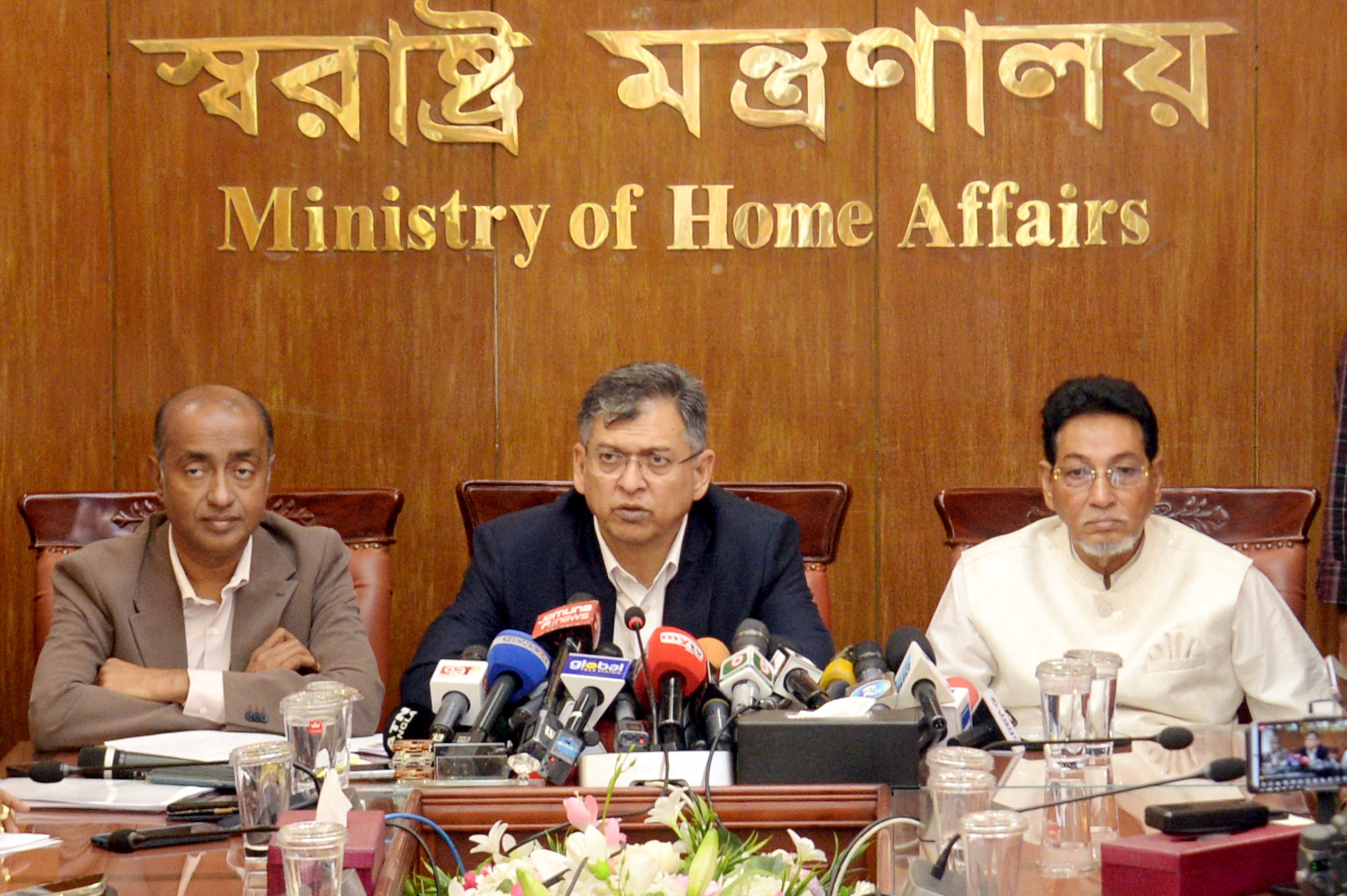
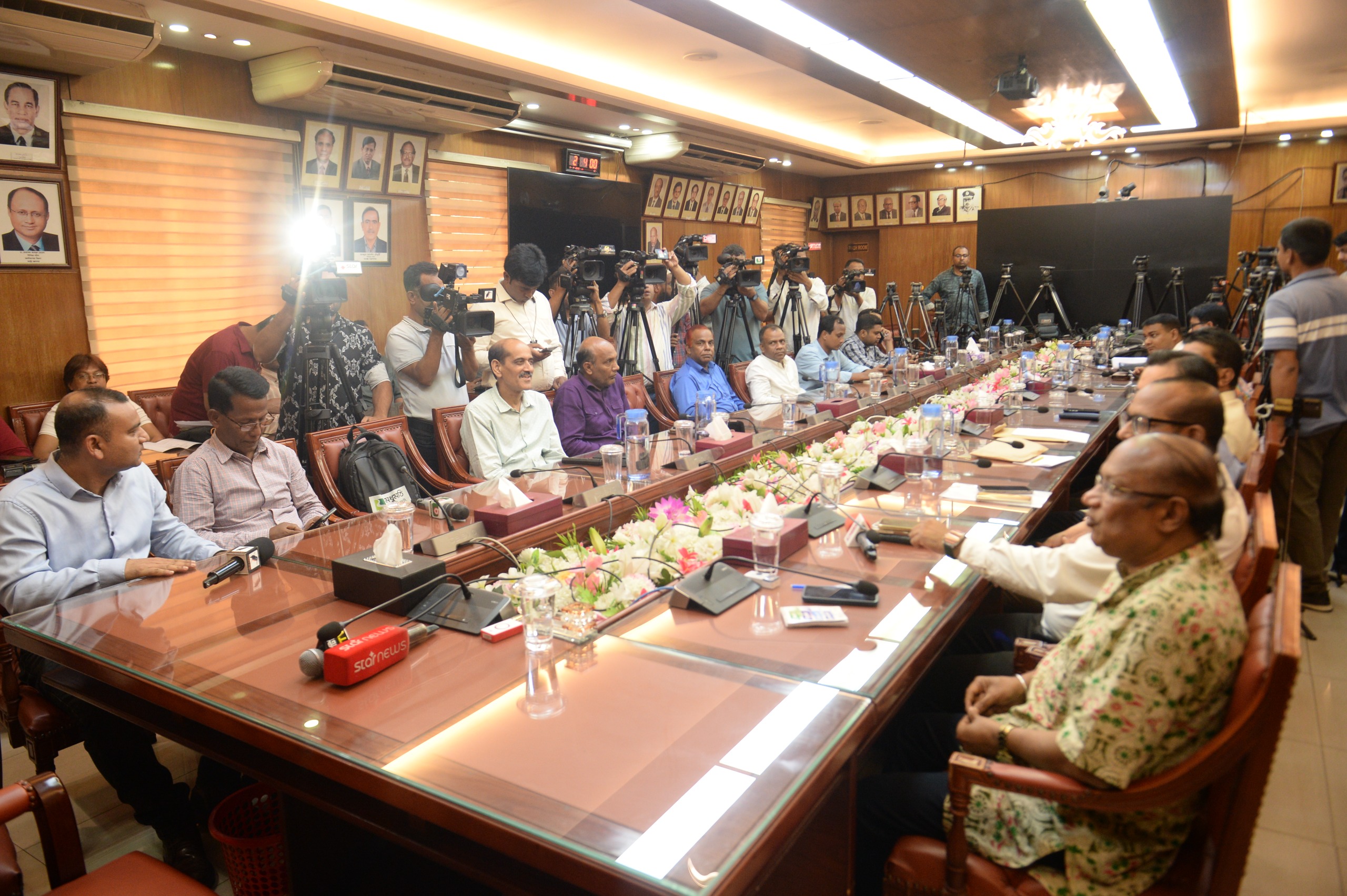
Salahuddin made the remarks during a press briefing regarding the “133 Ordinances Tabled in the National Parliament,” held at the conference room of the Ministry of Home Affairs in Bangladesh Secretariat.
Law, Justice and Parliamentary Affairs Minister Md Asaduzzaman delivered the keynote speech at the briefing, which was also attended by Chief Whip Nurul Islam Moni.
Law Minister Md Asaduzzaman explained that, under Article 93 of the Constitution, there was a legal obligation to dispose of ordinances issued during the previous government’s tenure within 30 days of the commencement of the parliamentary session.

Despite a limited number of working days due to the long holidays for Eid-ul-Fitr and Shab-e-Barat, the task was completed through the day-and-night efforts of officials from the Parliament Secretariat, Ministry of Law, BG Press, and the Ministry of Public Administration.
He noted that the bills were placed and disposed of under the special authority of the Speaker of the National Parliament in accordance with the Rules of Procedure.




The law minister further informed that as the standing committees have not yet been formed, these 133 ordinances were reviewed by a “Special Parliamentary Committee.”
Regarding the committee’s recommendations, he stated that 98 ordinances were recommended to be passed “as it is” by consensus. Decisions were made to table 16 ordinances as bills in the next session for further scrutiny, while the remaining ordinances were included in the list for amendment or repeal and saving.
Addressing confusion raised by the opposition leader regarding the number of bills, the law minister clarified on the floor that 17 ordinances were already included within 91 bills.
He explained that since some ordinances had second or third amendments issued shortly after the original, they were consolidated into a single bill for placement in the National Parliament – a detail the Leader of the Opposition may have overlooked.
Regarding the opposition’s walkout over the “July Mass Uprising Memorial Museum” Bill, the home minister emphasised that the government is highly sensitive and liberal on this matter.
He noted that there is scope to make the rules regarding the appointment and resignation of curators more transparent and logical, adding that the bill could be re-presented in the next session following further discussion and amendments.
On the issues of the Enforced Disappearance Commission, Human Rights Commission, and the ICT Act, the home minister stated, “I am a victim of enforced disappearance myself. We do not want any flawed laws to be passed in haste, allowing criminals to escape through legal loopholes.”
He assured that these laws would be made more modern and robust through discussions with all stakeholders to ensure maximum justice for victims.
The home minister observed that while the opposition has the right to walk out according to parliamentary culture, it is the government’s responsibility to clarify the facts if misinformation or misleading statements are spread outside the House.
He mentioned that the Speaker provided the opposition members an unprecedented amount of time to speak and that their “notes of dissent” or objections were preserved verbatim in the reports.
Nevertheless, he expressed the view that walking out on issues of public importance was not logical. The briefing was coordinated by Faysal Hasan, public relations officer of the Ministry of Home Affairs.