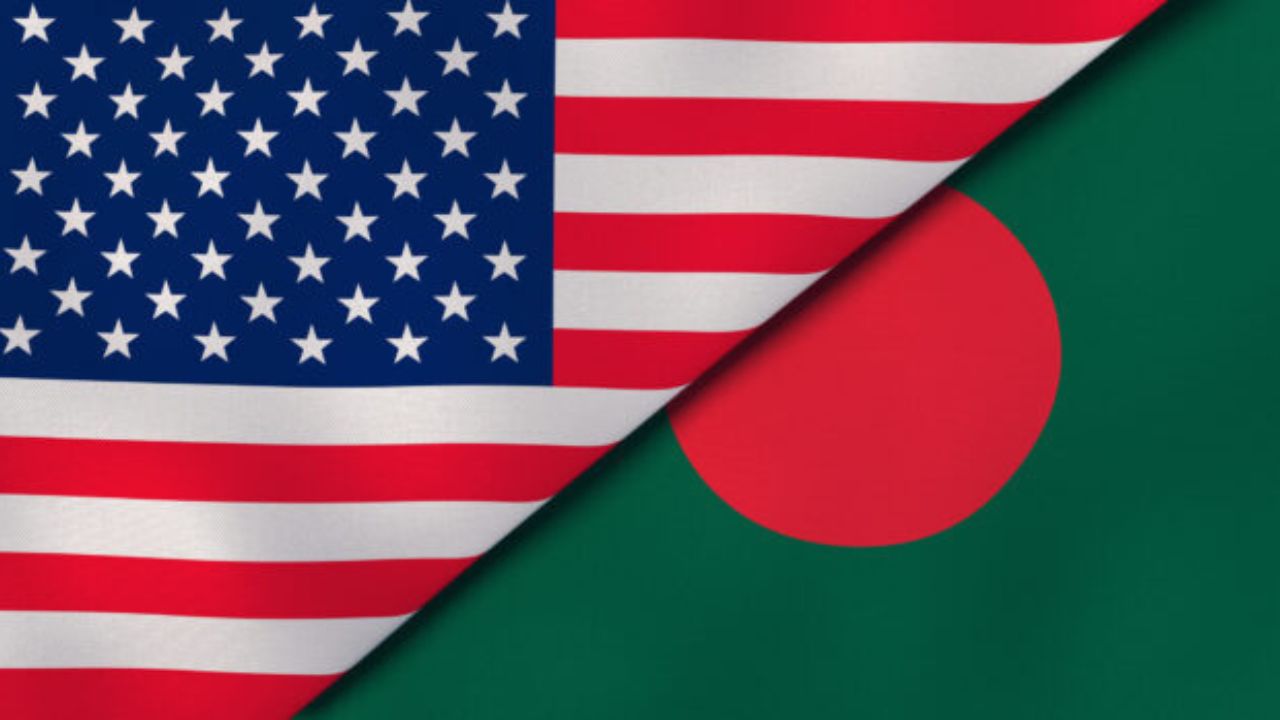

No fixed agenda has yet been announced for US Special Envoy for South and Central Asia Sergio Gor’s first three-day visit to Bangladesh, indicating that his meetings with the country’s top leadership may provide an opportunity for an open exchange of views on bilateral, regional and global issues.
Gor will arrive in Dhaka on Thursday as Washington seeks to deepen its understanding of Bangladesh’s evolving foreign policy amid a rapidly changing regional landscape.
He is expected to meet Foreign Minister Khalilur Rahman on Friday and Prime Minister Tarique Rahman on Saturday. He will also travel to Cox’s Bazar to visit Rohingya camps and gain first-hand insight into one of the region’s most pressing humanitarian and security challenges.
The visit comes at a geopolitically sensitive time, just one month after Prime Minister Tarique Rahman’s visit to China, during which Dhaka and Beijing expanded cooperation in several strategic sectors and described their relationship as entering a new phase.
Diplomatic observers say the timing of the visit, coupled with the absence of a formally announced agenda, suggests that discussions are likely to be broad and strategic rather than focused on a single issue.
Open-ended discussions
Foreign Minister Khalilur Rahman and Sergio Gor last met on 23 July in Manila, where they discussed strengthening Bangladesh-US relations, including trade, energy cooperation and efforts to promote a stable and prosperous Indo-Pacific.
Within a week, the two will meet again in Dhaka.

Officials familiar with the preparations said the visit has no fixed agenda so far.
Diplomatic analysts say such an approach is common during a special envoy’s first visit, particularly when the objective is to understand the broader strategic thinking of a partner country.
Understanding Dhaka’s strategic outlook
Analysts believe one of Washington’s key objectives will be to gain a clearer understanding of Bangladesh’s foreign policy priorities under the new government, which assumed office five months ago.
During the prime minister’s visit to Beijing last month, Bangladesh and China expanded cooperation in infrastructure, trade, investment, defence and connectivity, further strengthening an already close relationship.


Against that backdrop, analysts expect the United States to seek greater clarity on how Dhaka intends to balance its relations with major powers.
“After the prime minister’s China visit, it is natural for Washington to assess the direction of Bangladesh’s engagement with Beijing,” a former diplomat said.
“While the foreign ministry routinely briefs foreign partners on such visits, a special envoy would likely want to hear directly from the country’s top political leadership about its broader strategic outlook.”
Experts note that Gor’s portfolio covers South and Central Asia, a region that has become increasingly significant in the context of US-China strategic competition.
Trade and defence cooperation
Trade is also expected to feature prominently in the discussions.
Bangladesh and the United States signed the Agreement on Reciprocal Trade (ART) on 9 February, three days before Bangladesh’s 13th parliamentary election.
Since then, Dhaka has agreed to purchase Boeing aircraft and expand imports of US agricultural products and energy to help reduce the bilateral trade imbalance.
Following Washington’s latest tariff revision announced on 23 July, Bangladesh was placed in the lowest tariff category, with a 10% rate, a move widely viewed in Dhaka as a positive development for bilateral trade.
However, one area of the agreement remains largely unexplored: defence cooperation.
The ART states that the United States will work with Bangladesh to “streamline and enhance defence trade.”
Washington has repeatedly encouraged Dhaka to diversify its defence procurement away from China and Russia in favour of the United States and its allies, although Bangladesh has consistently maintained that its defence acquisitions are guided by national requirements.
Another issue likely to draw US attention is Pax Silica, the US-led economic security initiative launched in December 2025 to strengthen supply chains for semiconductors, artificial intelligence infrastructure and critical minerals.
Strategic significance
Diplomatic experts describe Gor’s visit as more than a routine bilateral engagement.
They say it reflects Washington’s growing interest in understanding Bangladesh’s foreign policy at a time when Dhaka is expanding relations with multiple global and regional powers while maintaining what it describes as a balanced and independent foreign policy.
The combination of the visit’s timing, its open-ended agenda and the current geopolitical environment has made Gor’s first trip to Bangladesh one of the most closely watched diplomatic engagements of recent months.
As regional strategic competition intensifies, analysts believe the discussions in Dhaka will offer both sides an opportunity to exchange views on the evolving regional order and identify areas where their interests converge while managing differences through sustained diplomatic engagement.