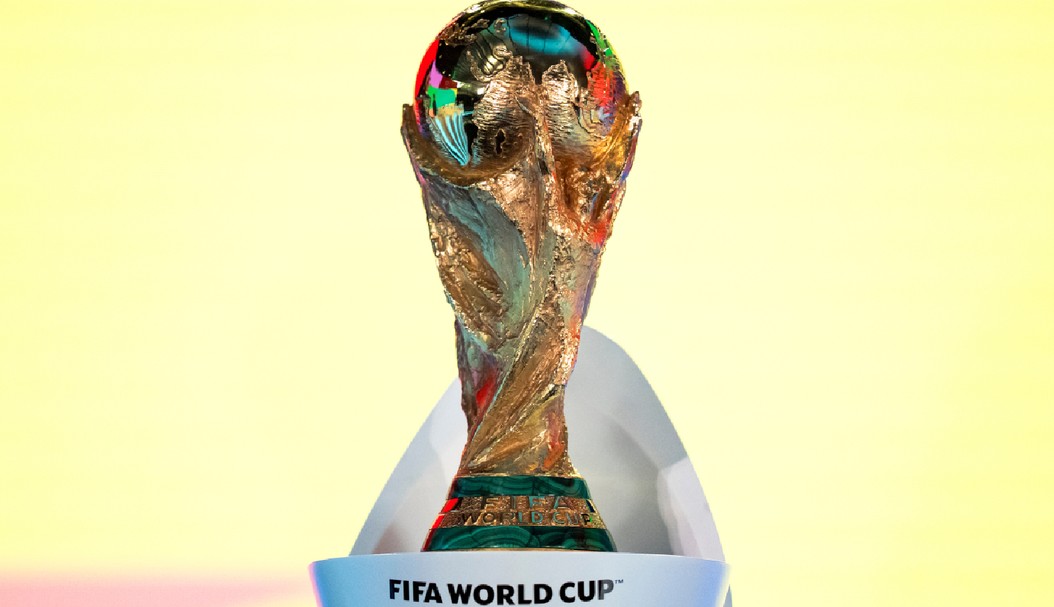

When you think about the FIFA World Cup, it is more than just a football match. It’s worldwide, and sport, politics, economics, and business interests converge. The 2026 FIFA World Cup in the USA, Canada and Mexico is the biggest in history with a total of 104 matches and 48 teams. As FIFA packages the tournament as a celebration of diversity and the sport itself, it’s also an arena for geopolitical influence, commercial power, and the political economy of international sport.
The competition has been excellent, featuring the best football nations in the world. The semi-finalists are 4 of the 5 most respected from the pre-tournament bunch, with France, Spain, England and Argentina the top four. The competitive order has largely been as predicted, and 4 of the 5 teams established as well respected on the pre-tournament list are in the semi-finals. But football was never a game of just points scored on the field. A great deal more discussion has occurred in the political-economic arena surrounding the competition.
The first big issue is the money that’s being poured into the World Cup’s metamorphosis. Over the course of the tournament cycle, FIFA is projecting around US$11 billion in revenue, making it the most lucrative World Cup in history. The worth of broadcasting rights is nearly US$4 billion, and worldwide sponsorship deals total US$2.8 billion. These facts and figures illustrate that football is one of the most lucrative entertainment industries in the world and of interest to multinational corporations, investment funds, technology companies and global advertisers.
But the high profits are not uniformly distributed. The gamble is that the three host countries, as well as each city, will have to cover the cost, while FIFA is set to enjoy record profits. Billions of dollars in public spending are needed for security operations, transportation improvements, stadium renovations and public infrastructure. While economic studies estimate that the tournament can bring in around US$41 billion in economic benefits to the world, many local governments are confronted with hard questions about whether such investments will deliver public benefit over time after the last whistle. Commercialisation of football also comes through FIFA’s introduction of dynamic ticket pricing for the first time. The cost of the ticket is influenced by the same dynamics as train fares or concert tickets, supply and demand. You can’t only blame corporate influence on ticket sales. Multinational companies are still the key players in the commercialisation of the tournament.

This imbalance has created the impression that there is a bias against teams that aren’t making money. In the 2026 tournament, disciplinary issues have sparked heated debate. In the case of the United States, FIFA’s decision to remove the red card from a player has been criticised following the club’s own review because of the inevitable questions of their neutrality. However, these assertions are either substantiated or not; mistrust of FIFA’s promise of a level playing field arises when big football markets are viewed differently.
On the other hand, smaller football countries tend to gain little, if any, advantage in situations involving controversial decisions. Egypt, Ghana, Iran, and other emerging football powers are not always as commercially strong as those from the traditional football powers. Politics has also become part and parcel of the contemporary World Cup. The tournament is increasingly being used as a tool for soft power politics by host governments, political leaders and international organisations.




In fact, issues related to freedom of movement and visas became major diplomatic concerns during the tournament. The immigration of supporters, the press and officials from several countries was tightly controlled. The Iranian team’s logistical problems were a reminder of the importance of geography in participating in seemingly universal sports competitions. These developments only serve to highlight the fact that sporting developments can seldom be divorced from international politics.
The issue of FIFA’s institutional independence has also come to light. Discussions have arisen about FIFA’s neutrality regarding high-profile communications between political leaders and FIFA regarding disciplinary issues. There are also political implications to the increase in the number of teams from 32 to 48. So, as far as Enlarged Format is concerned, it has to be inclusive, meaning that more countries ought to be included. It also widens FIFA’s political reach by increasing the number of football associations that directly benefit from hosting the World Cup.
The sports betting industry is another venue for the commercialisation, with its quick growth. The World Cup 2026 is expected to set a record of US$50 billion. It’s believed that betting on the World Cup 2026 will cross US$50 billion worldwide. Over 100 years of football have been translated into a gambling product that is always ‘on money.’
The other hot topic is the growing trend of providing hydration breaks for players in FIFA matches in hot temperatures. Medically, it’s entirely appropriate to safeguard players’ health during extreme weather. The breaks in the broadcast programme, however, offer additional commercial opportunities: an additional ad window for broadcasters and sponsors. Although this is done for sporting or health reasons, the commercial interest is increasingly a part of the tournament system’s role.
In conclusion, the 2026 FIFA World Cup reflects the changing dynamics of world football and is a testament to the sport’s constant evolution. Still, it is an amazing sports event that can move the hearts of billions around the world. It is also a result of global political-economic processes, including the emphasis on corporate power, the commercialisation of cultural institutions, sport’s geopolitical uses, and the increased importance of global cultural media markets.
The universal nature of football lies in its unpredictable, inclusive, and emotional connection with the ordinary. Institutions need to be transparent, accountable, and dedicated to competitive fairness, irrespective of market size and political support. FIFA’s commercial endeavours continue to expand, but its institutional purity and integrity must be preserved. Otherwise, the World Cup could lose its wonder and become a business ruled by economics, politics, and corporate agendas in the world of sport. But, the future of football will depend on more than just the victor of the World Cup: it will rely on the ability of the sport’s governing body to stay true to the principles of fairness, accessibility, and global solidarity that made the World Cup a truly universal event in the first place.
The views expressed in this article are solely those of the author
The writer is a Professor, Department of International Relations, University of Chittagong, Bangladesh. Director, Hong Kong Research Centre for Asian Studies-Bangladesh Centre (RCASBC). Email: [email protected]