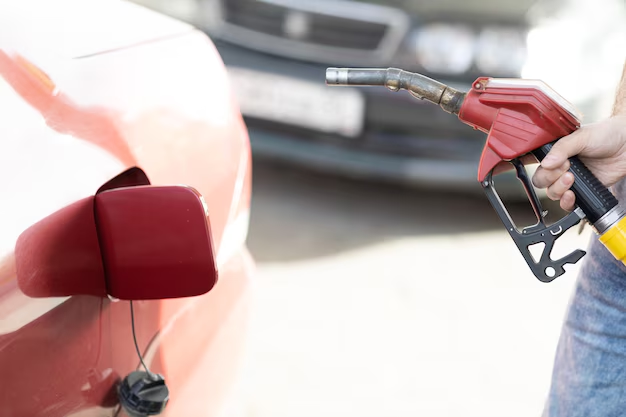

A severe fuel shortage has gripped northern districts under the Rangpur division due to a lack of railway engines, racks, and wagons, sparking growing concerns about its impact on agricultural production.
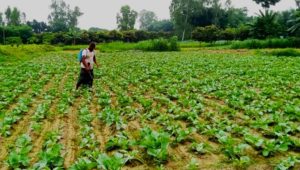
With the Aman and Boro seasons approaching, farmers in the region are increasingly worried that the shortage will pose a significant challenge to achieving the expected harvest.
As fuel is essential for irrigation and other farming activities, the crisis threatens not only local livelihoods but also the agricultural stability of the northern districts, which heavily rely on these key growing seasons.
The Bangladesh Petroleum Corporation (BPC) has attributed the situation to a shortage of railway rolling stock, which has disrupted fuel transportation.
According to BPC, the monthly fuel demand across five districts in the Rangpur region exceeds 1.25 crore litres. However, only 21 lakh litres are currently being supplied.

Meanwhile, petrol pump owners claim that the railway authorities have overlooked this long-standing issue, exacerbating the crisis.
Officials from the Bangladesh Railway explained that a shortage of metre-gauge locomotives in the Eastern Zone is disrupting train services.
“Many metre-gauge locomotives are under repair at the main locomotive workshop in Chattogram, and difficulties in acquiring the necessary spare parts are hindering the repair process,” Farid Ahmed, general manager of the West Zone of Bangladesh Railway, told TIMES of Bangladesh.
He added that services will not improve until the spare parts issue and the resulting repair backlog are addressed.




BPC sources indicate that the fuel supply began to decline after 2023.
Data from BPC and the Jamuna, Meghna, and Padma depots in Rangpur show a noticeable decrease in supply in recent months.
In August 2023, 27 railway racks, comprising 234 wagons, delivered 91.26 lakh litres of fuel to the depots. By August 2024, the supply had dropped to 26 lakh litres, and in August this year, only 21.06 lakh litres were delivered.
As of the afternoon of 13 September, only one rack with nine wagons, carrying 3.51 lakh litres, had arrived.
BPC explained that while a rack with nine wagons is ready for dispatch in Chattogram, it cannot be sent due to a malfunctioning engine.
Each rack holds nine wagons, with each wagon capable of transporting 39,000 litres of fuel.
Abdul Hakim, owner of a petrol pump in Sundarganj, Gaibandha, said, “We have been waiting for days, but due to the ongoing crisis, we’re not receiving fuel.
“To meet local demand, it costs an additional Tk8,000 to bring fuel from Baghabari in Sirajganj and Tk4,000 from Parbatipur in Dinajpur. This situation is jeopardising our investment. Even though the costs are higher, we cannot raise our prices.”
Aminur Rahman, in charge of the Padma Petroleum Depot in Rangpur, stated, “There is no national fuel crisis, but due to the shortage of railway wagons, we are not receiving fuel as needed. With the Boro season approaching, I’m uncertain how we will manage.”
He added, “In the past, 12 racks with 108 wagons would arrive at my depot every month. Now, it’s dropped to just two racks with 18 wagons.”
Abdullah Al Mamun, divisional commercial officer of the Lalmonirhat Division of Bangladesh Railway, confirmed the engine shortage issue.
“Because of this, we can’t bring in oil as usual. Previously, oil would arrive from Chattogram three or four times a week; now, it comes only two or three times a month. The crisis has emerged due to the shortage of engines.”