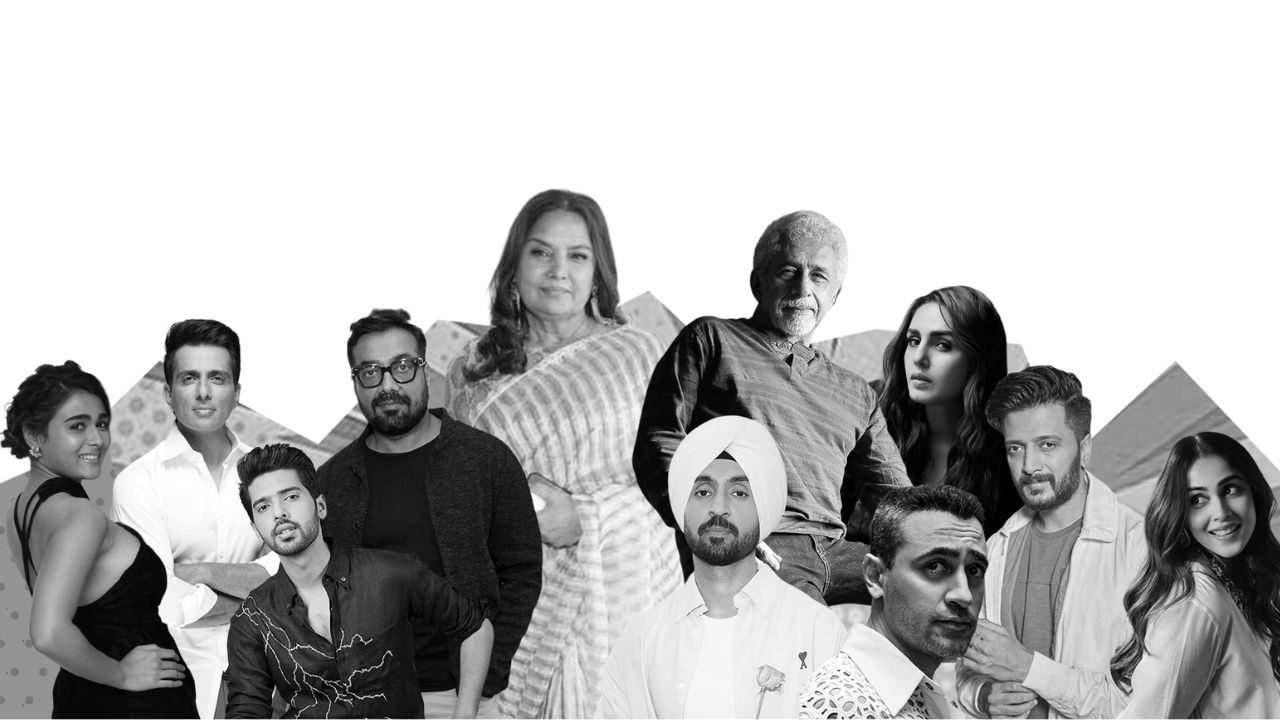



What began as a protest over the alleged NEET-UG 2026 paper leak has grown into one of India’s biggest celebrity-backed movements in recent years. As the Cockroach Janata Party’s (CJP) demonstrations spilled onto Delhi’s streets and clashes with police intensified, Bollywood’s biggest names stepped forward—some joining protesters in person, others using their platforms to demand dialogue, accountability and restraint.
The protests gathered fresh momentum after activist Sonam Wangchuk was hospitalised following his removal from the protest site during an indefinite hunger strike demanding the resignation of Union Education Minister Dharmendra Pradhan. Violence later erupted during the CJP’s “Chalo Sansad” march, with both protesters and police reporting injuries.
Veteran actor Shabana Azmi joined demonstrators at Jantar Mantar, where she recited verses by revolutionary poet Faiz Ahmed Faiz before telling the crowd, “We are all here for a peaceful protest. We have gathered to exercise the rights guaranteed by our Constitution… We have no intention whatsoever of creating violence.” She later wrote, “Yahan itni taydad mein jama huye sabhi sathiyon ko naman.”
Punjabi singer-actor Diljit Dosanjh, who had earlier stayed away from the movement, condemned the police action on Instagram. “Aj Jo hoyea Baut Maada Hoyea… Students Naal Edan Treat Nhi Hona Chaida c… Lokan Di Avaaz Rab Di Avaaz Hundi Aa,” he wrote, adding that he might once again be labelled “anti-national”, as he was after supporting the farmers’ protest.

Riteish Deshmukh and Genelia Deshmukh declared, “We stand in complete solidarity with the youth of our country… Their voices deserve to be heard—loudly, clearly and without fear.”
Joining the march with a copy of the Constitution, Prakash Raj warned, “History may forgive those who made mistakes, but it will never forgive those who remained silent.”
Filmmaker Anurag Kashyap criticised the police response, writing, “I didn’t know wearing a uniform meant giving up your conscience and humanity.”



Online, support poured in from across the film industry. Sonu Sood urged compassion, writing, “Our students need hugs, not batons… The future of our country deserves a hug, not a lathi.” Bhumi Pednekar said violence could never be the answer, while Huma Qureshi said images of peaceful protesters facing force would stay with her for a long time.
Filmmaker Nandita Das wrote, “Constructive dissent is what keeps a democracy alive.” Screenwriter Sutapa Sikdar said many protesters were students carrying “Rs 20 in their pockets” and “hearts full of hope”, yet still stood their ground.
Support also came from Sonakshi Sinha, Vir Das, Dia Mirza, Aditi Rao Hydari, Vijay Varma, Neeraj Pandey, Sahiba Bali, Swara Bhasker, Vishal Dadlani, Chinmayi Sripaada and Zeenat Aman, all of whom called for solidarity, dialogue or accountability.
Actor Imran Khan, who has backed the movement from its early days, condemned the police action in an Instagram post. He said students had been “failed by the system” and insisted there was “no choice” but to stand in solidarity with them.
Veteran actor Naseeruddin Shah also criticised the police response in an emotional video message. He likened officers involved in the crackdown to US immigration agents, urged students not to lose hope and pledged his support for their campaign.
Singer Armaan Malik postponed the release of his song Gaya Kaam Se, saying the current situation did not feel right for a celebration. He had earlier urged fairness for students, respect for peaceful protests and meaningful dialogue.
Not everyone agreed. BJP MP Hema Malini urged discussion instead of demonstrations, while actor-politician Kangana Ranaut argued that Parliament, not street protests, was the proper place to debate such issues.
Meanwhile, FTII students criticised R Madhavan, the institute’s president, for remaining silent on the protests, plastering his office door with “Gayab” posters and “NEET for Sale” signs that later went viral on social media.
As the demonstrations continue, Bollywood’s response has become almost as significant as the protests themselves, turning an education controversy into a wider national debate over democracy, dissent and the right to be heard.