


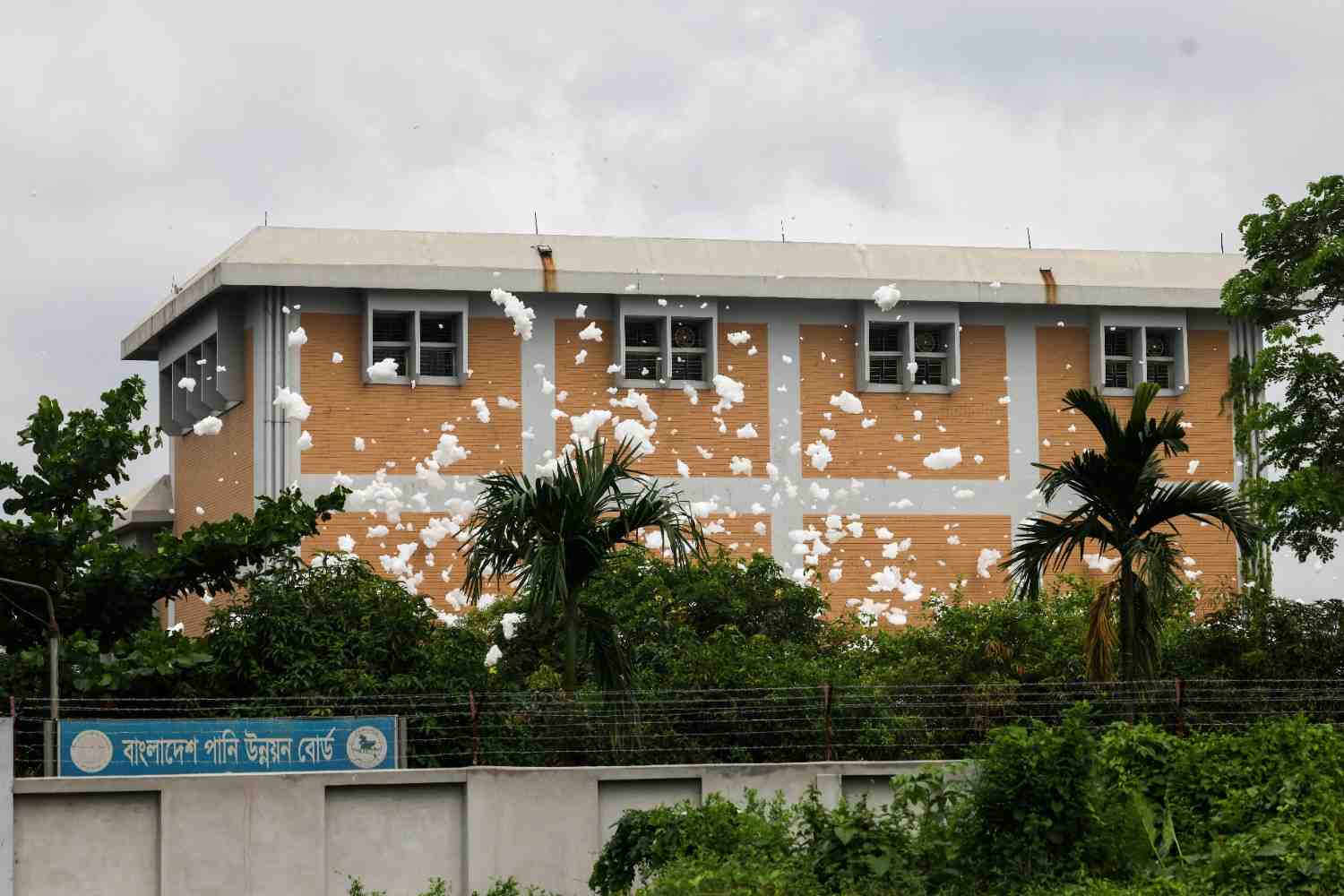
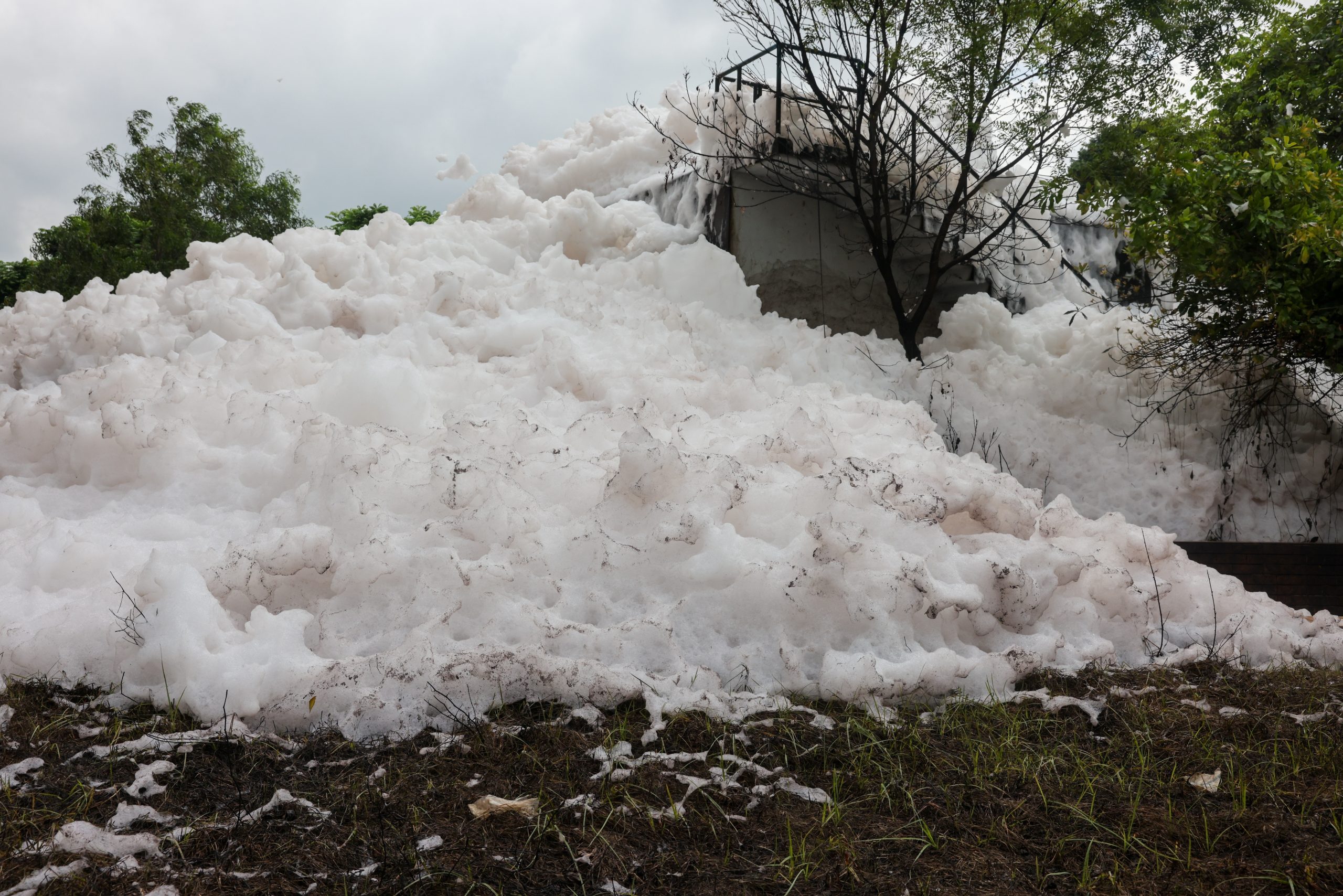
From a distance, white foam flying around the Goranchotbari Pump House in the capital looks almost like snowfall. But up close, it’s clear that it is foam: Thick, chemical-laden, and spreading everywhere.
During a site visit, everything beyond the Bangladesh Water Development Board signboard was found covered in foam. Trees, brick walls and concrete roads were coated with it, while airborne foam landed on people’s bodies, hair and eyelashes.

The foam is generated from the city’s wastewater. Water from canals and drains collects at the pump house, where powerful pumps churn it into huge amounts of foam that spill into the compound.
The pump station began operating in 2018 to reduce waterlogging in the capital. Water from densely populated areas including Mirpur, Cantonment, Turag, Kafrul, Shah Ali, Pallabi and Uttara flows into the Goran Chotbari catchment.

Household and institutional wastewater, industrial effluent, rainwater and waste from canals all collect in the Goran Chotbari detention pond before being pumped into the Turag River.
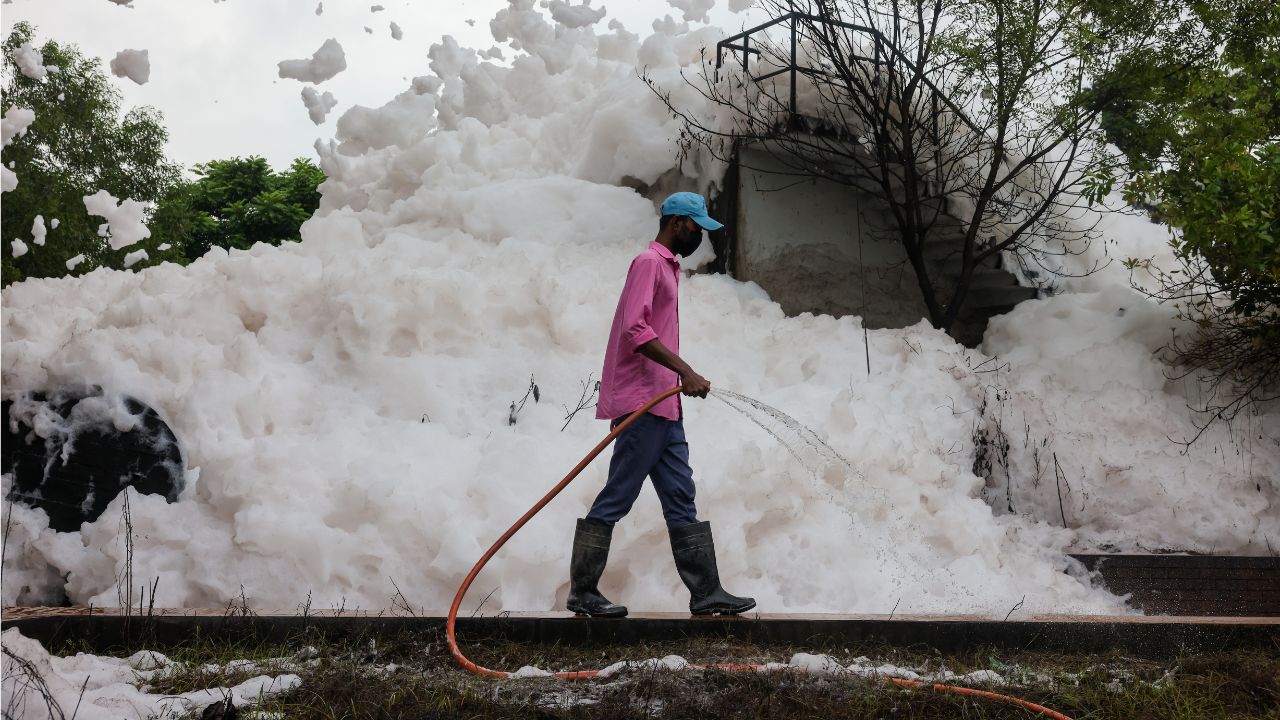
Workers battling the foam have little more than hosepipes. They walk along its edge and spray water over it, their bodies constantly exposed to the toxic mixture.
The effects of their daily exposure are visible. Irritation and burning marks can be seen between their fingers, while their feet are regularly submerged in foam and polluted water. Yet, the chemicals present in the water remain unknown.



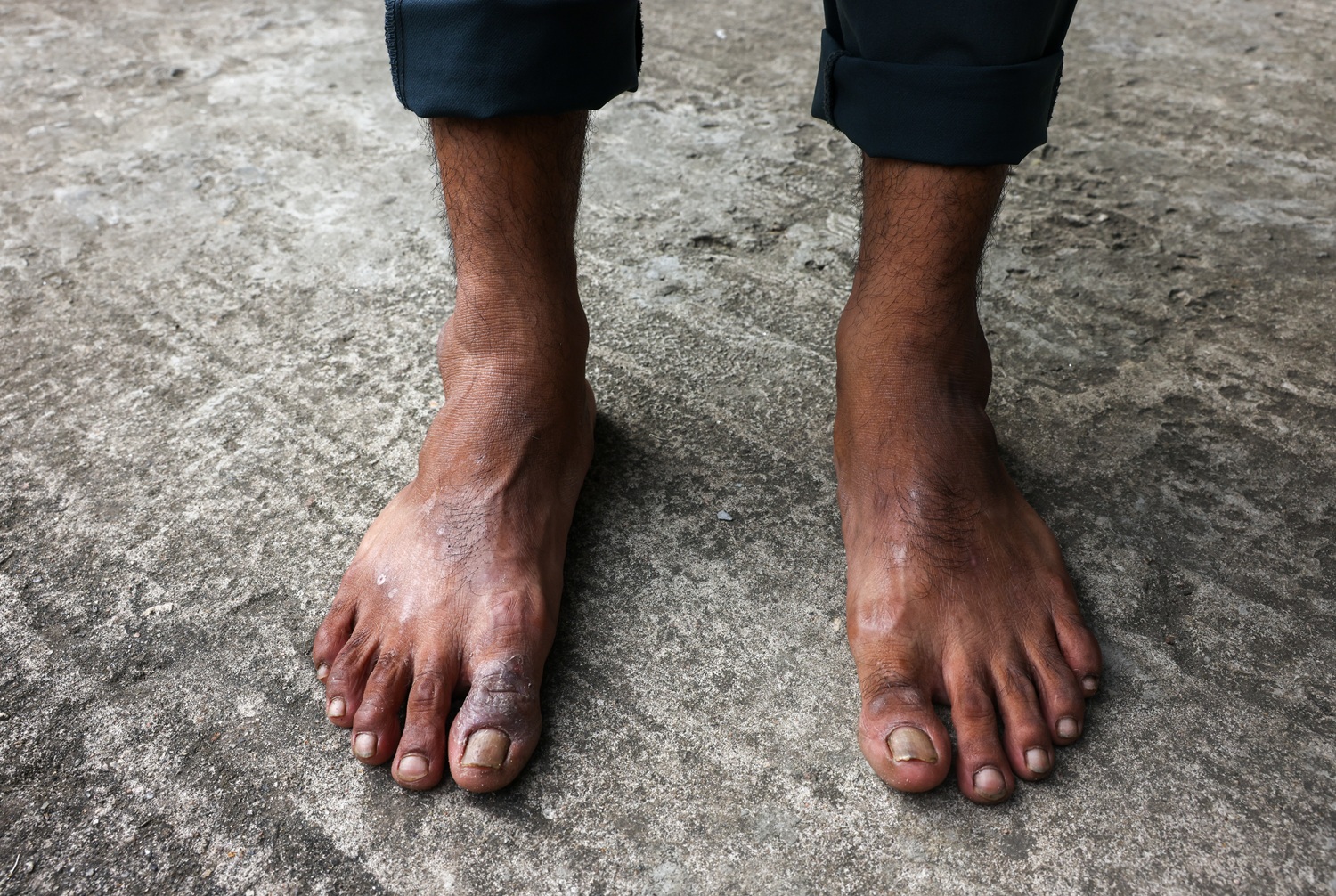
At least three workers told TIMES of Bangladesh that this regular exposure has led to itching, asthma attacks and breathing difficulties. Some also reported loss of appetite.
Delowar Hossain, sub-assistant engineer at the pump house, said household wastewater reaches the facility through canals. He believes detergents and other chemicals may be a major cause of the foam, while industrial waste could also be entering the water.
A study titled “Prevalence and determinants of respiratory, gastrointestinal and dermatological symptoms among waste and sanitation workers in Dhaka City, Bangladesh” found that 45.8 per cent of workers reported at least one respiratory problem, with 31.3 per cent reporting breathing difficulties.
The study also found that 36 per cent reported dermatological problems; 49 per cent experienced itching and 35.75 per cent reported skin redness.
According to the head of the Department of Dermatology at Green Life Medical College Md Asifuzzaman, prolonged contact with such water can dry and crack the skin, causing irritation and burning.
Cracked skin can allow germs to enter and cause infections. Long-term exposure may also increase the risk of fungal infections, allergies, rashes, redness and eczema-like conditions, he said. The risks may be greater for people with diabetes or other health conditions.

Delowar said workers are provided with gumboots and raincoats. However, many avoid wearing them for long because they become extremely hot and uncomfortable. More concerningly, there is no special risk allowance or dedicated medical response system to address the workers’ health risks.
As the foam continues to spread, the workers who battle it daily remain exposed, unprotected, and largely forgotten.