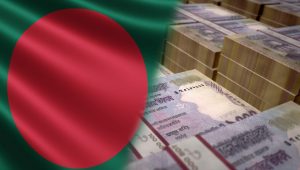
May 2026. Bangladesh finds itself at an economic crossroads—one that feels increasingly perilous. Yet, despite the stakes, our policy-making circles seem content to cling to an archaic, almost fearful conservatism regarding Foreign Direct Investment (FDI). It begs a blunt question: do the Governor of Bangladesh Bank, the Finance Minister, and the Planning Minister truly not grasp that for a rising nation, FDI is more than just a “dollar influx”? It is the very pulse of job creation and the skeleton of any real, sustainable growth.
Prime Minister Tarique Rahman has set a high bar: a $1 trillion economy by 2034. But let’s be honest—the bureaucratic walls currently standing don’t just make that goal difficult; they make it look like a daydream.
The widening gap between us and our regional neighbours is becoming a public embarrassment. While we hesitate, the UAE, Singapore, and Malaysia are rolling out the red carpet. The Emirates have torn up the old rulebook to allow 100% foreign ownership across the board. Singapore’s EDB doesn’t just regulate; it acts as a high-tier business partner. Even Malaysia’s new ‘Incentive Framework’ is a stroke of genius, tying tax breaks directly to the actual success of the investment.

Meanwhile, back on the ground in Bangladesh, a foreign entrepreneur is essentially left to rot in a bureaucratic labyrinth. Navigating nearly 50 different departments for a few stamps of approval isn’t just “red tape”—it’s a systemic rot that tells the world we are either incompetent or hostile to their business.
But there is a darker force at play than just paperwork: the “invisible shadow.” We are seeing a specific class of political insiders and business titans who view global competition as a mortal threat to their cosy monopolies. They are willfully ignoring the basic grammar of modern economics: FDI doesn’t just “bring competition”—it forces the entire local industry to level up, sharpening standards and reinforcing the “backward linkages” that keep an economy resilient.




The numbers don’t lie. Every 1% bump in FDI translates to real paychecks for real families. There is zero moral ground for sacrificing the livelihoods of millions of young Bangladeshis just to pad the profit margins of a few well-connected elites. If this economy is ever going to breathe, we have to break the back of this “oligarchy.”
It’s not just about the cash, either. These investors bring the very things we lack: world-class technology and management “know-how.” It is frankly heartbreaking that even after these companies commit their capital, they face a nightmare trying to repatriate their own earned profits. Despite the central bank’s recent directives, the reality on the ground remains choked by mid-level obstructionism.
The message to the Prime Minister must be clear: your “Bangladesh First” philosophy cannot survive these hurdles. We are past the point where “piecemeal” fixes or vague promises will suffice. We need a single, high-powered “Unified Authority”—a true one-stop hub where an investor can close a deal without being harassed or shaken down.
If we keep these doors bolted, the dream of a developed Bangladesh will remain exactly that—a dream on paper. It is time for our leadership to choose: the long-term prosperity of the nation, or the narrow, greedy interests of the few.
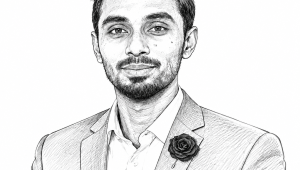
The author is a capital market investor and a Vice President at the Bangladesh-American Chamber of Commerce USA Inc. The views expressed in this article are solely those of the author.