
Amid the fuel crisis in Dhaka triggered by the Iran war, along with different kinds of political and natural heat, the electric vehicle exhibition at the automobile and auto-parts fair held at the International Convention City Bashundhara (ICCB) on April 24, Friday, felt like long-awaited summer rain. When we reached the fair, it was around 5:30 in the afternoon. In the fading sunlight, the yellowish golden shower flowers of Bashundhara looked even more beautiful.
Dhaka Auto Show
The three-day 19th Dhaka Auto Series of Exhibitions 2026 was held at ICCB from April 23 to 25. Under one roof, several exhibitions were held alongside displays of cars and automotive parts. One of the key attractions was the 3rd Electric Vehicle (EV) Bangladesh Exhibition.
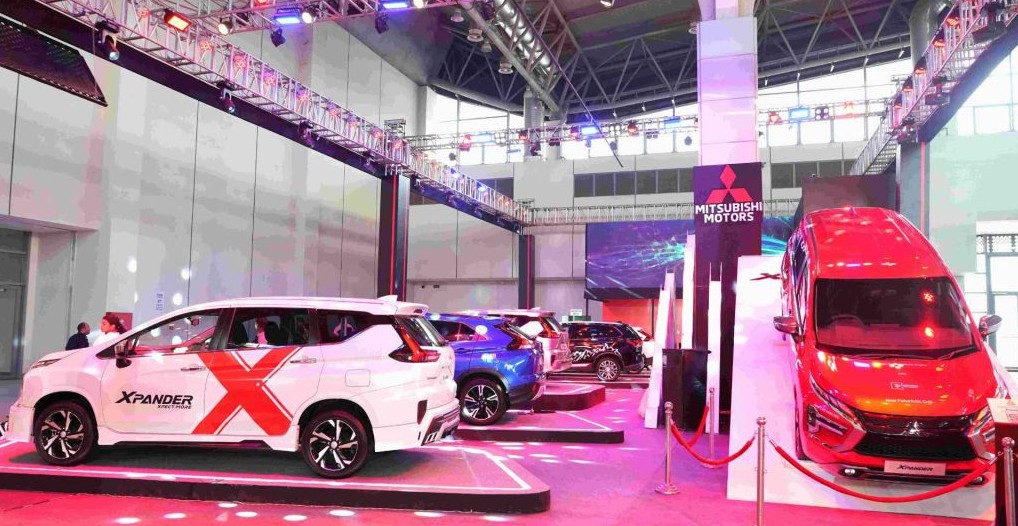
More than 70 companies from 10 countries, including Japan, India, China, Malaysia, Germany, and the United Kingdom, participated in this year’s exhibition, showcasing new technologies and vehicles across nearly 200 booths. Local and foreign automobile companies, parts manufacturers, and technology providers took part. Cars from brands such as Mitsubishi, Toyota, Mercedes-Benz, Honda, MG, Proton, and Changan were displayed. The fair was organised by CEMS-Global.
Various models of electric cars and motorcycles, or e-bikes, were displayed at the fair. Against the backdrop of the country’s fuel crisis, public interest in electric vehicles is growing. As a result, visitors showed particular interest in the electric car and motorcycle stalls. Young visitors were especially drawn to the electric motorcycle stalls.
Viewing cars in groups
Pushing through the crowd of young men and women, we first arrived at the display of Bangladesh Auto Industries Limited (BAIL). By ‘we,’ I mean around ten to twelve classmates from the 14th batch of Rajshahi Cadet College.
We came to see the EVs made by BAIL at the invitation of its Managing Director, Mir Masud Kabir. At this exhibition, BAIL unveiled its much-anticipated prototype model. The company introduced three of its brands: MEV, a four-wheeled passenger and cargo vehicle; Glider, a motorbike brand; and Automax, a three-wheeler. Seeing BAIL’s and other companies’ motorbikes and three-wheelers in Hall 1 was a wonderful experience. One striking scene was the excitement of young visitors taking photos and selfies on these vehicles. We also joined that photo festival.
The excitement of youth while sitting in an EV

After that, we went to Hall 2 to see BAIL’s four-wheeled passenger vehicle, a sports utility vehicle or SUV. The company affectionately calls this brand MEV. Mir Masud Kabir, known to us as Apu, had first told us about his EV dream during an evening gathering in the spring of 2015. Finally, in the summer of 2026, when krishnachura, jarul, and golden shower flowers were in bloom, that dream became a reality.
This takes me back many years. After vacation, we were returning to Rajshahi Cadet College on the banks of the Padma. A large number of cadets from different parts of North Bengal usually joined college by train, especially the Uttara Express. Our friend Mir Masud Kabir, Apu, came from the Rajshahi University campus. Both his parents were university teachers. Some of us came from Pakshi, Ishwardi, Pabna, Natore, Bogura, Dinajpur, Rangpur, Chapainawabganj, and Sirajganj.
The distance from Sardah Railway Station to Moktarpur, where the cadet college is located, was about three miles. From the station, college buses would take us there. But sometimes we would travel by horse carriage or tomtom. It was an unbelievably joyful journey. That day, sitting inside BAIL’s white electric SUV, some of us happily took pictures. A witty friend made a comment that stayed with me: “From tomtom to EV.” Sitting in the EV felt like reliving the youthful excitement of riding a tomtom. Yet so many years have passed in between. Life moves forward in this way. I do not know how our beloved horse-cart driver, Gafur Bhai, is doing now.
The story of a 100% locally made car
Masud Kabir and BAIL Chairman A. Mannan Khan, Chairman of Mango Teleservices Ltd., told us, almost like a story, about the highly challenging journey of producing EVs. An EV manufacturing plant has been established in the Mirsarai Economic Zone in Chattogram with an investment of around Tk1,500 crore. The goal is to reduce import dependence by locally producing vehicle platforms and bodies. They said the company aims to play an important role in building a complete EV ecosystem in the country.




Electric vehicle assembly has already begun in Bangladesh. However, BAIL’s EV will be 100% made in Bangladesh, including its battery. A striking banner at BAIL’s display caught my eye: “The first Made in Bangladesh EV unveiled by the country’s first automobile manufacturer – Bangladesh Auto Industries Ltd.” In other words, BAIL is producing electric vehicles entirely within the country. In this regard, BAIL is the pioneer.
A few more words on EVs
The organisers hope that this exhibition will expand the electric vehicle market in Bangladesh and create new investment opportunities in the local industry. Those concerned believe that this initiative will open a new horizon for the development of the domestic automobile industry and the expansion of electric vehicles.
According to analysts, in the context of rising fuel costs and growing demand for environment friendly transport, this progress in Bangladesh’s EV sector could become an important milestone.
Prospects in the automobile industry
Bangladesh sees new possibilities in the automobile industry. Bangladesh’s motor vehicle industry is the third largest in South Asia. Over the past decade, the two-wheeler motorcycle market in Bangladesh has expanded significantly. This can be called a revolution.
Bangladesh has several large automobile factories that assemble passenger cars from Mitsubishi and Proton, as well as commercial vehicles from Hino and Tata. In addition, several local companies, along with foreign technology partners, have announced investments in the Mirsarai Economic Zone. Foreign companies are initially investing in assembling their branded vehicles. Gradually, these assembly plants may develop into full-fledged automobile manufacturing factories.
Now is the time for the automobile manufacturing industry to move forward. The automobile, light engineering, and agro-machinery sectors have demonstrated Bangladesh’s industrial potential and capability. These sectors are priority sectors for the government and are playing an important role in diversification, employment, and economic development. There are vast opportunities here. EVs are the future of automobiles. This is where our entrepreneurs must come forward.
The future of EVs in Bangladesh
Across the world, EVs are gaining momentum in the automobile industry as countries try to tackle climate change risks and ensure energy security. Bangladesh is no exception to this transformation. Considering population density and increasing pollution, the future of EVs in Bangladesh is very bright. However, to turn this potential into reality, planned and coordinated government action is essential.
Demand for EVs is increasing in Bangladesh day by day. Electric vehicles can play a major role, especially in urban areas, by reducing air pollution and dependence on imported fuel. The government’s target is to convert at least 30% of the country’s vehicles into electric vehicles by 2030. If this target can be achieved, carbon emissions will decrease, and transport costs will also be significantly reduced in the long run.
The history of automobile manufacturing in Bangladesh
In 1966, Gandhara Industries was established in Chattogram’s Barabkunda through a joint initiative with General Motors of the United States. Retired Lieutenant General Habibullah Khan Khattak of the Pakistan Army was its entrepreneur. In the late 1960s, sedan cars such as the Vauxhall Viva and Bedford trucks began to be produced or assembled there.
After Bangladesh’s independence, the government nationalised the company and renamed it Pragati Industries. Pragati Industries Limited is one of the oldest and largest motor vehicle assemblers in Bangladesh. In 1972, at a fair in Delhi, Bangladesh presented a car made by Pragati to Indian Prime Minister Indira Gandhi. The fact that newly independent Bangladesh was producing cars surprised Indian journalists at the time.
Bengali entrepreneurial tradition
At the automobile fair, I found myself thinking about the entrepreneurial tradition of Bengalis. During the British period, compared to many other regions of India, Bengalis were relatively advanced in industrialisation. In the first half of the 19th century, a Bengali merchant class, mainly Hindu, emerged around Kolkata. Various industries grew around Kolkata and Howrah.
After the creation of Pakistan, industrialisation began anew in East Pakistan, now Bangladesh. The situation changed mainly after 1958. Through President Ayub Khan’s industrial policy, doors opened for local and foreign industrial investment. During this period, many foreign pharmaceutical companies, jute companies, local banks, insurance firms, jute mills, and paper mills were established.
A self-reliant Bengali entrepreneurial class emerged during this time. Although jute had been exported earlier, the export of leather products and shrimp began toward the end of the 1960s, and Bengalis gained experience in international business during this period. Apart from Dhaka, industries developed remarkably in Chattogram and Khulna. Although non-Bengalis owned most of the industries, it was during this period that Bengalis began to emerge as industrial entrepreneurs.
Industrialisation must be prioritised
Over the past 55 years, Bangladesh has achieved significant industrialisation. Garments, textiles, pharmaceuticals, and leather have performed very well. Some of these sectors are now world-class. Industry should be the most important sector of our economy. We must also rethink defense industrialisation.
Millions of our young people are now unemployed. Without broad industrialisation, it will be very difficult to reduce this unemployment. Therefore, our focus should be on industrialisation. However, two issues must be kept in mind while establishing industries. First, industry must not destroy the environment. Second, agricultural land must not be used indiscriminately for industrial purposes.
The government should not be involved in running industries. Its role should be to facilitate industry, encourage entrepreneurs, and support them. Welcome EVs to Bangladesh. Best wishes to the young industrial entrepreneurs; they will take Bangladesh forward. Promising industrial sectors, including automobiles, must be advanced. Bangladesh must make use of the opportunities and possibilities that EVs offer. EVs are the future of automobiles. May our united, spirited Bangladesh move forward through industry.
The writer is a Retired Brigadier General, Researcher and Analyst, former Chairman of BTMC