
Ahsan H. Tutul
Multiculturalism, once considered a salient feature of Europe, has now become an anathema. Economic stagnation, high unemployment, and falling living standards have exacerbated the situation. Frustrated by the lack of progress in their quality of life, many Europeans have lost faith in mainstream political parties and are shifting toward the far-right. Recent election results show they are steadily gaining popularity and winning more seats in local and national elections. Often dismissed as mere fringe groups, the far-right parties currently play a decisive role in European politics. Their mantra of anti-immigration and anti-multiculturalism appeals to nativist and culturalist voters.
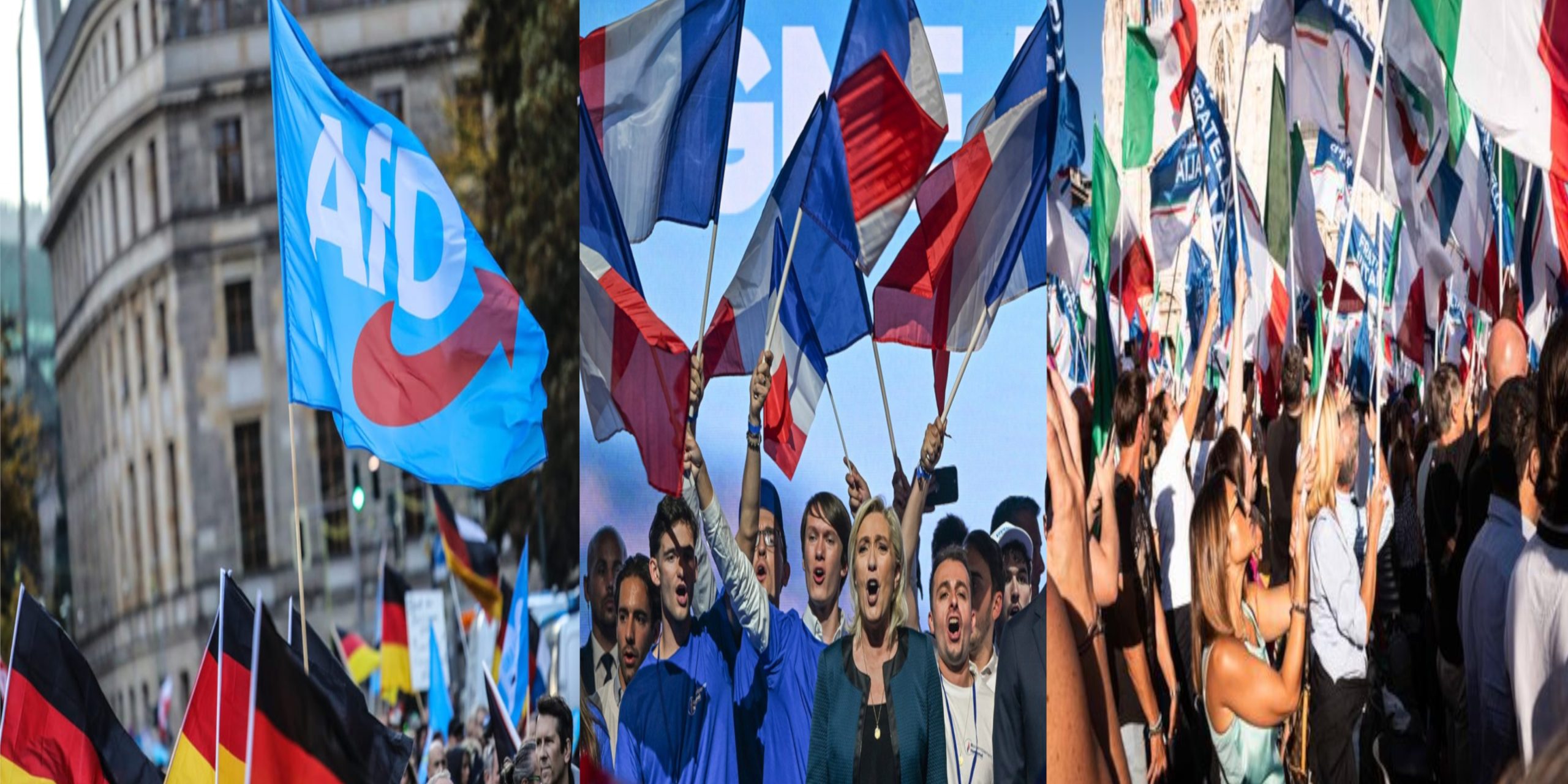
Germany is the largest liberal democracy in Europe. However, its current political landscape is a conundrum. The precipitous rise of the Alternative for Germany (AfD) is an unexpected political development. It focuses on banning immigration and negating multiculturalism. The party’s persistent social media campaign targeted voters to inculcate the idea that immigration is the leading cause of societal and economic problems.

Furthermore, the AfD propagated the message that Muslim immigrants threaten the German way of life, where beer, bikinis, and burkas do not mix. Therefore, not only should Muslims be restricted from immigrating to Germany, but they should also undergo a mass deportation that could even target German citizens if they do not assimilate into the majority society. The campaign also convinced voters that Muslims commit terrorism in Germany, which they believe is a daily threat to their safety and security. AfD stressed that Germany is for the white and native Germans only, where multiculturalism has no place. These aggressive, illiberal messages resonated well with anti-establishment voters. As a result, AfD secured 20.8% of the seats in the Bundestag in the February election, making them the second-largest party in Germany.
In France, the far-right National Rally adheres to the principle of “France for the French.” Their staunch anti-immigration and anti-elitism stance attracts voters. They advocate denying citizenship to people born in France with foreign-born parents. Their “national priority” initiatives favour native French citizens over naturalised ones in all social services. By spreading fear of Islamisation, justifying antisemitism, and criticising the political elite, they have swayed culturalist voters. The party further gained substantial backing from the working class. Accordingly, the National Rally won 143 of the 577 seats in the National Assembly in last year’s election indicating France could have a far-right government by the next election.




Brothers of Italy (Fratelli d’Italia, FdI), backed by other far-right parties like the League (Lega) and the center-right Forza Italia, formed the government in 2022. They ran their election campaigns emphasising Italy’s Christian identity. Essentially, these parties are Eurocentric, anti-immigration, and vehemently oppose Islamisation. They also promote anti-climate change policies, restrict abortion, and keep euthanasia illegal. Their political agendas also echo with hardliners who prefer smaller governments and strict economic measures. FdI received only 4% of the vote in the 2018 election but surged to 26% in the 2022 election, enough to lead the country; an impressive validation for the far-right parties.
From Sweden to Austria, Hungary, and the Netherlands, far-right parties are increasingly becoming an influential political force. Their political agility fuels their rise to normalise the “othering” of immigrants and people from non-European backgrounds. These parties accuse the “others” of exploiting social benefit systems meant for native citizens.
Previously lax and welcoming immigration policies led Europe to become a multicultural society. Over time, as economic struggles made life harder for ordinary people, the blame quickly shifted to immigrants. The stagnant economy and lack of job growth have made it more difficult for citizens to find well-paying jobs that support a decent standard of living. That’s where the debate intensified: immigrants are taking jobs that rightfully belong to native Europeans. Additionally, a large part of the population feels that schools are overcrowded; hospitals, transit systems, social services, and housing have all been disproportionately used by immigrants.
Trumpism helped boost the popularity of far-right parties in Europe. By speaking openly about controversial issues and not feeling guilty about it, Trumpism removed all the veneer of political civility. Moreover, Trump banned citizens of certain Muslim countries from entering the U.S. and broadly limited immigration, and built walls along the U.S. southern border to prevent immigrants from seeking asylum. The European far-right took a cue from these actions, embraced Trumpism, and replicated it, achieving success in their elections as well.
Liberal democracy and multiculturalism are waning, while far-right parties are gaining ground in Europe. If this trend persists, Europe might become a refuge for tribalism. Identity politics will take center stage in political discussions, and “othering” will become prevalent in mainstream politics. Consequently, the continent that birthed democracy could also witness its slow demise. Instead of blaming immigrants and multiculturalism for social and economic malaise, Europe should concentrate on stabilising its economy, creating jobs, making housing affordable, and raising living standards. These efforts would constitute the proper solution to the grievances raised by far-right parties and their supporters.
The writer is a Doctoral Researcher, International Relations, Universiti Sains Malaysia (USM)