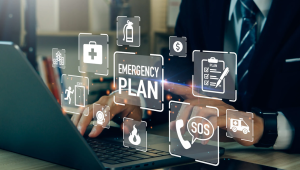
Emergency services are extremely important during the unexpected moments of our life. Be it is related to education, health problems, accidents, fires, or crimes, these important services help save lives and resolve problems quickly. Essentially, emergency services also play an important role in maintaining social safety, peace, and stability. We should be aware of these services and use them properly when necessary.
Through apps and hotlines, people can also receive necessary medical advice. Fire stations are usually located in different parts of cities to ensure rapid response not only for fire issues. Police play a vital role in cases of crime, theft, and threats to personal safety and security. By using emergency numbers, quick assistance can be obtained. Additionally, police regularly operate to maintain traffic control and public safety throughout the country and more precisely in sensitive and crime- prone areas. During floods, earthquakes, cyclones, storms, or other natural disasters, rescue teams – such as Disaster Response Teams – remain vigilant. They stand beside affected people by providing quick rescue operations, food, and shelter.
The world’s first national emergency call number, 999, was introduced in 1937 in London. This three-digit number quickly became very popular because it was quite easy to remember and could be dialed free of charge during emergencies. Through this system, police, fire services, and ambulances could be connected quickly. Later, it worked alongside 112 and other modern telecommunication technologies to ensure that any emergency call is reached to the appropriate service quickly. Subsequently, in the United States, citizens had to call different local numbers to seek help. The first 911 call was made in 1968 from Haleyville, Alabama. Since then, it has become the primary means of contacting emergency services nationwide. This system not only connects callers to the police but also other emergency response teams.

Today, almost every country in the world has a national emergency number and emergency services. However, the number and administrative structure vary from country to country. Emergency services are not only essential during emergency situations but are also crucial for maintaining social peace, safety and stability. We should remain aware of these services and use them properly when it is quite necessary. Now let us turn to our country.
In Bangladesh, the national emergency number 999 was launched on December 12, 2017. It is a toll-free service, where people can call from a mobile or landline without cost and be connected to the police, fire service, or ambulance. Gradually, more services have been brought under its coverage. Previously, people had to call separate numbers for police, fire service, and ambulances. With the introduction of 999, all emergency services can now be reached through a single call and lots of important services are brought under it.




Recently, a newspaper report drew the attention of many, including myself. According to the report, kidnappers detained a ninth-grade school boy in Khilgaon and demanded a ransom of 50,000 taka. Later, the boy’s father, sought assistance from the Prime Minister. Following his direct intervention, the police quickly arranged a rescue operation. Within an hour, the police conducted a raid and rescued the abducted student safely. During preliminary interrogation, it was revealed that the accused were involved in several other kidnapping cases.
Undoubtedly, the Prime Minister deserves appreciation for the successful rescue and removing worry of a father. However, the question remains: why should such a relatively small incident require informing the Prime Minister? And why should he need to personally inform a police officer about the matter?
If the emergency service system does not function effectively, our attention should focus on ensuring that it works properly so that the mass people receive its true benefits and the police can take immediate and effective action. Incidents like these occur regularly in Bangladesh and may continue to occur again and again. It is not realistically possible for the Prime Minister to micro-manage every such event.
The author is a freelance writer, New York, USA