



Once nightfall descended over Dhaka, Sadarghat would awaken to a grand spectacle: a relentless fleet of majestic passenger launches setting sail in quick succession, bound for the southern reaches of Bangladesh.
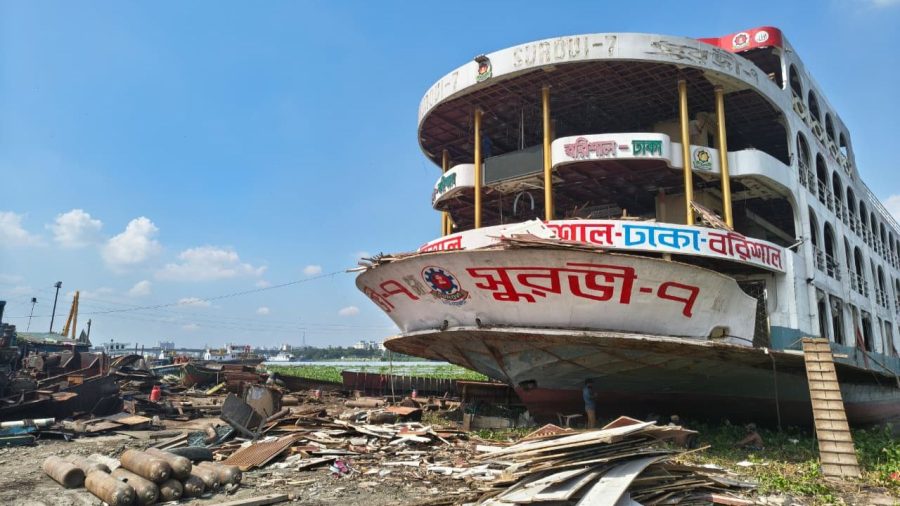
Today, that golden era is rapidly fading, with several iconic vessels arriving at their final, tragic destination, the shipbreaking dockyards of Jurain, destined for the scrapheap.
The primary catalyst for this shift is the landmark opening of the Padma Bridge, which established rapid road connectivity and drastically curtailed public demand for overnight river travel to Barishal and neighboring southern districts.
Plunging passenger numbers, compounded by soaring fuel costs and escalating operational overheads, have rendered the historic waterway trade financially unsustainable.
At the Member Trading Corporation yard in Jurain, the grim reality of this transition unfolds daily.
The Surabhi-7, a legendary vessel that once commanded the prestigious Dhaka-Barishal route, is currently being dismantled alongside another unnamed launch.

Sparks fly as workers armed with gas cutters slice through thick iron hulls, stripping down machinery and piling up rusted sheets of metal across the yard.
“Many of these vessels are between 35 and 40 years old, suffering from decaying structural integrity and worn-out engines,” explained one dockyard artisan.
“Keeping them operational demands exorbitant maintenance budgets.




When combined with sky-high fuel expenses, vessels sit idle for months before owners inevitably sell them off for scrap,” he said.
Scrap metal from the broken hulls yields between Tk 50 and Tk 90 per kilogramme, depending on the quality of the iron, he said.
Dockyard proprietor Nurul Bappi highlighted the severe economic contraction following the bridge’s inauguration.
“Operating a single round trip costs upwards of Tk4 lakh to Tk5 lakh, yet launches are drawing barely 150 passengers,” Bappi noted, emphasising that the industry is no longer viable in its current form.
Russell, a seasoned yard hand, echoed these sentiments, “Travellers bound for the southern region previously had no viable alternative to river transport. Now, express buses crossing the Padma Bridge reach Barishal within hours. Launches cannot even cover their fuel bills on a standard journey.”
Data from the Bangladesh Inland Water Transport Authority (BIWTA) and the Naval Safety and Traffic Management Department underscores the scale of the decline.
A fleet that once numbered well over 200 passenger vessels has dwindled to roughly 165 registered ships, with an average of just 50 launches operating daily across all southern routes.
Industry leaders warn that structural economic pressures are exacerbating the sector’s collapse.
Mohammad Shah Alam, President of the Bangladesh Noujan Sramik Federation, pointed out that vessel operators are caught in a pincer movement of declining revenue and rising statutory costs.
“It is not merely a loss of passengers; operational expenditures have surged across the board,” Shah Alam said.
“Fuel costs, fuel duties, conservancy charges, and toll rates have all risen sharply, alongside arbitrary lease taxes levied at various points. Under these conditions, vessel owners are struggling to keep ships afloat, let alone guarantee crew wages.”
Shah Alam urged regulatory intervention, asserting that if state revenues and fuel taxes continue to rise, passenger and cargo tariffs must be restructured accordingly to prevent the total collapse of riverine transport.
When approached for comment, the newly appointed Joint Director of the BIWTA Sadarghat River Port, Mohammad Mustafizur Rahman, said he required time to review the situation before offering an official policy assessment.