A 40 per cent hike in global oil price and a 50 per cent hike in liquefied natural gas price together risk Bangladesh losing its gross domestic product (GDP) by 1.2 per cent, South Asian Network on Economic Modeling (SANEM) said on Thursday.
The Iran-US-Israel conflict may hit Bangladesh through three channels — energy, remittances, and trade and logistics — with the energy shock posing the most immediate risk to the economy.
The war has escalated risks to energy production, tanker movement, and maritime security across the Gulf since 28 February, exposing Bangladesh’s extreme sensitivity to Middle East supply chain disruptions.
The closure of the Strait of Hormuz has triggered a major energy crunch for Bangladesh, with at least 20 per cent of global LNG supplies shipped through the route now at risk, according to energy consulting firm Kpler.
The situation has worsened as Qatar has shut down production following recent attacks, tightening supply when Bangladesh is already facing a structural gas deficit due to falling domestic gas production.

Bangladesh is especially vulnerable because 72 per cent of its LNG imports come from Qatar and the United Arab Emirates, supply routes that are now effectively cut off.
To assess the impact of a prolonged Middle East conflict, SANEM used the Global Trade Analysis Project’s computable general equilibrium model and simulated several scenarios.
The analysis showed that a sharp rise in oil and gas prices would increase Bangladesh’s import and production costs, widen the current account deficit, and intensify inflationary pressure because of the country’s heavy dependence on imported fossil fuels.




Under a scenario in which global crude oil prices rise by around 40 per cent and LNG prices by 50 per cent, Bangladesh’s real GDP may fall by about 1.2 per cent, exports by around 2 per cent, and imports by 1.5 per cent.
Consumer prices may rise by nearly 4 per cent, while real wages may fall by almost 1 per cent, further weakening household purchasing power.
The impact would vary across sectors, with output in the ready-made garments sector falling by roughly 1.5 per cent, transport by almost 3 per cent, agriculture by nearly 1 per cent, and energy-intensive manufacturing by around 2.5 per cent.
The government’s response has drawn mixed reactions, with austerity measures and fuel rationing announced, but official notifications on fuel availability not matching the reality on the ground.
To improve energy security, the study placed strong emphasis on renewables alongside short-term fuel management.
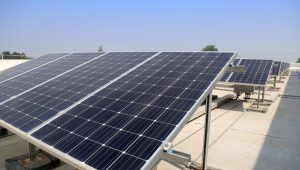
It urged faster commercial and industrial rooftop solar adoption through quicker net-metering clearances and stronger private sector support, given land and other limitations.
A significant and earmarked budget allocation for renewable infrastructure, backed by specific implementation steps, could help shift the country away from dependence on disruptive imported fuels.
The recommendations also included tax-free renewable energy equipment, easier access to cheap loans for renewable projects, and redirecting fossil fuel subsidies towards renewables to remove barriers facing new solar and wind installations.
While permanent energy resilience requires a radical shift towards renewables, immediate survival demands rapid diversification of the energy mix through multi-country contracts and bilateral arrangements to secure crude oil, refined fuel, and LNG from alternative sources.
The study also urged the government to build a strategic national reserve of crude oil, refined fuel, and LNG to prepare for future global supply chain disruptions and geopolitical shocks amid prolonged and frequent crises in the global energy sector.
As immediate demand-side steps, it recommended fuel rationing through a QR-code-based digital fuel pass, shifting industrial operations to off-peak hours, and reducing commercial operating hours so scarce fuel can be allocated to agriculture and export-oriented manufacturing.
In the medium term, it called for faster onshore and offshore domestic gas exploration to secure reliable baseload power generation and reduce dependence on the volatile LNG market.