Although showing some signs of recovery, the economy stands at a critical juncture as stubborn inflation, weak output growth and fragile investor confidence continue to undermine the outlook, the General Economic Division (GED) of the Planning Commission said in its new report.
According to the report “State of the Bangladesh Economy 2025” released on Monday, the economy began to stabilise in the last fiscal year as remittance inflows, steady exports and a gradual revival in manufacturing offered indications of a slow rebound.
However, persistent high inflation, subdued investment sentiment and limited foreign-exchange reserves continue to pose major challenges, it added.
The report prompted caution from business leaders and analysts, who said Bangladesh must address these vulnerabilities through coherent and credible reforms to sustain economic recovery.
They emphasised that rebuilding investor confidence is essential, requiring clearer policy direction, improved governance and stronger financial-sector stability.

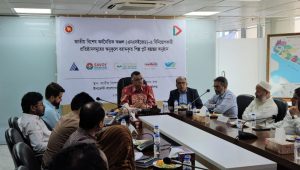
Speaking at the publication event, Zahid Hussain, former lead economist of the World Bank’s Dhaka office, said although Bangladesh has made progress to recover, it faces even greater challenges ahead.
Economists warn that without decisive action, the country risks slower growth, rising poverty and widening inequality. But with a coordinated policy push, they believe Bangladesh can build on recent stability and move towards more inclusive and sustainable growth in FY26.
According to the GED report, inflation has remained stuck between 8% and 9%, rising again after brief declines. With domestic prices still elevated despite falling global rates, rice continues to drive food inflation significantly.
Food price shocks, higher import costs due to a weaker taka and repeated supply disruptions have eroded real incomes, particularly for low-income and rural households.



“Persistent high inflation, driven by food price shocks and import-cost pressures, continues to erode real incomes for low-income and rural households.”
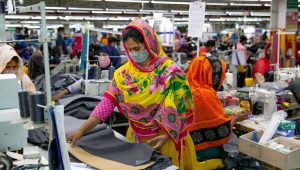
Experts at the event highlighted the need for inflation control, stronger regulation and targeted support for manufacturing. They noted that the manufacturing sector, including garments and SMEs, requires assistance to upgrade technology and diversify markets.
The report also stated that investment sentiment remains weak, with foreign direct investment critically low and expected to remain subdued in the coming months.
“Political uncertainty, subdued investment and sluggish industrial activity remain key constraints to economic recovery,” it said.
According to the report, limited reserves and weak revenue mobilisation are also restricting the government’s ability to plan and execute public investment.
“Revenue mobilisation remains insufficient, with fiscal space constrained by a widening shortfall at the National Board of Revenue,” the GED observed.
National Board of Revenue Chairman Abdur Rahman Khan warned that Bangladesh could face a debt trap, expressing frustration over the tax-to-GDP ratio slipping below 7%.
CPD distinguished fellow Mustafizur Rahman cautioned that interest payments have already become the second-largest fiscal expenditure, a trend he said could push the country into further borrowing simply to service existing debt.
A provisional estimate from the revenue authority showed a wider-than-expected shortfall against its target, worsened by a temporary administrative shutdown in June. Although collection later resumed, the episode exposed deeper structural weaknesses in fiscal management.
GED said demographic pressures and skill shortages remain long-term risks.
“A large and growing labour force, coupled with inadequate human-capital investment, threatens to increase joblessness and inequality,” it said.
GED stressed that Bangladesh must prioritise keeping inflation under control through targeted policies and effective market oversight, adding that the next one to two years will be decisive, requiring reforms that are rapid, credible and clearly communicated.