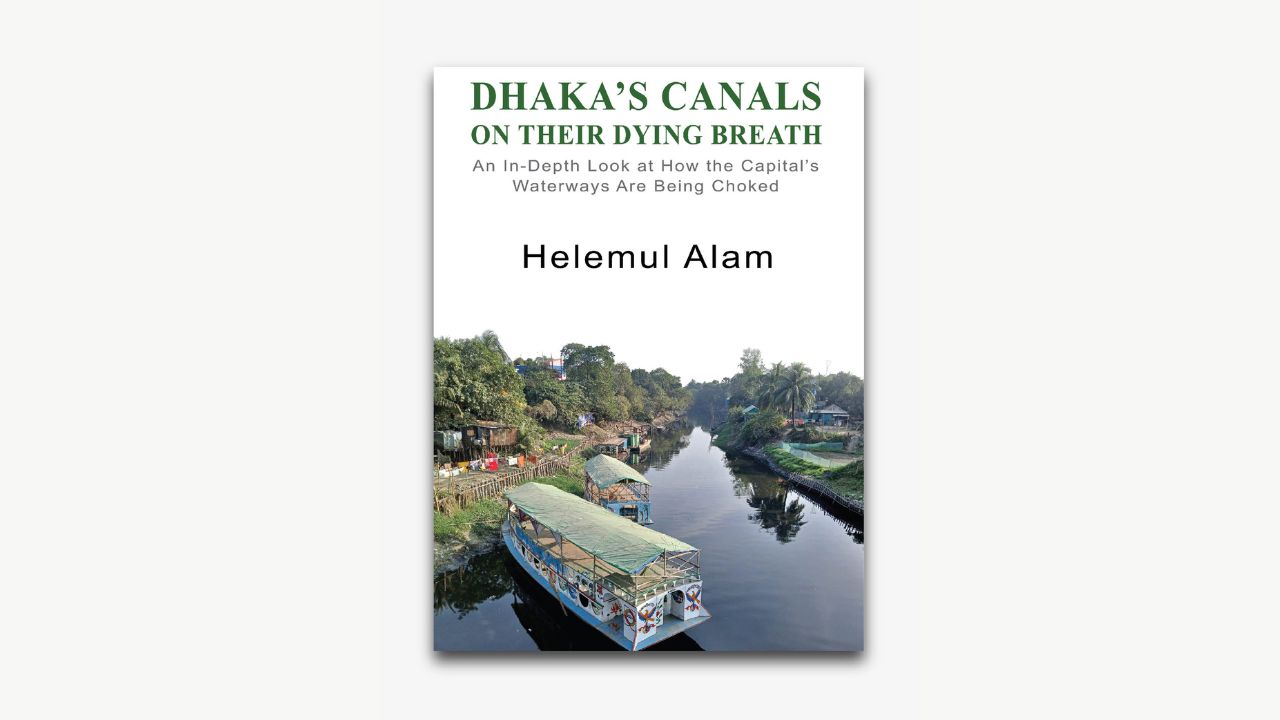

When recently Helemul Alam signed me a hardback, glossy version of his 221-page book titled “Dhaka’s Canals On Their Dying Breath” I was quite delighted. Not because the cover looked great, but I instantly knew Helemul’s book was a result of sheer hard work and a long, arduous investigation over an area of over 300 square kilometers.
I knew Helemul during my reporting years with The Daily Star, and now the young man has painstakingly compiled a book on city’s beautiful natural canals in existential deathbed. Our capital city Dhaka had been naturally adorned with these canals but we haplessly failed to protect them from extinction.
The book not only explores the current miserable states of these canals but also talks to people who had lived along these waterways for generations. People who witnessed their beloved lifelines destroyed by pollution, encroachments and negligence of the authorities concerned.

Helemul’s book explores why these canals lie in this state today and what we could do to restore their lost glory. In the way our district townships are growing, often brushing aside a proper scientific planning, we should be warned of massive and almost irreversible waterlogging problems in the near future.




The book should be a handy reference guide for Town Planners, developers, Landscape Architects and anyone studying our urban history. It should be displayed in all the 71 public libraries around the country and made easily available to anyone hunting for information on urban growth.
As I look back 30 years from today to think about Dhaka, I can visualise how a massive tsunami of urbanisation was unleashed by a phenomenally growing numbers of rural and urban masses almost wiping out our chances of an ethical living.
But those days the city’s peripheral areas, minutes’ drive from any part of the city in any direction, you could find a river flowing with a vast network of natural canals crisscrossing the landscapes.
The most remarkable thing was every canal was navigable and each erupted with life and its purposes. Women washing utensils, children diving into the water from a nearby hijol tree, farmers bathing their cattle, some casting fishing nets while some rowing boats to a destination.