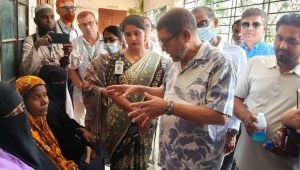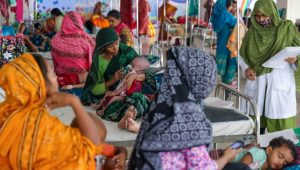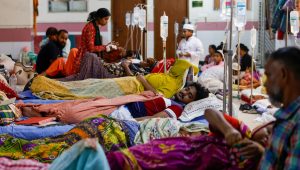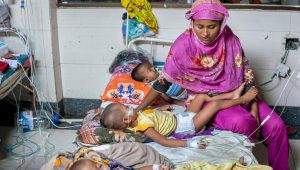



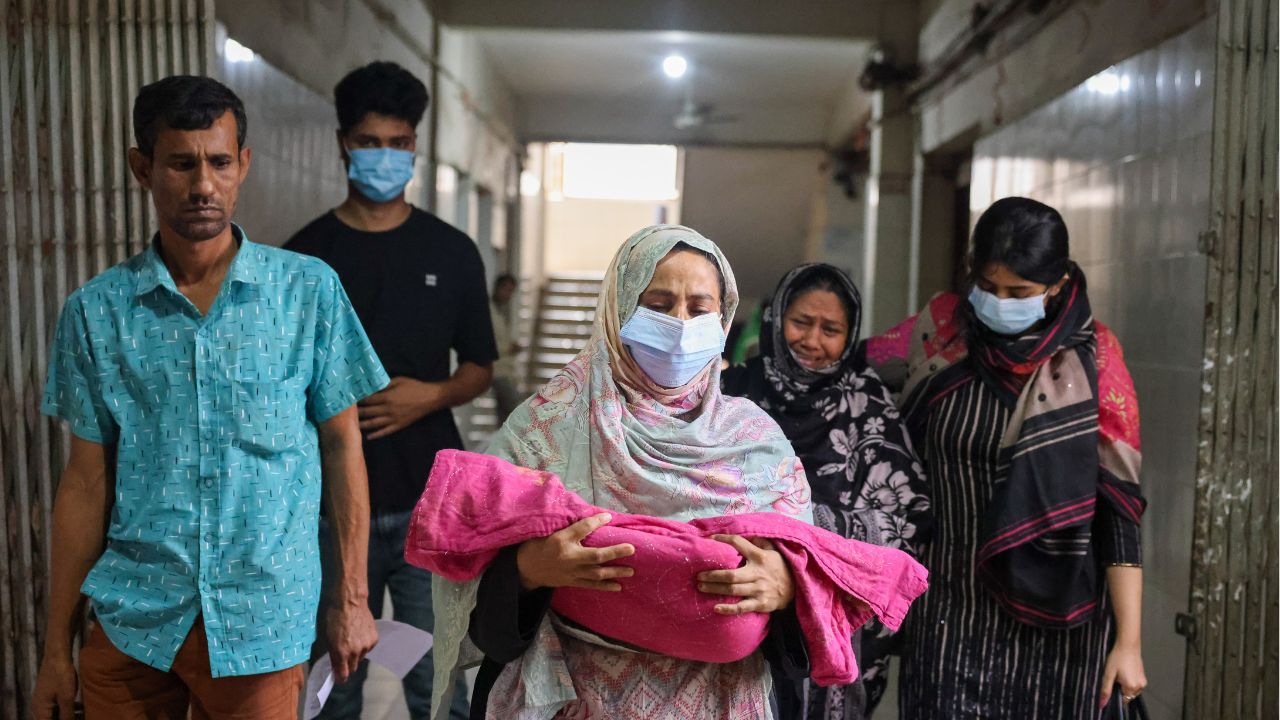
The emergency entrance of Sir Salimullah Medical College and Hospital (Mitford) was packed with stretchers rolling in and out on Saturday. Attendants stood in cramped corners as the air filled with the sounds of coughing and anxious voices. Many patients looked pale, struggling amid the noise and chaos.
On the sixth floor of Building 2, the medicine ward – where many dengue patients are admitted – mirrored the same scene of overcrowding and distress.
Beds were placed so tightly that it was difficult to move between them. Some patients lay on the floor or huddled in corners, while the bed sheets showed signs of repeated use, stained with medicine and food.
In one corner, 55-year-old Josna sat beside her husband, Sanauallah, 60. He had a tumour removed just days earlier and was now battling dengue as his platelet count continued to fall.
“Seven bags of blood have been given so far. We have already spent over Tk35,000,” she told TIMES of Bangladesh.
She said when she asked for a clean bedsheet, hospital staff told her to bring one from home.
The hospital has been overwhelmed with dengue patients in recent months, as the mosquito-borne disease has taken a deadly turn this year.

A severe shortage of beds and manpower, along with the absence of a dedicated dengue ward, has left the authorities struggling to cope with the rising number of patients.
The situation in most hospitals in the city is the same.
Health experts have warned that Bangladesh is on the brink of a public health emergency. The dengue outbreak intensified sharply in October due to persistent rainfall, and they fear the situation could worsen further through November.
The recent pattern of dengue transmission underscores growing concern. According to the Directorate General of Health Services (DGHS), 15,866 new cases were recorded in September and 19,081 in October. In just the first two days of November, another 1,162 cases have already been reported.

In the past 24 hours, 1,162 new dengue infections and five deaths were reported across the country, bringing the total number of cases this year to over 127,000.
According to the Health Emergency Operation Centre and Control Room, 283 people have died from dengue so far in 2025, with 32 fatalities recorded in October alone.
Acknowledging that hospitals were unprepared, Mohammad Sehab Uddin, director of Shaheed Suhrawardy Medical College Hospital, told TIMES, “This is not the usual dengue season. The surge was unexpected, and hospitals lacked readiness.”
“Corridors and verandas are now being used as temporary wards,” he added.
Doctors at Mitford Hospital admitted that managing the situation has become increasingly difficult with limited resources.
“Hospitals from other districts are referring most of the critical patients to Dhaka. We have to admit them despite a severe shortage of beds,” said HM Ishraque, an intern doctor at the hospital.
He also warned of the risk of cross-infection, as dengue patients share space with others in overcrowded wards. “We need a separate ward for dengue patients to ensure safety,” he added.
At Dhaka Medical College Hospital (DMCH), the situation was no different. Rain had left the corridors damp, and the smell of saline and disinfectant hung heavily in the air.
According to DGHS, DMCH has recorded 2,705 dengue cases from January to November, with around 150 patients currently admitted.
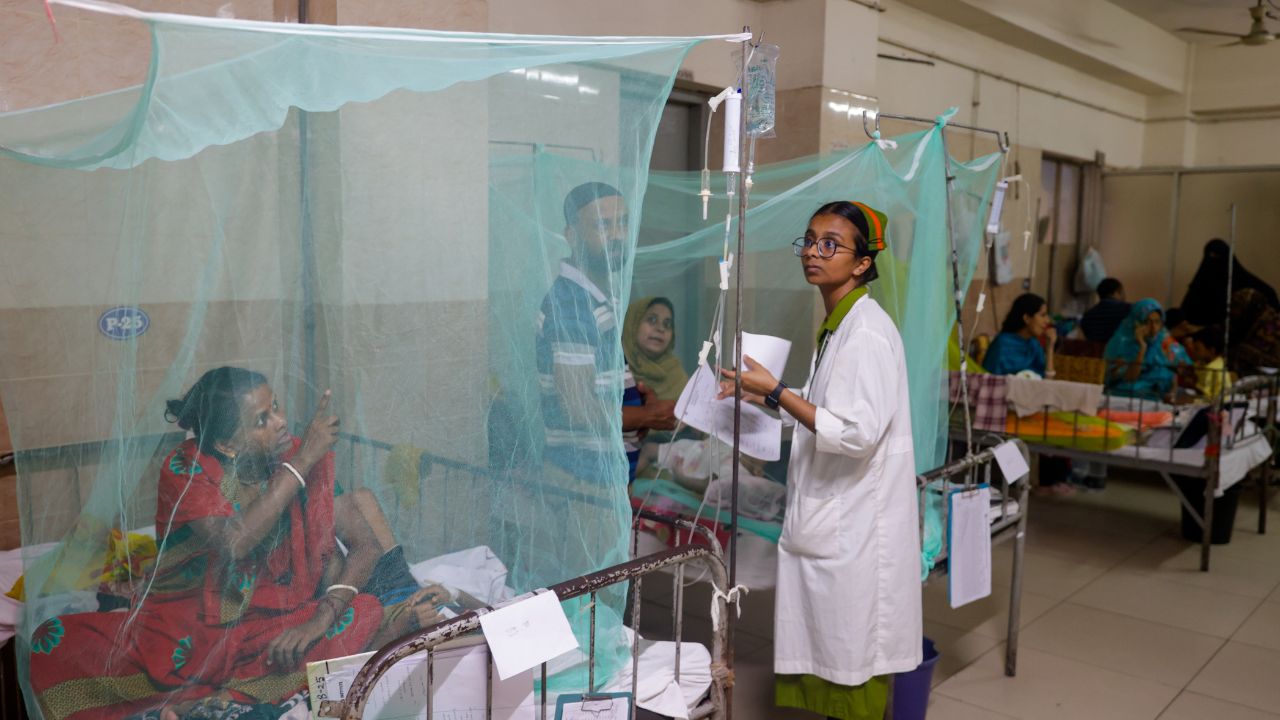
Entry to the dengue ward was restricted, allowed only with prior permission. Inside, the unit appeared well managed – beds neatly arranged, mosquito nets securely fixed, and nurses moving swiftly between patients. Two beds even remained vacant.
However, with only about 25 beds in the official dengue ward, many patients had to be transferred to other overcrowded sections. There, dengue patients were seen lying on the floor while attendants held saline bottles by hand, and record-keeping remained incomplete.
“The designated dengue unit admits only a handful of cases. The rest are kept upstairs,” said a hospital staff member.
There have been widespread allegations that the city corporations failed to take adequate measures to control the dengue outbreak despite repeated warnings.
Officials of the Dhaka South City Corporation, however, claimed that their operations were continuing “efficiently and systematically,” with enhanced field activities and extended work shifts.
Parveen Ahmed, additional chief health officer of the Dhaka South City Corporation, said regular household visits, data verification, and weekly cleaning drives were being carried out to contain the spread of the disease.
On Sunday, Dhaka North City Corporation (DNCC) administrator Mohammad Azaz said, “According to international standards, 2.3 workers are required per thousand residents to ensure public health protection, but we have only one worker for every 11,000 people – which is grossly inadequate compared to the need.”