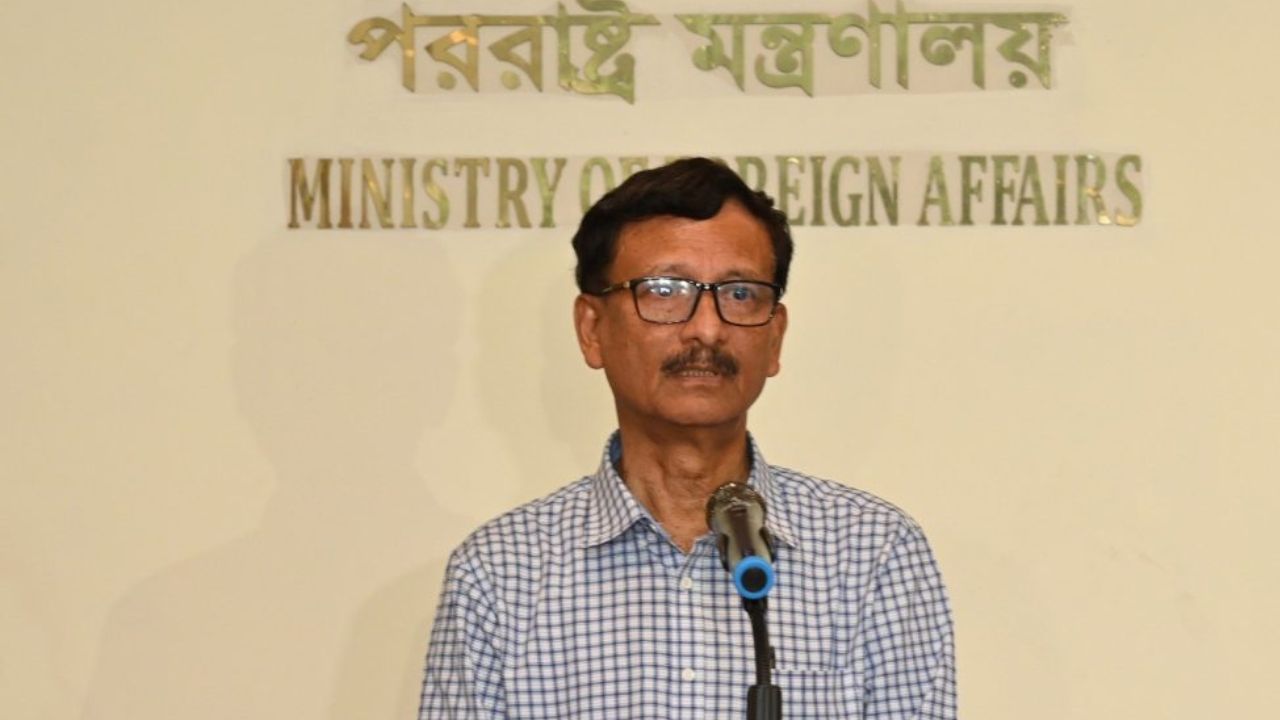

Bangladesh’s diplomatic relations with India experienced a series of challenges and “setbacks” over the past 18 months, leaving the bilateral relationship largely stagnant, Foreign Affairs Adviser Md Touhid Hossain said at his farewell press conference.
He acknowledged that ties between Dhaka and Delhi had not been “smooth” during the tenure of the interim government, citing multiple difficulties that slowed progress in bilateral engagement. Despite these obstacles, the adviser expressed hope that the next elected government would be able to rebuild momentum and establish a more stable and constructive relationship, even though differences of interest between the two neighbours would inevitably remain.
“Maintaining a good working relationship with India is essential for Bangladesh,” he said, adding that he remains optimistic a way forward will eventually be found to address the complex and sensitive issues affecting ties between the two countries.
Hasina’s presence in India
The adviser noted that the continued presence of ousted prime minister Sheikh Hasina in India has complicated official communication between the two governments and contributed significantly to the current strain in relations.

According to him, a major point of contention arose when Indian authorities allowed the former prime minister to make public statements from Indian soil. The interim administration viewed this development as a serious “setback” in diplomatic engagement.
Although Dhaka formally requested Hasina’s return through official channels, the adviser confirmed that Bangladesh has yet to receive any written response from the Indian government.



When asked about India’s broader stance on the matter, he declined to speculate, describing the notion of a country’s “attitude” as an abstract concept and noting that, officially, Bangladesh’s request remains unanswered.
Election ahead
With the national election just a week away, Touhid Hossain acknowledged that some observers continue to question whether the vote will proceed as scheduled. However, he said there is no reason to believe the election will be delayed.
He explained that the interim administration will continue to function in a caretaker capacity for a few more days until a new government is formed following the election.
The adviser also noted that while “perfect” elections are rare anywhere in the world, his benchmark for success is whether the outcome genuinely reflects the will of the people. He expressed confidence that voters will be able to go to polling stations and cast their ballots freely.
Regarding the participation of the Awami League, he said some foreign diplomats and Western representatives had inquired about the party’s involvement in the interest of ensuring an inclusive election. However, he stressed that there had been no external pressure to include the party, adding that the Awami League is not taking part due to the prevailing political circumstances.
Interim government’s role
Touhid Hossain described the current administration as a temporary arrangement by definition, tasked with steering the country through a transitional period. He expressed hope that the incoming government would build on the positive reforms introduced over the past 18 months—particularly the expansion of space for media criticism—while addressing areas where the interim administration may have fallen short.
Despite the diplomatic and political challenges faced during the transition, the adviser said he remains hopeful that the next government will be able to stabilise foreign relations, strengthen democratic institutions and move the country forward.