State-run Bangladesh Gas Fields Company Limited has begun deep drilling at the Titas field in Brahmanbaria to explore gas at greater depths and ease the country’s supply shortfall.
The company aims to drill down to about 5,600 metres, or 18,372 feet, marking the deepest exploration attempt in the country so far.
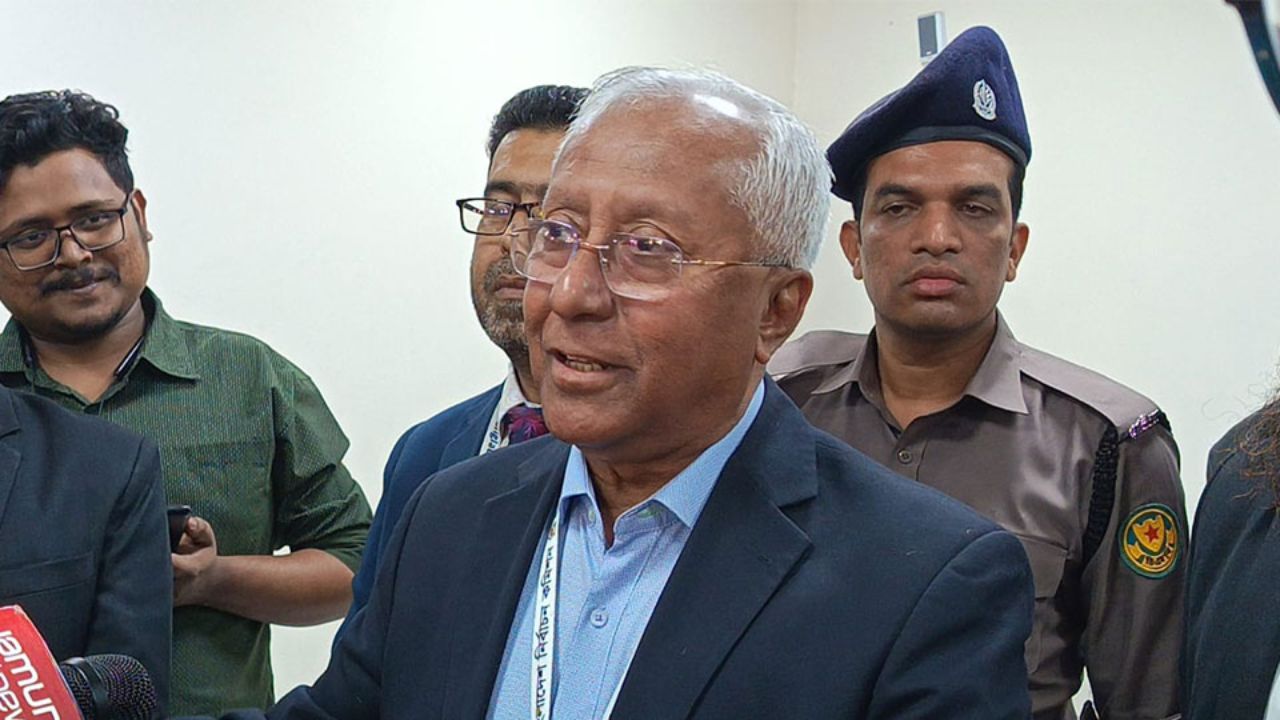
“Gas resources are often found at deeper levels, closer to the source rock. Once drilling reaches 5,600 metres, it will be considered a deep well,” said Bangladesh Gas Fields Company Limited Managing Director Abdul Jalil Pramanik while speaking at the site.
He said a modern rig with 2,682 horsepower has been deployed to explore the Borail layer, where new reserves may exist.
The country has previously drilled wells up to around 4,900 metres. “This time, we are trying to go beyond that limit,” he added.

Energy and Power Research Council Chairman Azizur Rahman Ripon, Executive Director Shirajul Islam, Vice Chairman Hasan Azad, and other officials visited the Titas-31 deep well site.
The managing director said another well will be drilled in Bakhrabad using the same Chinese rig after the current project.
The total cost of drilling the two deep wells has been estimated at Tk594 crore. “If everything goes well, the two wells could yield around 2 trillion cubic feet of gas, though this will be confirmed after completion,” he said.



Bangladesh currently faces a gas demand of around 3,800 million cubic feet per day, while supply stands at 2,600 to 2,700 million cubic feet per day.
To bridge the gap, around 1,000 million cubic feet per day of liquefied natural gas is being imported.
The drilling of the Titas-31 well began on 19 April and is expected to take 210 days. About 22 per cent of the work has been completed so far.
The Bakhrabad well is expected to require around 180 days for completion.
Officials said gas-bearing zones in the Titas field exist at four underground levels, with the first layer at a depth of 3,736 to 3,765 metres and the deepest between 5,315 and 5,344 metres.
The managing director said that once drilling passes 3,750 metres, it will enter a high-pressure zone.
“If the pressure is not managed properly, the entire drilling process could be disrupted. To prevent this, a blow-out preventer with a capacity of 15,000 PSI is being used,” he said.
He added that previous operations used systems with a capacity of up to 10,000 PSI, but this project has adopted higher safety standards.
The drilling is being carried out by China National Oilfield Services Company Drilling, as such high-capacity rigs are not available locally.
The Chinese firm has experience in drilling wells up to 10,000 metres, raising hopes of discovering new energy reserves beneath the Titas field.