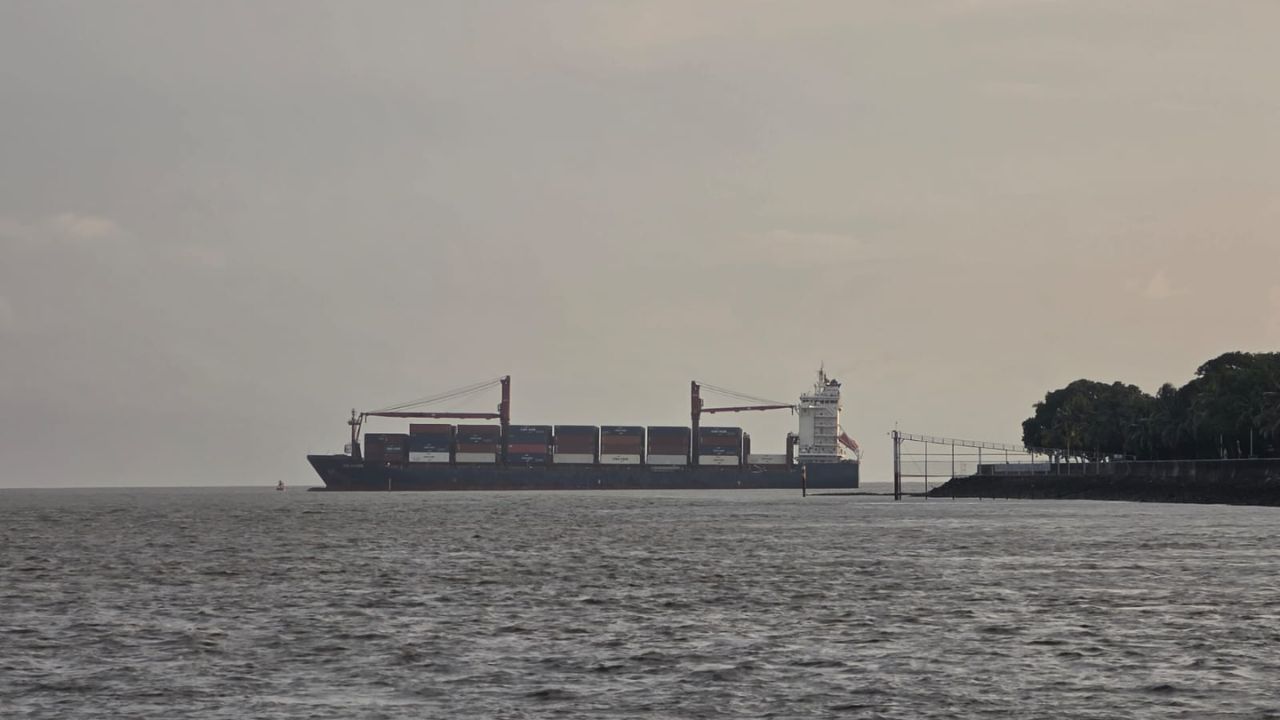



A China-bound container vessel ran aground after suffering a steering failure while entering the Karnaphuli River estuary at Chattogram Port on Monday afternoon, temporarily disrupting the movement of lighter vessels along the port channel.
The vessel, MV CNC URANUS, became stranded on a rocky retaining wall near the river mouth after losing steering control. Port authorities immediately launched a salvage operation, deploying tugboats to free the vessel.
Chattogram Port Authority (CPA) spokesperson Syed Refayet Hamim said the incident occurred at around 2:15 pm when the container ship experienced a technical steering failure while navigating the channel.
“As a result, the vessel came into contact with Red Buoy No. 2 and subsequently grounded on the retaining wall,” he said.

He added that tugboats Kandari-4 and Kandari-11 were deployed to assist in the rescue operation. The Bangladesh Navy, Bangladesh Coast Guard and other relevant maritime authorities are working in coordination with the CPA to secure the vessel and ensure the safety of navigation.
“No casualties have been reported. The navigation channel remains safe and open,” the CPA spokesperson said.
According to the vessel-tracking website MarineTraffic, the MV CNC URANUS departed Shenzhen Port in China on July 25 and arrived at Chittagong Port on 3 August.


Abu Sufian, a crew member of a lighter vessel operating near the scene, said the ship was entering Chittagong Port when the accident occurred.
He claimed the vessel’s captain apparently misjudged the buoyage system while approaching the channel. Under the International Association of Marine Aids to Navigation (IALA) Region A system, followed in Bangladesh, inbound vessels are required to keep the red buoy to their port (left) side.
However, the captain allegedly attempted to pass the buoy on the starboard (right) side, apparently following the Region B practice, causing the vessel to run onto the stone embankment near the estuary.
He said, the grounding has affected the movement of lighter vessels engaged in unloading imported petroleum and other cargoes from mother vessels anchored offshore.