When the first volleys of American and Israeli munitions struck Iranian soil in late February, the leadership in Beijing faced a daunting prospect – the potential collapse of a friendly administration, closely following the political upheaval in Venezuela just weeks prior.
However, as the conflict reaches a tentative pause nearly four months later, the geopolitical landscape appears significantly altered in China’s favour, according to a CNN analysis by Simone McCarthy.
An interim agreement between Washington and Tehran has been established, the Iranian regime remains intact, and the broader perception is that the war has effectively highlighted the constraints of American hegemony.
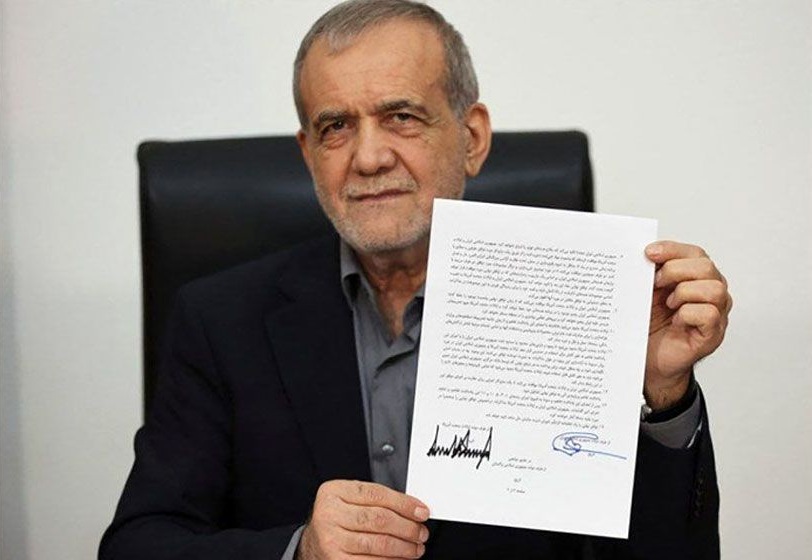
Throughout this period, Beijing has seen its diplomatic influence expand, positioning itself as a steadfast advocate for peace while hosting an array of international dignitaries.
Even US President Donald Trump has offered repeated commendations for China’s conduct during the crisis.
The world’s second-largest economy has demonstrated remarkable resilience against the energy shocks caused by the war, a feat attributed to its substantial strategic petroleum reserves and its aggressive transition towards green energy and electric vehicles.
Diplomacy of ‘calibrated neutrality’
China’s approach to the conflict was a masterclass in diplomatic balancing.

While Beijing condemned the initial strikes and continued its procurement of Iranian oil in open defiance of US sanctions, it simultaneously maintained robust communication channels with all relevant stakeholders.
This “neutral” stance earned unexpected praise from President Trump during a G7 press conference in Evian-les-Bains, France.
Trump specifically thanked President Xi Jinping for not deploying Chinese naval power to challenge the US blockade of Iranian ports, suggesting that Xi’s restrained involvement was instrumental in reaching the current memorandum of understanding.

The Chinese Foreign Ministry has expressed its readiness to facilitate “peace and tranquillity” in the Middle East following the recent deal.



While Ministry spokesperson Lin Jian did not confirm a direct role in the negotiations, he highlighted Beijing’s “tireless” diplomatic efforts, specifically pointing to President Xi’s four-point peace proposal unveiled in April.
This diplomatic activity was underscored by a series of high-level visits to Beijing, including meetings with the Iranian Foreign Minister Abbas Araghchi, Pakistani mediators, and even President Trump himself.
A ‘Suez moment’ for the United States?
As the 60-day period for negotiating final terms begins, political analysts in China are debating whether this conflict represents a “Suez moment” for the United States.
This historical parallel refers to the 1956 crisis that marked the end of Britain’s status as a pre-eminent global power.
Sun Degang, director of Fudan University’s Centre for Middle Eastern Studies, argued in the Global Times that the Strait of Hormuz might be playing a similar role for the US today.
Sun noted that US military power did not appear as “overwhelmingly powerful” as expected, and the lack of support from traditional allies suggests a deepening fracture within the US-led global alliance system.
This sentiment is echoed by other influential voices who believe China has emerged as the primary beneficiary of Washington’s entanglement.
Political commentator Hu Xijin remarked that the war has validated China’s “strategic planning” regarding energy security and its peaceful development model. More critically, Hu suggested that the conflict has “significantly diminished” US deterrence regarding Taiwan.

By exposing the limitations of US munitions stockpiles and its difficulty in assembling a broad Western coalition against a singular adversary like Iran, the war has raised questions about Washington’s ability to mobilise allies for American interests in Asia.
Limits of a new superpower
Despite the perceived decline of US dominance, Beijing remains cautious about assuming the mantle of a global security guarantor.
While Tehran was reportedly keen for China to act as a formal guarantor in the peace process, Beijing showed little appetite for such a complex and potentially fraught role.
China’s top diplomat, Wang Yi, recently emphasised that the “dawn of peace” depends on all parties fulfilling their commitments and resisting external interference, particularly regarding the security of the Strait of Hormuz.
Observers note that while China promotes a “multipolar world” and challenges the US-dominated security architecture, it does not necessarily wish to replicate the American superpower model.

Sun Chenghao of Tsinghua University’s Centre for International Security and Strategy pointed out that while US dominance now requires “far greater political, military, economic and reputational costs,” it remains the most powerful external force in the Middle East.
The ultimate success of China’s vision – centred on sovereignty, non-interference, and development-oriented security – will depend on more than just critiques of American foreign policy.
As the dust settles on the Iran war, the world will be watching to see if Beijing can provide the practical diplomatic solutions and energy stability it promises, or if its role will remain that of a cautious power broker avoiding the heavy costs of global leadership.