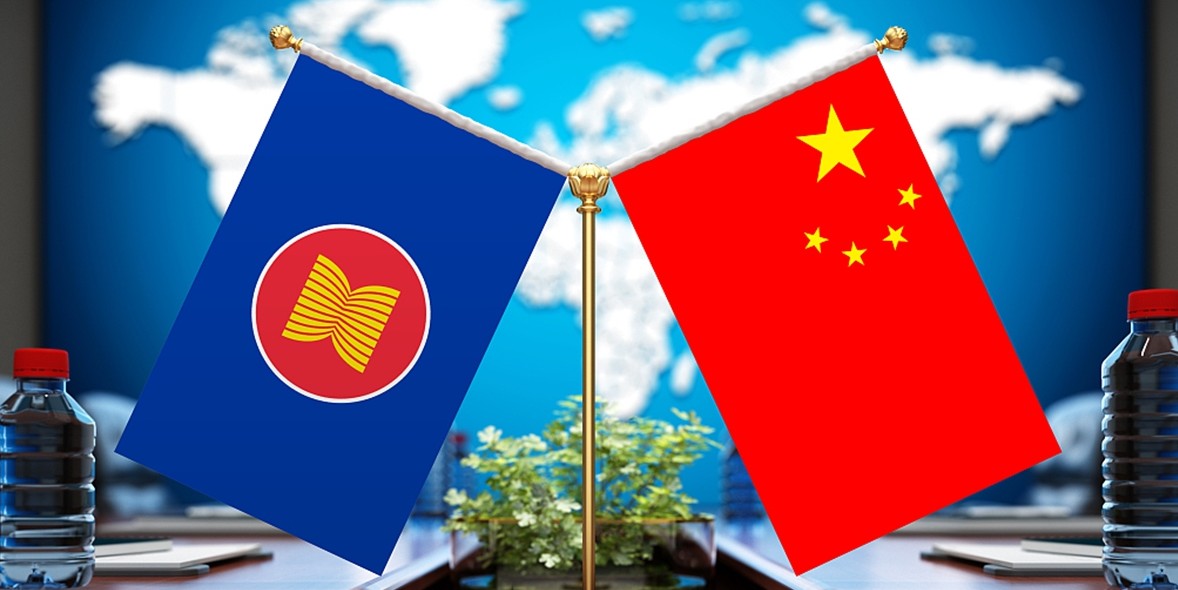



The relationship between China and the Association of Southeast Asian Nations (ASEAN) has never been disrupted by geopolitical issues, supply chain problems, or current unilateralism. This cooperation between China and ASEAN has not only proven successful in the region but also has been a pillar of stability for the entire Indo-Pacific and beyond amid the most radical changes in the world order in decades.
International relations have been a zero-sum game between major powers for years. However, not like in Southeast Asia. The China-ASEAN relationship is in no way a Cold War-style, nor is it a today’s new great-power competition style, where both sides are facing off in one bloc or another. When the world needs it the most, this is a hope of an alternative.
Numbers tell just half the picture. China has been the leader in trade with ASEAN for years, and bilateral trade has increased by 18.5 percent to 2.74 trillion yuan in the first half of 2026. In Guangdong, two-way trade with the ASEAN countries in 2025 hit a new record of 1.53 trillion yuan, and the trade volume grew by 13.3 percent in the first half of this year. These are not numbers, they are people. They are factories rumbling away on Java, ports blossoming in Guangzhou, digital platforms connecting small businesses in Chiang Mai with those in Chengdu, and millions of jobs being created across the South China Sea.

What is unique about this partnership, though, is how it went from a trade-based partnership to a more integrated, mutually beneficial one. The recently concluded negotiations on the China-ASEAN FTA 3.0 pave the way for a new phase of economic integration, including the digital, green, and supply chain resilience economies. In a time when many countries have tightened their borders and adopted protectionism, China and ASEAN are moving towards eliminating obstacles and further integration between countries, as well as establishing a regional economic architecture that will make supply chains more open, dynamic, and inclusive.
But numerous critics have noted that closer ties with China will result in the disintegration of ASEAN’s centrality. The actual situation on the ground is different, however. Cooperation with Beijing has not undermined ASEAN unity but has enhanced ASEAN’s centrality and role in regional affairs. It has provided Southeast Asian countries with the space and opportunity to go their own way, not be trapped between the wars of the great powers. Consensus-building, non-interference, and quiet diplomacy, which have been the hallmark of the ASEAN Way, are a natural complement to the longstanding ASEAN commitment to the Treaty of Amity and Cooperation of the Southeast Asian countries, to the same principles.




Both sides have shown tremendous maturity on all sensitive issues. The third reading of the Code of Conduct in the South China Sea demonstrates that conflicts can be resolved without escalating to a confrontational level. There have been and will be differences, but there will always be more interest in peace and freedom of navigation and cooperation in the maritime world than in confrontation. This is a huge feat in an area that is just ripe for broader unrest amid maritime tensions.
The relationship between China and ASEAN is possibly the least well-known model for the Global South. Over the past few decades, developing countries were instructed to follow one Western-dominated model for modernisation. Today, China and ASEAN are providing another example of how there is a different way to go, one founded on respect for national sovereignty and one based on mutual benefit for poverty alleviation, and one that is giving tangible development results and no conditionality. The fruits of this cooperation can be witnessed in the high-speed train linking the various regions of Southeast Asia’s peninsula, e-commerce platforms linking rural artisans to the international market, and much more.
It is a timely reminder that order need not be imposed by a single hegemon but can be achieved through a partnership between China and ASEAN as a whole, as the world faces fragmentation. It is possible to emerge from mutual goodwill and common interests as a volunteer association. It may be diverse rather than uniform, it may be inclusive rather than exclusive.
China and ASEAN are not spectators amid a changing global order. They are involved in creating a more stable, equitable, and prosperous future for the region. This relationship reflects the reality that, even in this period of unrest, cooperation is possible and is the best means of achieving enduring peace and joint progress for all countries.
The writer is a Professor, Department of International Relations, University of Chittagong, Bangladesh. Director, Hong Kong Research Centre for Asian Studies-Bangladesh Centre (RCASBC). Email: [email protected]