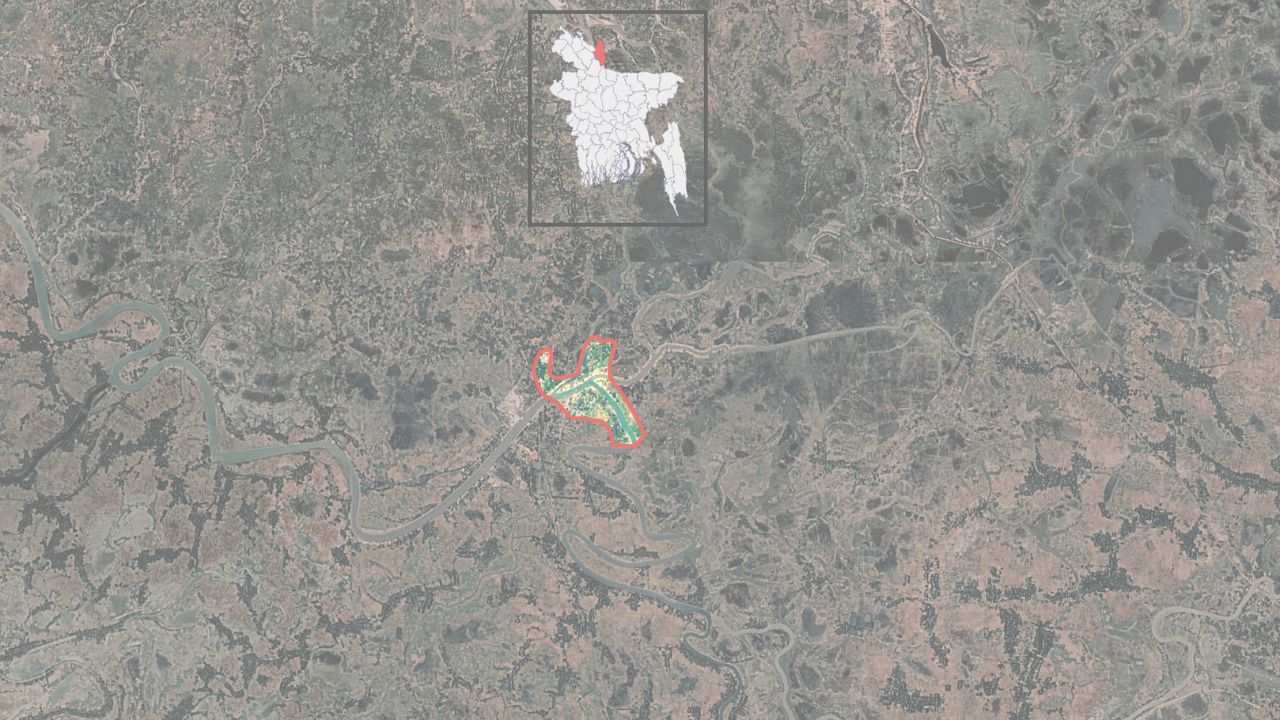

Burning limestone to produce lime may sound like a routine industrial activity. In reality, it has emerged as a serious threat to the environment and public health in Sunamganj’s Chhatak upazila, where unregulated lime kilns are rapidly spreading.
The process releases large amounts of carbon dioxide into the air, damaging crops and vegetation. Children and elderly residents are increasingly suffering from breathing difficulties and chronic respiratory illnesses. The danger intensifies when trees are indiscriminately cut down and used as fuel, an environmental cost that is difficult to quantify, yet impossible to ignore.
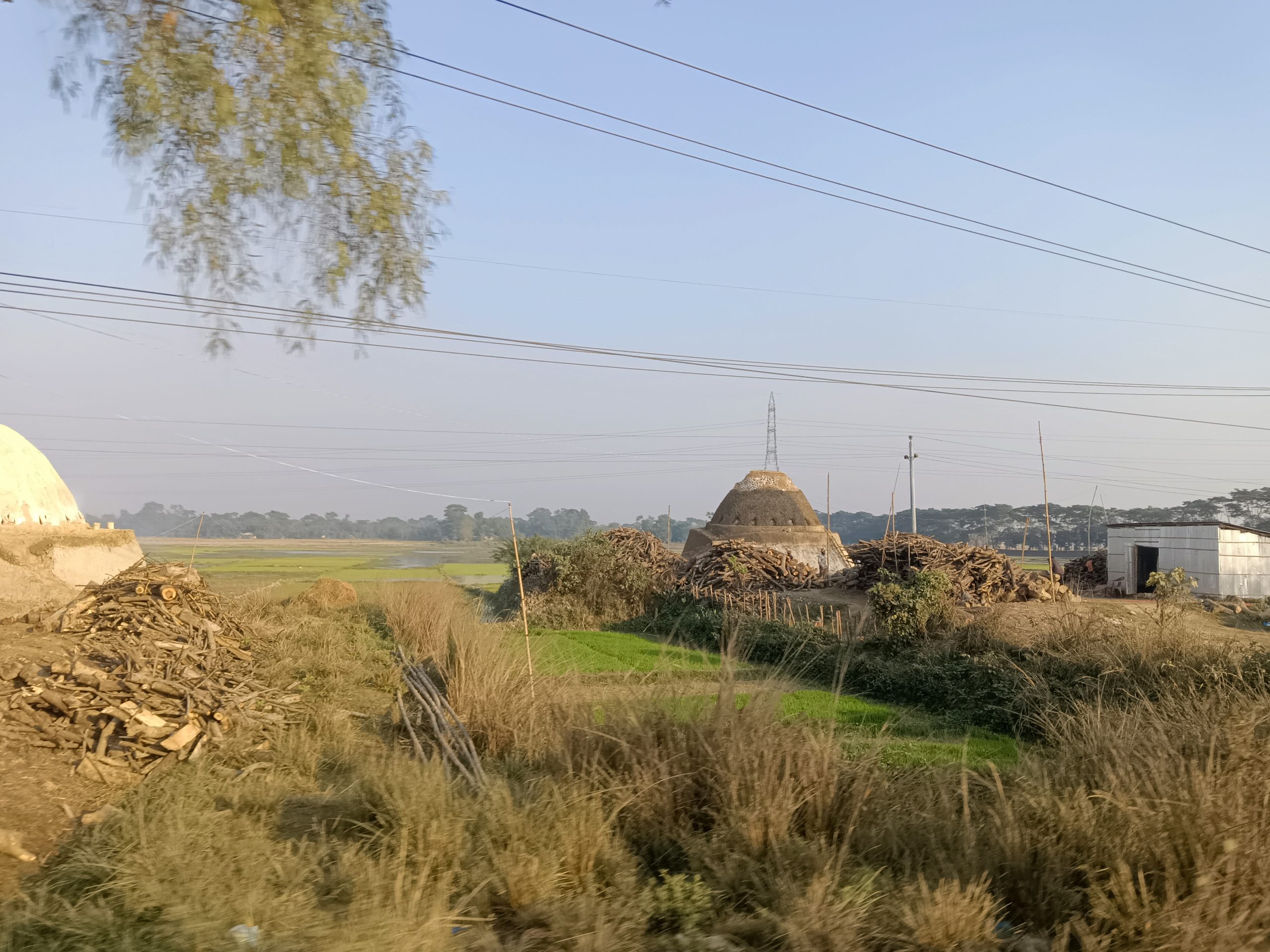
More than a hundred such environmentally destructive lime kilns are now operating openly across Chhatak. Locally known as “chun paja”, these kilns have mushroomed without following environmental or safety regulations. They stand along highways, inside rural neighbourhoods and alarmingly close to educational institutions.
Environmental experts warn that the area has effectively turned into an undeclared industrial hub and a pollution hotspot. Smoke and fly ash released from these unscientific furnaces spread toxic substances into the air, creating severe health risks for nearby communities. In the long run, this unchecked pollution threatens the region’s ecological balance.

Lime producers, however, claim they operate with clearances from the local administration and the Department of Environment (DoE). Authorities deny these claims, insisting that no such permissions have been granted and promising action against illegal kilns.
According to local sources, just a year ago, Chhatak had around 18 to 20 lime kilns. That number has now surged to between 70 and 80. Once hidden from public view, the kilns are now boldly placed along main roads. Several are located dangerously close to schools. Officials confirm that none have environmental clearance from the DoE or approval from the Fire Service. Monitoring by the local administration remains minimal.

The environmental damage goes beyond air pollution. Trees of various species are being cut down indiscriminately to fuel the high-temperature furnaces. Piles of tree trunks and branches lie stacked beside the kilns. As a result, the region’s green cover is rapidly disappearing, pushing the local ecosystem toward collapse.




Experts say sulphur-laden smoke and fine white lime dust from the kilns settle on nearby farmland. Over time, soil quality deteriorates, fertility declines, and agricultural land becomes unsuitable for cultivation. Health risks are equally alarming; prolonged exposure to smoke and dust increases the likelihood of asthma, respiratory distress, and chronic lung disease. Children and the elderly remain the most vulnerable.
Local residents allege that influential political figures control the illegal kilns. Under their leadership, people from different backgrounds have joined the trade, forming a powerful syndicate. As a result, even local authorities appear reluctant to intervene.
The Chhatak Upazila administration denies granting any approvals. Upazila Nirbahi Officer (UNO) Diplomacy Chakma told Times of Bangladesh that discussions have already been held with the Department of Environment and that eviction drives against illegal kilns will begin soon.


“I have not approved any lime kilns,” the UNO said, adding that she is investigating whether any permissions were issued previously.
Fear grips local communities. Several residents, speaking on condition of anonymity, said they are too afraid to protest. Anyone who speaks out faces threats to life and livelihood. Thousands are forced to live amid toxic smoke with little protection.

To keep the business running smoothly, traders have reportedly formed a Paju Committee. Former Chhatak municipality councillor Salek Mia claimed that he and 12-13 members possess trade licenses, environmental clearance, and fire service approval, though he admitted many kiln owners do not. He said rising costs of limestone and firewood, coupled with falling lime prices, have pushed the business into crisis.
Dr Anowarul Islam, associate professor at Shahjalal University of Science and Technology, warned that Chhatak has become a pollution hotspot due to administrative negligence. He urged authorities to regulate the sector and transform it into a planned small or medium industry to protect both public health and the environment.
Sunamganj Deputy Commissioner Mohammad Elias Mia said the kilns have no approval, and legal action is underway.
For now, however, smoke continues to rise over Chhatak quietly choking its air, soil, and people while accountability remains dangerously slow.