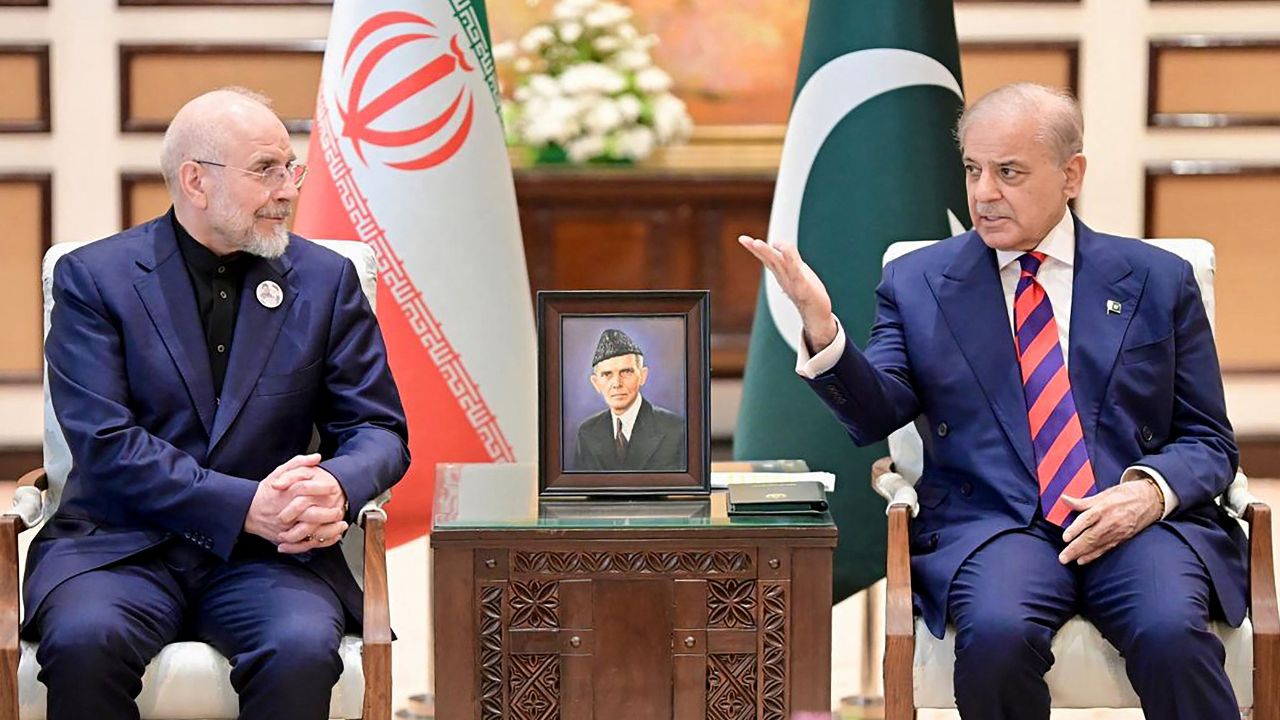



Pakistani Prime Minister Shehbaz Sharif sat before a wooden‑panelled bookshelf and signed a memorandum of understanding (MoU) between the United States and Iran on 17 June.
The document, hailed as a pathway to long‑term peace, extended their fragile ceasefire and marked the high point of weeks of frenzied diplomacy led by Islamabad.
Less than a month later, that effort appears in tatters. Pakistan’s Ministry of Foreign Affairs has issued two statements in recent days expressing “deep concern” over renewed hostilities, even as the MoU it helped broker lies in shreds, Al Jazeera reports.
On Monday morning, the US launched fresh strikes on Iran. Tehran responded with missiles and drones targeting Gulf and Arab nations it accused of hosting US bases.
Hours later, Iranian Foreign Ministry spokesman Esmaeil Baghaei said mediators including Pakistan, Qatar and Oman remained engaged, but warned Iran would continue retaliating against what it sees as US violations of the June agreement.
So far, those mediation efforts have failed to slow the fighting. On Sunday, Deputy Prime Minister and Foreign Minister Ishaq Dar spoke by phone with Iranian counterpart Abbas Araghchi, stressing that dialogue remained “the only viable path.”

Pakistan PM Sharif also warned Iranian President Masoud Pezeshkian that “hard‑earned” peace gains were at risk, while Dar separately called Saudi Foreign Minister Prince Faisal bin Farhan Al Saud.
Analysts say the question now is whether Pakistan or any other mediator can bring Washington and Tehran back to the table amid deepening distrust.
Repeated breakdowns
The latest escalation marks at least the third collapse since the 8 April ceasefire. Days after that truce, Islamabad‑hosted talks broke down, prompting a US naval blockade in the Strait of Hormuz and tit‑for‑tat attacks on shipping.
After the 17 June MoU, Iran again struck vessels it claimed were passing without permission, sparking renewed confrontation. Last week’s tanker attacks pushed tensions higher still.




Iranian authorities say US strikes have since hit 10 provinces, killing a soldier, fishermen in Hormozgan, and a firefighter in Sistan and Baluchestan. A railway bridge linking Iran with Central Asia and China was damaged, as was a bridge near Mashhad used by mourners travelling to Ayatollah Ali Khamenei’s funeral.
Qatar, a fellow mediator, was also drawn in when Iranian missiles and drones hit the Gulf state, injuring three people.
Iran’s foreign ministry accuses Washington of violating “nearly all parts” of the June deal within 25 days. Baghaei said Iran had “acted in good faith” but would continue to respond in kind when the US failed to meet its obligations.
Pakistan’s limited leverage
Since the war began on February 28, Islamabad has played mediator, hosting April talks that brought US and Iranian officials together for the first time in four decades. Its army chief and interior minister have visited Tehran repeatedly, and Pakistan helped secure a Chinese‑backed peace framework in March.
In June, Sharif joined Pezeshkian and US President Donald Trump in signing the MoU, later discussed at the Burgenstock summit in Switzerland.
But analysts argue Pakistan lacks enforcement tools. Javad Heiran‑Nia of Tehran’s Center for Scientific Research said the MoU was tactical, not substantive, deferring key disputes. Iran views control of the Strait of Hormuz as a strategic asset, he noted, and is prepared to risk war to preserve it.
Dania Thafer of the Gulf International Forum said Pakistan’s room for manoeuvre has narrowed as both sides harden positions. “Pakistan is highly dependent on both parties, but Iran is bent on asserting control over the strait,” she said.
Yet Qamar Cheema of Islamabad’s Sanober Institute countered that Pakistan’s access itself is leverage. He cited US Vice President JD Vance’s praise for Field Marshal Asim Munir’s role, arguing Islamabad’s military‑diplomatic channel carries weight in Washington.
Crowded diplomacy, unchanged dispute
Pakistan is not the only mediator. Heiran‑Nia noted Iran had previously removed the strait issue from Islamabad’s agenda, treating it as bilateral with Muscat.
Despite escalating attacks, the core dispute remains unchanged: who controls passage through the Strait of Hormuz. Iran insists the MoU gave it authority; the US disputes that.
On Monday, Trump reinstated a naval blockade and announced a 20 percent tariff on ships passing through the strait. Earlier, talks had explored a compromise where vessels coordinated with both Iran and a Gulf state, but negotiations stalled amid Khamenei’s funeral.
Since then, military action has replaced diplomacy. “The trajectory now is continued strikes to shift the balance of power, with risks of spiralling beyond control,” Heiran‑Nia said.
Thafer noted neither side has formally abandoned the MoU. “Iran frames this escalation as a violation, not a reason to exit, which means there could still be light at the end of the tunnel,” she said.
For now, however, the fighting continues and Pakistan’s mediation faces its toughest test yet.