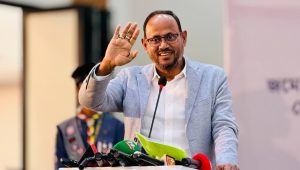
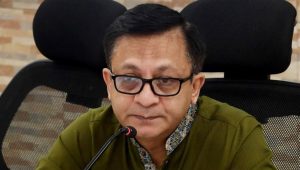
Finance Minister Amir Khosru Mahmud Chowdhury has said that the core philosophy of the upcoming national budget is to democratise the economy and bring the poor and marginalised communities into the mainstream of economic activities.
He said, “In Bangladesh’s budget, the most deprived are the low-income people. Therefore, we have prioritised the poor, low-income groups, and homemakers in the budget.”
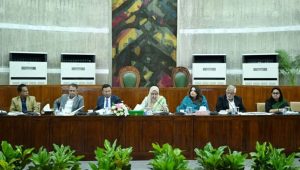
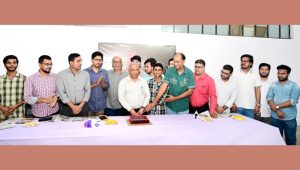
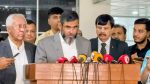
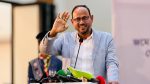
The minister made the remarks on Tuesday as the chief guest at a seminar titled ‘Budget 2026-27: Expectations and Reality’ organised by the Economic Reporters Forum (ERF) in the capital.
He noted that preparing a budget in a short period is a difficult challenge for the current government. Despite the fragile economic situation inherited from the previous two governments, the administration is working to meet public expectations.

Under the Family Card programme, direct transfers will be made to beneficiaries’ accounts, ensuring that no political influence or middlemen interfere.
For farmers, the launch of the Farmers Card initiative aims to ensure food security while improving their livelihoods.
Regarding healthcare, Amir Khosru said the people of the country are incurring excessive out-of-pocket expenses. Consequently, the government is focusing on expanding universal and primary healthcare, involving not only public institutions but also private and NGO sectors.

The minister also highlighted the Creative Economy programme to integrate blacksmiths, potters, weavers, small artisans, theatre workers, and cultural workers into economic activities. Support will include skill development, loans, design assistance, branding, and marketing.
He said, “GDP does not come only from industries and factories. Culture, sports, handicrafts, and the creative sector can also contribute significantly to the economy.”
Amir Khosru stated that the government aims to democratise the economy so that all citizens can participate in economic activities and enjoy the benefits of development.
Emphasising reduced controls and bureaucratic obstacles in business and trade, he said approvals must be issued within a stipulated time. Measures are being taken to create a regulation-free economy by minimising unnecessary restrictions on investment and business.
On budget implementation, he mentioned that a dashboard system will be launched to monitor development projects across ministries, enabling prompt identification of delays and responsible personnel.
Regarding the capital market, he said the Bangladesh Securities and Exchange Commission (BSEC) is being reorganised, and a new commission comprising professional and experienced individuals will soon be formed. This, he said, will boost investor confidence and make it easier for companies to raise funds through the stock market.
He expressed hope that through various reform initiatives, the country’s economy will gradually move towards stability and prosperity.
The event was chaired by ERF President Daulat Akhtar Malar. Special guests included Fahmida Khatun, Executive Director of the Centre for Policy Dialogue (CPD); Azam J Chowdhury, Chairman of East Coast Group; and Shawkat Aziz Russell, President of Bangladesh Textile Mills Association (BTMA). The programme was conducted by ERF Secretary General Abul Kasem.