When discussing Bonolota Express, based on Humayun Ahmed’s novel Kichukhon, a key issue comes forward – the long-standing challenge of translating literature into a visual medium.
This challenge becomes even more profound in the case of Humayun Ahmed. When his readers become viewers, they do not come only to watch a story; they come to match what they see with what they have already imagined.
The visuals they create while reading become their “original.” As a result, while watching the film, the audience often shifts from experiencing the narrative to comparing it with their own mental storyboard. This is a common challenge for any adaptation, but it is particularly intense in Bangladesh, where Humayun Ahmed is deeply connected with people across almost all social classes.
His audience is not only large but also emotionally invested. That is why many viewers question why the film’s visualization does not match their imagination, and most criticisms of his adaptations arise from this gap between text and screen.
In this context, Bonolota Express becomes an important case study. The novel Kichukhon explores the psychology of different people within a fixed space – a train. It is not driven by major events or dramatic plot points; instead, it focuses on inner emotions, relationships, doubt, empathy, and brief human connections.
Adapting such a quiet and internal story into film is not an obvious choice, as subtle shifts in relationships matter more than dramatic action. From this point of view, director Tanim Noor’s decision to work on this story is a meaningful creative step.

The film presents a moving train, but within it are many lives – their struggles and experiences forming unexpected connections. It is not a single focused story but a continuous journey where people share and blend their emotions. This creates a steady emotional flow, shaping the film as a journey rather than a conventional plot.
Another strong aspect is how the film captures a specific time. It reflects the experience of train travel in Bangladesh during the mid-2000s, before the era of smartphone isolation – when people used button phones and dealt with uncertain network signals. Most importantly, people talked to each other. Instead of being absorbed in screens, they connected with strangers.




Without declaring itself a period film, it naturally creates that atmosphere. At the same time, the dialogue creates an interesting contrast. Although the story belongs to the past, the way characters speak often feels contemporary, using an urban colloquialism that resonates with a younger generation Z or ‘Gen-Z’ audience today. While this may feel slightly mismatched at first, it gradually becomes a strength, helping the audience connect more directly and making the story feel immediate rather than distant.
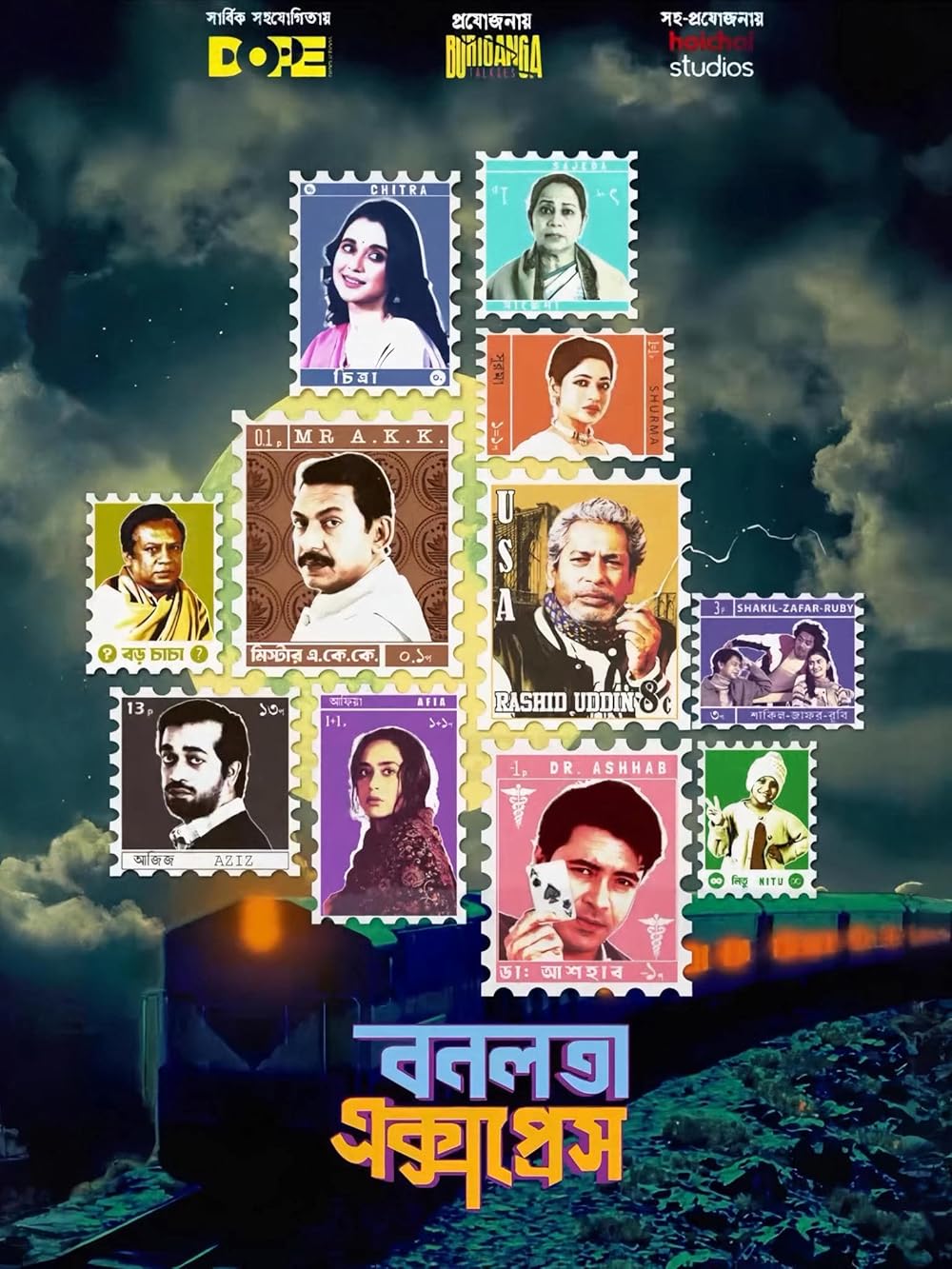
The film’s strongest aspect lies in its characters. None of them are one-dimensional, and there is no simple shift from “bad” to “good.” They appear human from the beginning, with doubts and behaviors that may seem uncomfortable at first. But as the film progresses, deeper layers emerge. For example, Mosharraf Karim’s character (Rashid Uddin) first appears irritating – constantly smoking and ignoring others’ comfort – making it easy to judge him negatively.
However, the film slowly reveals his humanity, changing our perception. Similarly, Sariful Razz’s character (Dr Ashhab), who performs magic and seems strange at first, later shows a more human side that gives new meaning to his earlier actions. The same applies to Shamol Mawla’s character (Aziz), who initially reflects a traditional mindset but later reveals responsibility and emotional depth. This shift is central – the characters do not change; our understanding of them does.
The film also carries Humayun Ahmed’s signature subtle humor. It is not loud or forced but grows naturally from situations, misunderstandings, and human behavior. By placing different types of people together, the story creates moments that feel quietly funny without relying on major events. This “dry” humor comes from small silences, awkward situations, and realistic behavior.
Bonolota Express follows this approach closely. There are no intense conflicts; instead, small interactions slowly unfold, allowing the audience to observe. This makes the film feel warm and human, even without dramatic tension. This tone continues until the end, where disagreements never become extreme, and situations resolve without revenge, often ending on a warm, humane note.
These interactions build the film’s “feel-good” atmosphere, but it does not feel artificial. The characters come from familiar reality – a student (Chitra, played by Sabila Nur), a doctor, a pickpocket, a grieving father—and their lives influence each other in meaningful ways. The use of music adds another emotional layer. Tanim Noor uses well-known songs like “Chai-tei Paro” by Artcell or references to Ayub Bachchu in new contexts, bringing back personal memories for the audience.
At times, the use of music carries a slightly playful tone, reflecting current culture, although a bit more silence in some scenes could have made the performances stronger. Technically, the film is well handled. Cinematographer Barkat Hossain Polash creates movement within a limited space, while editor Saleh Sobhan Auneem maintains a smooth flow where dialogue moves naturally between characters. Rajim Ahmed’s art direction, Tania Rahman’s costume design, and Sayba Talukder’s sound work all support the film effectively.
The performances are natural and believable. Chanchal Chowdhury, Sabila Nur, and Azmeri Haque Badhon, along with the full cast, deliver strong performances, and even smaller roles remain memorable. Labonno Chowdhury, Sabrin Azad, and others stand out, but Shamima Nazneen leaves a lasting impression with her performance. Her portrayal carries a strong Humayun Ahmed-like presence. The voice-over by Nuhash Humayun adds a reflective, almost spiritual layer to the film.
Ultimately, the biggest strength of Bonolota Express is its accessibility – it is a film families can watch together. Many middle-class viewers in Bangladesh want to go to cinemas but hesitate because of content. This film removes that hesitation by offering familiar emotions, music, and characters in a comfortable and engaging way.
This also leads to a broader trend in storytelling. There was a time when independent creators explored multi-character, family-based narratives, but over time budget limits reduced these stories into simpler forms. As family dynamics disappeared, stories became less engaging. Later, with the rise of digital platforms, the demand for family-centered stories returned, showing how important these narratives are for local audiences.
In this context, Bonolota Express stands out by bringing back that lost sense of family and social diversity. It presents a wide range of characters – from family members to workers, artists, and young people – creating a rich and relatable world. Because of this, the film becomes more than just a story; it becomes a shared experience where different viewers can find themselves.
This is why it is spreading through word of mouth and drawing repeat audiences. Even after one viewing, it feels like there is more to discover, and this quality of rediscovery may help the film remain memorable for a long time.
Writer: Abu Shahed Emon, Filmmaker