
BNP will invest in a ‘mega scheme’ in the education sector to build a ‘skilled Bangladesh’ if the party comes to power after the February 12 parliamentary election, said party leaders and experts at a programme on Sunday.
They urged decentralising the education system, upskilling teachers, and improving access to education for students in remote areas.
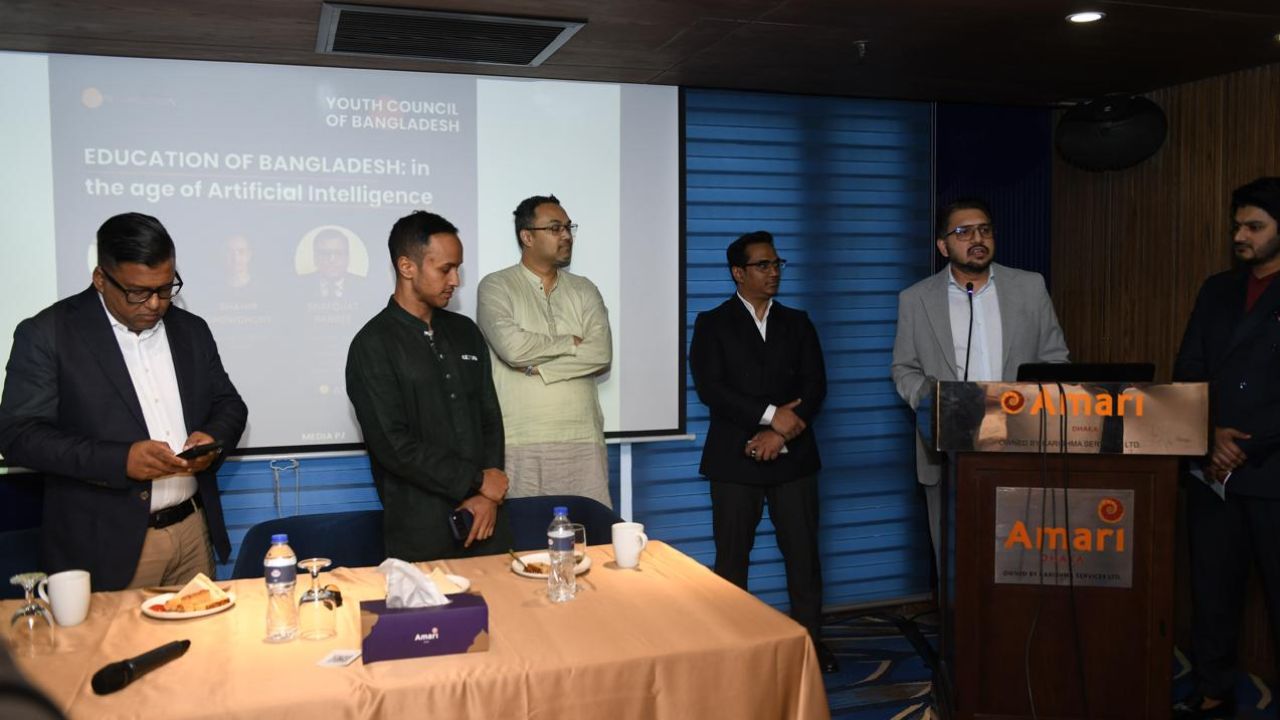
They made the remarks at an event, titled ‘Education of Bangladesh: In the Age of Artificial Intelligence’ organised by youth-based national platform Youth Council of Bangladesh at a hotel in the capital.
At the programme, Mahdi Amin, advisor to acting BNP chairperson Tarique Rahman, outlined BNP’s vision of prioritising education-led development, saying the party’s focus would begin at the primary level with an emphasis on teacher quality, ethics, and access.
The party will do it instead of prioritising infrastructural ‘mega projects’, he said.

He highlighted the proposed “One Teacher, One Tab” scheme to equip teachers with digital tools and online training, alongside multimedia classrooms at secondary schools.
He also stressed integrating technical and vocational education into mainstream curricula and introducing foreign languages to align Bangladesh’s workforce with global demand.




“We want to invest in making global citizens,” he said, adding that education must produce “employable, ethical, and self-reliant” youth.
Bobby Hajjaj, chairman of the Nationalist Democratic Movement, said Bangladesh’s education crisis stems from over-centralisation and long-standing neglect of teachers, rather than artificial intelligence alone.
He noted that while economic growth relied on human capital, the country failed to transition to value-added skills.
Criticising weak research culture and the dominance of non-STEM disciplines, he said, “We haven’t adapted to the 20th century, let alone the 21st.”
On AI, he cautioned against blind reliance, describing it as a tool that demands strong foundational knowledge. “AI is really dumb—you have to be smart to use it properly,” he said.
Shahir Chowdhury, founder and CEO of ed-tech startup Shikho, said technology is the only scalable solution to Bangladesh’s education inequality.
Describing EdTech as “architecture, not just videos,” he explained how digital platforms can integrate teaching, assessment, and data analysis.
“You can’t solve a system this large without technology,” he said, advocating public-private partnerships and warning against unsustainable government-built software.
Banker and educationalist Shafquat Rabbee said AI will not eliminate jobs but redefine skills.
“AI will not take your job, but the person who knows AI will,” he said, urging young people to strengthen communication, confidence, and problem-solving skills alongside technical literacy.