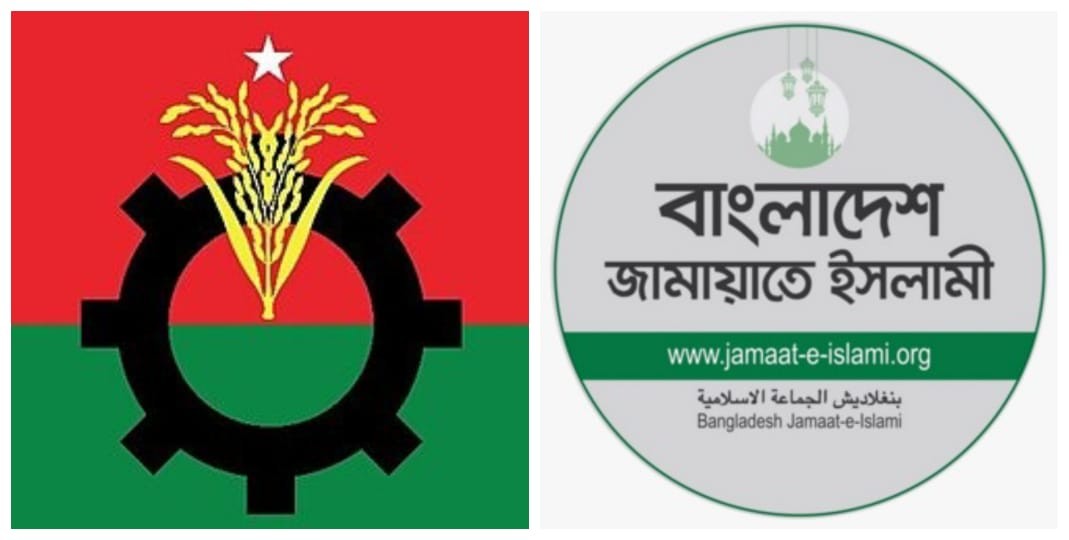

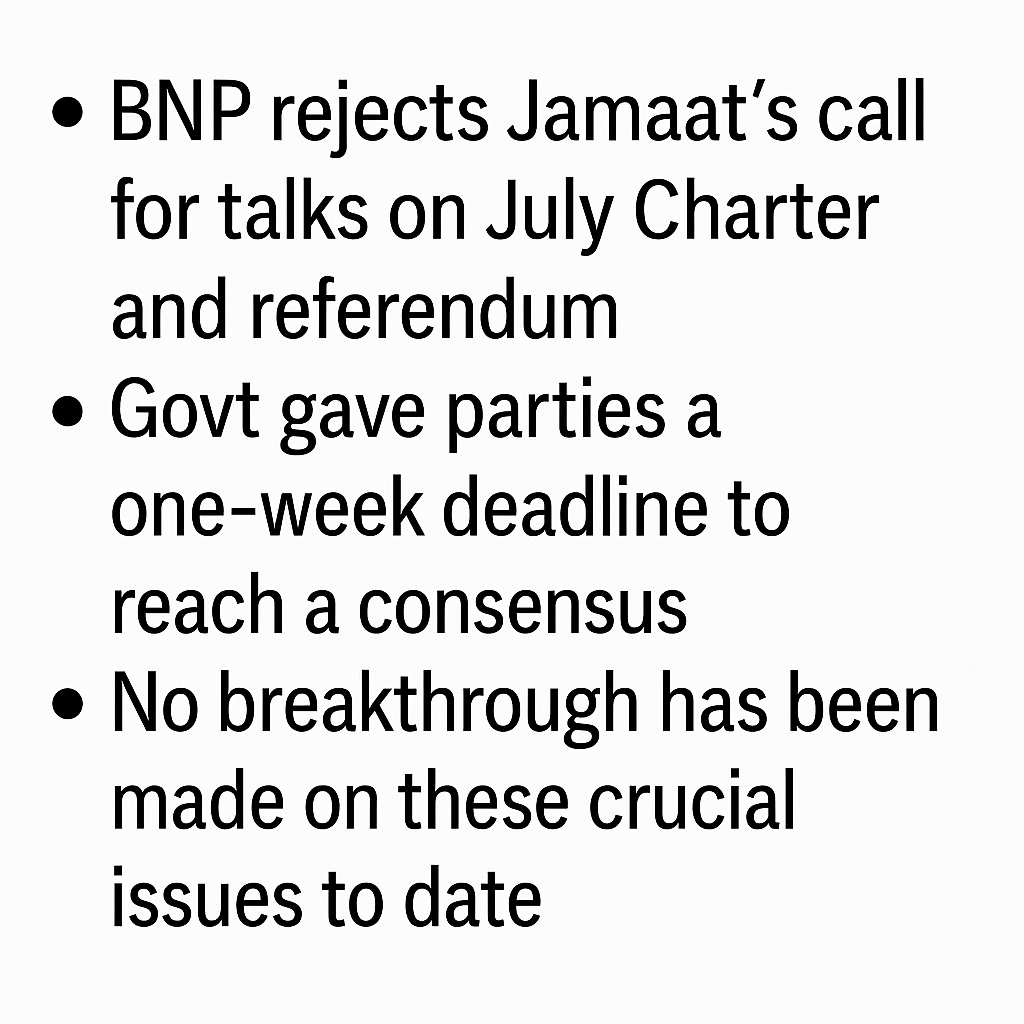
BNP has rejected Jamaat-e-Islami’s proposal for a dialogue on holding a referendum on the implementation of the July Charter, deepening a rift between the two allies-turned-rivals.
The party says the issue falls under the purview of the interim government and that no further negotiations between political parties are required.
The dispute has heightened political tensions, with the two major parties — in the absence of the ousted Awami League — now openly taking opposing positions on the July Charter and its implementation process.
According to BNP policymakers, the crisis could be resolved if the government holds the referendum on the same day as the national election. However, party sources indicated that if the government initiates a fresh round of political dialogue in the interest of the elections, BNP may reconsider its position.
The interim government gave political parties a one-week deadline to reach a consensus, but no breakthrough has been made to date.
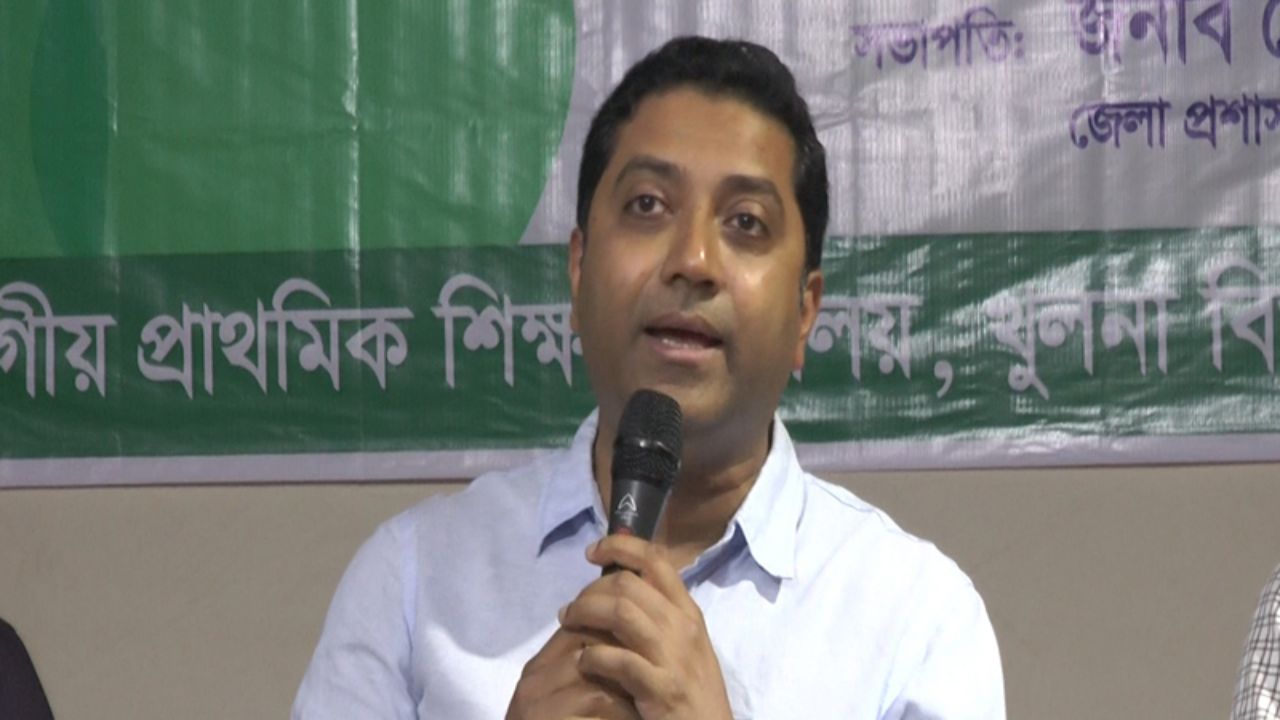
On Thursday evening, Jamaat Naib-e-Ameer Syed Abdullah Mohammad Taher telephoned BNP Secretary General Mirza Fakhrul Islam Alamgir, proposing talks between political parties.

The BNP Standing Committee convened an emergency meeting the same night, chaired by the party’s acting chairman Tarique Rahman virtually from London.
Most leaders in attendance rejected the proposal, saying there was “no justification” for engaging in talks convened by Jamaat.
They noted that BNP had participated in National Consensus Commission meetings for nearly a year and formally proposed adding “notes of dissent” to the July Charter and holding the referendum on election day.


“Those proposals were ignored when the commission finalised the charter on 28 October and submitted it to the government. That is where the crisis began, and responsibility lies with the government and the commission,” BNP leaders said at the meeting.
The party reiterated that the government — not political compromise — must resolve the issue and that the referendum must take place on the same day as the national election.
After the meeting, BNP said in a statement that the July Charter must be implemented legally, the national election must be held on time, and no party should be allowed to create a new crisis that could obstruct the electoral process. It also stressed that political unity must be preserved to restore democracy.
Speaking to TIMES of Bangladesh, BNP Secretary General Mirza Fakhrul Islam Alamgir said: “There is nothing new to add. The Standing Committee’s decision is our final position. The referendum must be held on the day of the national election.”
Warning the government over its role, he added: “There are conspiracies to destroy democracy and derail the election. If the government fails to take the right path, it will bear the responsibility.”
The interim administration is seeking political consensus on whether the referendum should be held before or on election day. To this end, Jamaat has formed a two-member team to conduct outreach to political parties.
Talks have progressed with at least nine parties, including the National Citizen Party and AB Party. Although BNP has shown no formal interest, sources say some of its leaders have held informal discussions with Jamaat and other political actors.
Jamaat leaders believe dialogue could still materialise at any time.
Meanwhile, eight political parties, including Jamaat and Islami Andolan Bangladesh, have launched a three-phase programme demanding that the referendum be held before the elections. They have issued an ultimatum set to expire on 11 November.
Jamaat leader Taher warned that if their demands were not met, agitation would escalate. “If the matter cannot be resolved the easy way, we will take a harder path. There will be a grand rally. The movement will intensify, and Dhaka’s landscape will change,” he said.
Jamaat Assistant Secretary General AHM Hamidur Rahman Azad told TIMES: “It is natural that pro-democracy parties engage in dialogue in the national interest. But in many cases, BNP is speaking in the same tone as the Awami League — questioning why they should attend talks at Jamaat’s invitation.”
He added: “If BNP calls the dialogue, we will also participate. There is no alternative to dialogue to resolve the current crisis. We have not been formally informed that BNP will not engage in talks convened by Jamaat.”