


Bangladesh Garment Manufacturers and Exporters Association (BGMEA) has urged the World Bank to expand a $5 million water-management pilot for garment factories, saying the size of the fund and the number of participating factories are too small compared with industry demand.
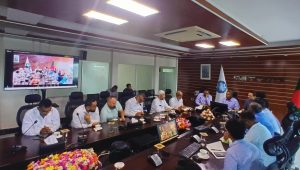
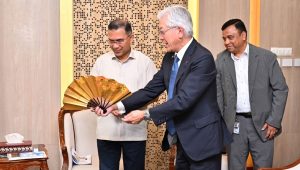
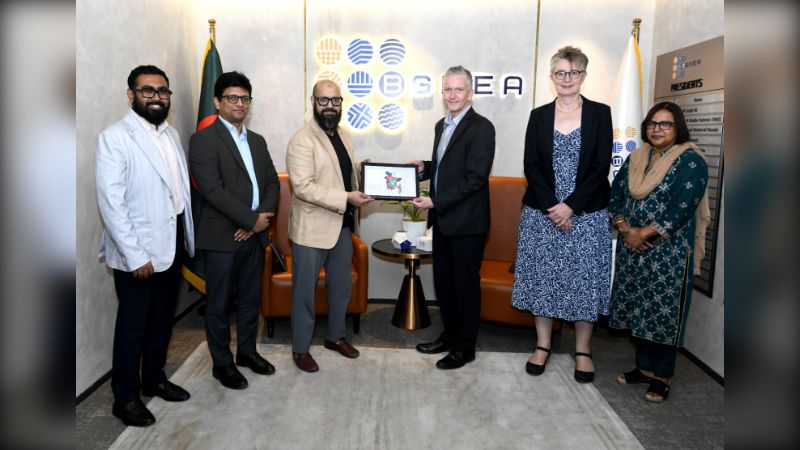
The call came at a meeting on Wednesday between BGMEA President Mahmud Hasan Khan and a World Bank delegation led by Mara K Warwick, regional director for sustainable development in South Asia, at the BGMEA Complex in Uttara.
The two sides reviewed the $5 million viability gap funding (VGF) pilot under the World Bank-supported Dhaka Water Security and Resilience Programme, or D-Water.
BGMEA had proposed an initial list of 31 factories for the programme, but the World Bank plans to begin work with eight.
Khan urged the lender to increase both the size of the fund and the scope of the programme, citing strong demand among garment manufacturers for technology that cuts water use, improves wastewater treatment and enables recycling.

He said water management had become a business and competitiveness issue rather than merely an environmental concern, as international buyers, particularly European brands, increasingly seek data on water consumption, wastewater treatment and recycling throughout production.
Protecting Dhaka’s rivers and groundwater while retaining export markets therefore requires greater use of water-efficient technologies, he said.
BGMEA said the biggest obstacle is the high upfront investment required for sustainable water-management projects, which makes it difficult for factories to establish their financial viability.




The industry is also struggling to secure adequate product prices in international markets amid the global economic slowdown, according to the association.
BGMEA said garment manufacturers would be better able to undertake such investments if international development partners provided grants or large-scale, long-term financing on easy terms at zero interest.
The meeting also examined infrastructure constraints.
Some factories have enough space to install their own effluent treatment plants but lack a suitable nearby waterbody or drainage system for discharge, while many small and medium-sized factories cannot afford large standalone treatment plants.
BGMEA proposed moving industrial effluent by lorry or tanker instead of relying solely on permanent pipelines and developing cluster-based treatment plants to serve multiple factories.
It also called for the programme to be extended beyond Dhaka to other industrial areas of the country.
The association urged the government to avoid abrupt changes to environmental policies and regulations and to give manufacturers sufficient notice before new requirements take effect.
BGMEA said regulatory predictability would give factories greater confidence to make long-term investments in cleaner technology.
The World Bank delegation responded positively to the proposals and assured BGMEA of continued logistical and broader support for accelerating the garment industry’s green transition, according to the association.
BGMEA Director Md Hasib Uddin also attended the meeting.
The World Bank delegation included Lead Water Specialist David Malcolm Lord, Senior Water Supply and Sanitation Specialist Rokeya Ahmed, Water Specialist Md Mahadi Hasan and Environmental Specialist Bushra Nishat.