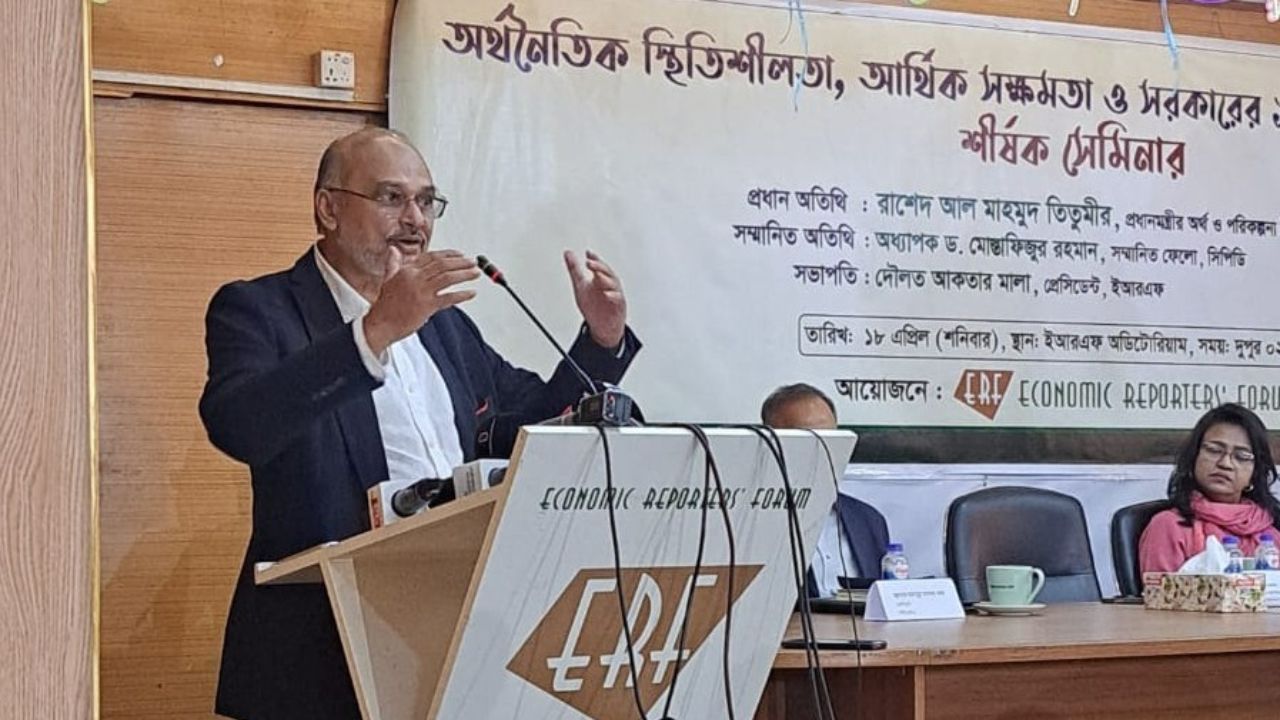

Bangladesh will move away from a “rent-seeking” growth model, with reforms focused on transparency, productivity and sustainable expansion, said Prime Minister’s Finance and Planning Adviser Rashed Al Mahmud Titumir.
He outlined the approach at a seminar titled “Contemporary Economic Stability, Financial Resilience and the Government’s 180-Day Action Plan” at the Economic Reporters’ Forum auditorium on Saturday, the organisers said.
The action plan targets corruption in large infrastructure projects, reforms in agriculture and industry, and stronger domestic investment to attract foreign direct investment.
He criticised past development driven by cronyism and non-transparent mega projects, saying it created unsustainable debt and weakened long-term stability.
“The economy has carried unrealistic debt burdens created through patronage-based projects, and many have damaged overall economic health,” he said.
He pushed a “locals first” strategy, saying foreign investment will follow stronger domestic entrepreneurs.

He identified northern Bangladesh as a growth hub, citing surplus maize, potatoes, mangoes, litchis and dairy, alongside export potential in mozzarella cheese from Thakurgaon and off-season tulip cultivation for European markets.
He called for compliance with Leather Working Group standards and full operation of the Central Effluent Treatment Plant to boost leather exports.
He also flagged possible privatisation of selected state-owned assets and management reforms at facilities such as Sonargaon Hotel.
He said the Directorate General of Drug Administration must be upgraded to World Health Organization standards to support pharmaceutical exports.



He described Dholaikhal’s light engineering cluster as a national asset requiring modernisation and pointed to inequalities between small tea growers in Panchagarh and large estates in Sylhet.
While the government targets 10 per cent GDP growth by 2030 and 15 per cent by 2035, he criticised unrealistic projections by the National Board of Revenue.
“Targets must be credible, and fictional projections undermine institutional trust,” he said.
He said fuel price adjustments have added about Tk150 in cost pressure for low- and middle-income groups, with mitigation measures under way.
He said Bangladesh Bank is preparing a package to stabilise the banking sector through liquidity support and tighter regulation.
He said restoring financial discipline and ensuring people-centred governance remain priorities.
Centre for Policy Dialogue Distinguished Fellow Mustafizur Rahman said the economy faces an “acid test” amid inflation, weak investment and banking stress.
He warned of risks from least developed country graduation and Sustainable Development Goals commitments, alongside rising inequality and a widening income gap.
He said the revenue-to-GDP ratio remains below 8 per cent and called for difficult reforms including inheritance and wealth taxes, warning of risks of a middle-income trap and a debt trap as debt servicing now exceeds education spending.
Bangladesh Garment Manufacturers and Exporters Association President Mahmud Hasan Khan called for policy stability for at least five years, warning frequent changes hurt investor confidence.
He proposed expanding solar irrigation and releasing blocked funds in merged banks to support garment firms.
Bangladesh Knitwear Manufacturers and Exporters Association President Mohammad Hatem said labour law ambiguities, high energy costs and banking bottlenecks are affecting factory operations and jobs.
Footwear and leather exporters’ leader Md Rafiqul Islam said Bangladesh is the world’s seventh-largest footwear producer and 15th-largest exporter.
He called for upgrading the Savar leather industrial park, securing international certification, expanding duty-free access in trade agreements, and improving port efficiency and energy pricing.
Speakers said Bangladesh must strengthen institutions, ensure policy stability and pursue inclusive reforms to sustain growth and reduce inequality.