
State Minister for Health and Family Welfare Dr MA Muhit on Monday said Bangladesh will emerge as a unique role model and a “positive brand” for a disability-inclusive society among developing nations if all ministries work in unison.
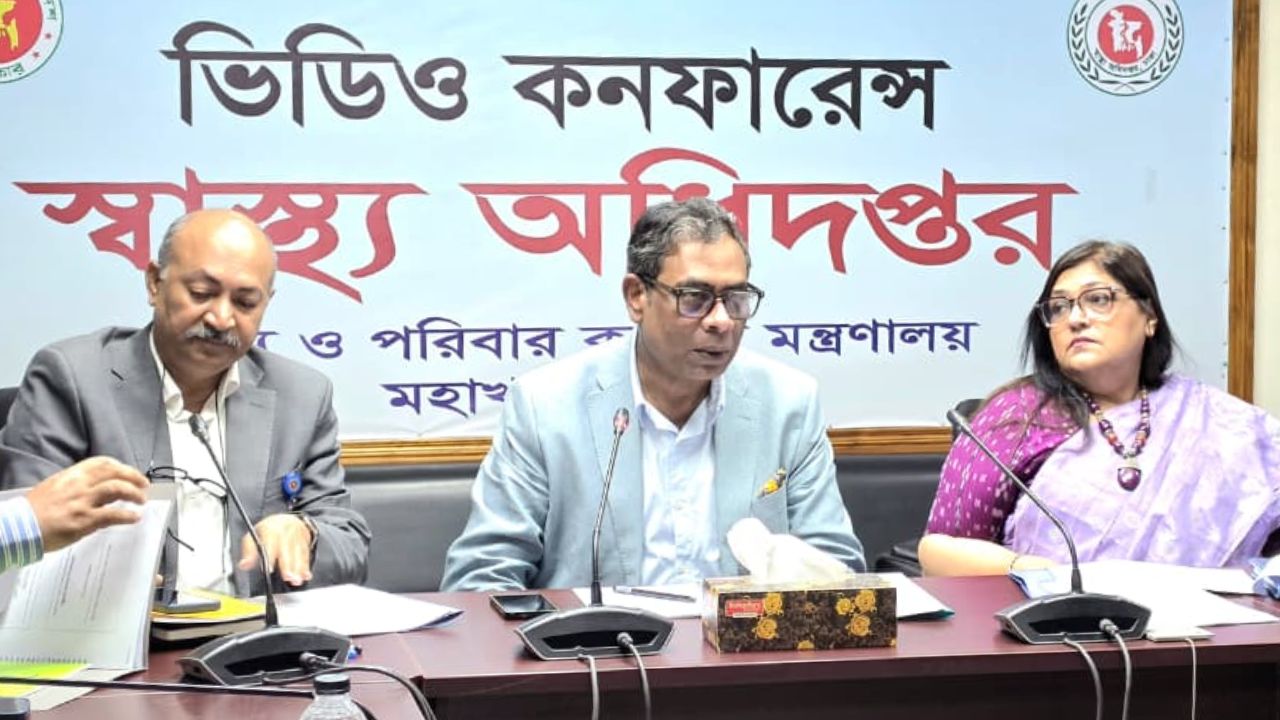
He made these remarks while addressing a stakeholder consultation meeting on the formulation of “Shishushwarga Model” pilot project at Directorate General of Health Services (DGHS) in Dhaka.
The meeting was also addressed by the Director General of DGHS, Professor Dr Prabhat Chandra Biswas, Additional Director General Professor Dr Foara Tasmim, Professor Dr Zahid Raihan, and Director Professor Dr Jalal Uddin Mohammad Rumi, along with representatives from various ministries.
Integrated Service Model
Dr Muhit said the Ministry of Social Welfare has the capacity to establish specialised centres and spaces named “Shishushwarga” in every district. These centres will serve as the primary hubs for long-term rehabilitation, vocational training, and employment generation.

Simultaneously, the Health Ministry’s extensive network of field workers will identify persons with disabilities at the grassroots level to provide early medical attention and therapy. This will create an institutional linkage between “Shishushwarga” and the Ministry of Education, ensuring a seamless transition from medical treatment to long-term rehabilitation.
Rights-Based Approach
The state minister said while 4.6 million persons with disabilities are currently registered in the government database, the new government has set a “mega target” to bring state services and rights to at least 10 million people.

He emphasised that the government has moved away from a “charity model” in favour of a full rights-based society to simplify the lives of the disabled population. To this end, a high-level policy-making steering committee has been formed under the leadership of the prime minister.
Quoting the prime minister’s personal commitment to the cause, Dr Muhit said, “The prime minister perceives this issue with great empathy. He has clearly said he does not want an environment where the state is seen as being charitable; rather, he wants them to enjoy equal rights like all other citizens”.
Policy and Implementation
A “Steering Committee for Disability Rights and Service Protection Policy” has been established with the prime minister as the chair and the state minister for health as the alternative chair. Additionally, an “Implementation Committee for Disability Rights and Service Protection” has been formed to execute policies at the field level, chaired by the state minister for health with the state minister for social welfare serving as vice-chair. These committees demonstrated their momentum by holding their first meeting within 15 days and a second within a month of formation.
Dr Muhit highlighted that this top-level coordination is already yielding results. The Ministry of Road Transport and Bridges and the Ministry of Railways have announced half-fare or free travel for persons with disabilities on metrorail. Other ministries are also taking initiatives to make their respective development plans “disability inclusive”.
The ‘Conveyor Belt’ Philosophy
The state minister compared the service delivery process to a “conveyor belt” or a relay race. He said the state will remain beside a disabled person at every stage of life, from birth to employment.
“When a child is born with a disability, they require a certain type of treatment and therapy. At age six, their needs change. At 12, a disabled adolescent girl has different requirements, and in adulthood, they need employment,” Dr Muhit said. He added that various ministries will meet these evolving needs step-by-step, ensuring support throughout their lives.