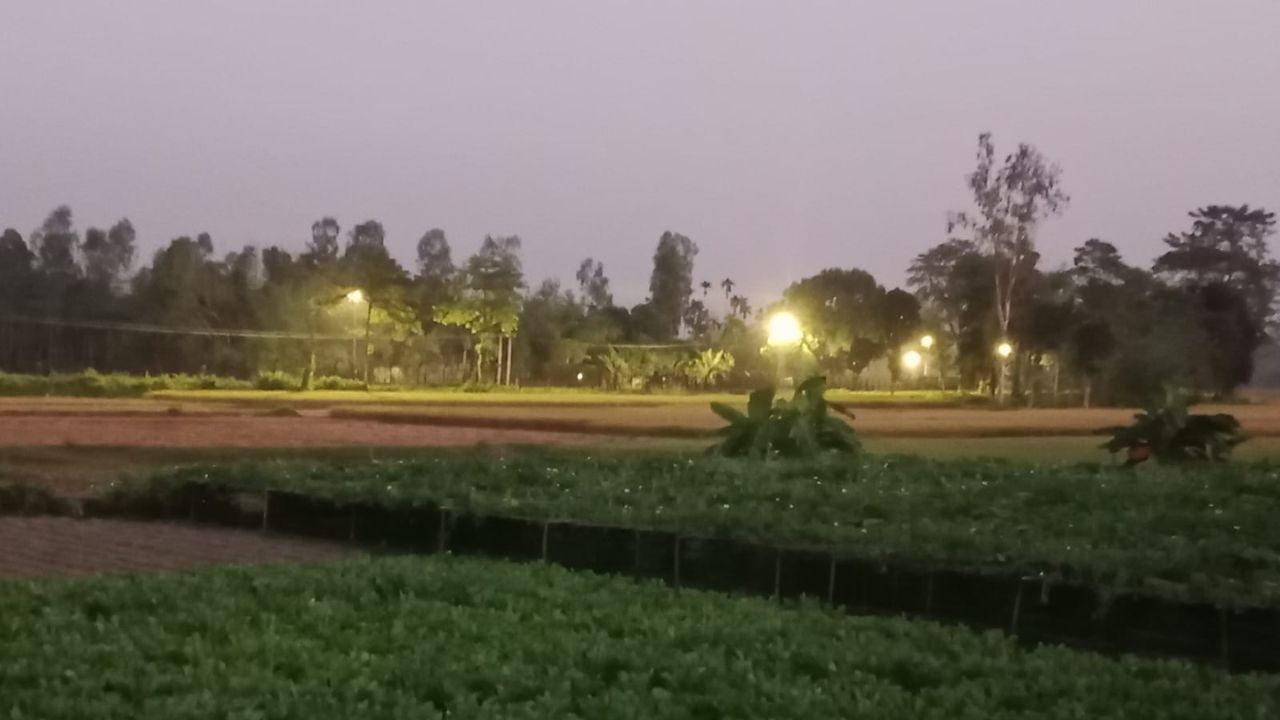



Farmers in Kurigram are facing significant losses due to intense light from India’s high-powered searchlights installed along the Bangladesh-India border.
The searchlights, operated by the Indian Border Security Force, illuminate about half-a-kilometre areas of agricultural lands affecting crops and reduce topsoil quality.
According to local farmers, the powerful lights are turned on every evening. The light impacts the soil’s fertility, dries it out, and increases pest infestations.
Some farmers claimed that crops grown away from the searchlight are growing better, those in the direct light of the searchlights report lower yields, especially in rice, maize, and vegetables.

Farmers in various border upazilas, including Bhurungamari, Fulbari, Ulipur, Nageshwari, Charrajibpur, and Rowmari, have raised concerns over the ongoing agricultural damage.
One of the affected farmers, Abdus Salam from Jummapur in Fulbari, said, “The paddy leaves turn yellow, the grain size is smaller, and the maize flowers are fewer. We also see poor growth in vegetables like potatoes, onions, and okra.”
Farmers also mentioned that they had to apply more fertilisers and pesticides to compensate for the negative effects caused by the searchlights.



“We need to spray pesticides four to five times compared to two times in other areas,” said Rabiul Alam, a farmer from Rowmari.
“We also need more fertilisers to make up for the reduced yield,” he added.
In response to the situation, local pesticide vendors in Fulbari have confirmed that demand for chemicals and fertilisers has increased, as farmers are trying to cope with the reduced agricultural output.
Experts have explained that artificial light interferes with the natural photosynthesis and respiration cycles of plants.
Plant taxonomist and conservationist Dr AKM Kamrul Haque said exposure to high intensity lights can directly affect crop yield.
“Exposure to lights during night can disrupt plants’ usual night-break and reduce yield of crops like rice.
Dr Mirza Mohammad Nasir Uddin, former chair of the Department of Botany at Kurigram Government College, pointed out that plants need natural light during the day and rely on the night for respiration.
He stated, “Artificial light disrupts this process, leading to reduced yields and increased pest infestations.”
The problem has worsened since 2001 when BSF installed high-powered searchlights along the border. The lights are positioned every 100 meters along the fence, and their light extends up to 500 meters into Bangladeshi territory.