Dr Anisuzzaman Chowdhury, chief adviser’s special assistant, stated on Saturday that Bangladesh is not in a position to defer its graduation from the Least Developed Country (LDC) category, given the country’s current economic and social conditions.
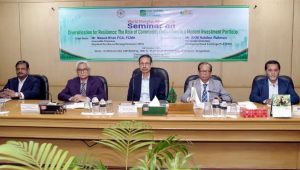
He made the remarks during a seminar titled “LDC Graduation and Bangladesh’s Preparedness” organised by the Economic Reporters’ Forum (ERF) at its Paltan auditorium.
The seminar was attended by Chief Adviser’s Press Secretary Shafiqul Alam, Bangladesh Knitwear Manufacturers and Exporters Association (BKMEA) President Muhammad Hatem, and economist Dr M Masrur Reaz.
Senior Vice-President of Bangladesh Garment Manufacturers and Exporters Association (BGMEA) Inamul Haq Khan and Chief Executive Officer of the Bangladesh Association of Pharmaceutical Industries Md Mustafiz Rahman also contributed to the discussion by sharing sector-specific recommendations.
Dr Anisuzzaman emphasised that the interim government will not process any proposal to delay LDC graduation, as such a decision should be made by the next elected government.

He further pointed out that Bangladesh is unlikely to have its application for deferring graduation accepted by the UN Council, as it would require the support of a majority of the 193 member states.
The special assistant urged businesses to study the implications of LDC graduation in greater detail, explaining that not all sectors will be equally affected. He noted that certain markets, such as those in Europe, may reduce specific facilities three years post-graduation.
Press Secretary Shafiqul Alam added that Bangladesh missed the opportunity for significant capacity building and planning during the “golden period” between 2021 and 2024.




He stressed that the private sector must focus on building capacity and assisting the government in developing a smooth roadmap for graduation. This would allow the export sector to enhance its capacity, improve labour standards, and align with environmental compliance.
Referencing the Rana Plaza disaster, Shafiqul stated that the garment sector had significantly improved safety standards following pressure from buyers.
Similarly, he urged the private sector to strengthen compliance in Bangladesh’s manufacturing industries, as these are critical for accessing global markets.
Shafiqul also encouraged entrepreneurs to take bold steps in tackling risks and challenges in order to achieve sustainable growth and long-term profitability with international buyers.
He cited Cambodia as an example, where buyers pay US$208 per worker, yet export orders remain steady. In contrast, in Bangladesh, workers earn only US$105, with businesses arguing that higher wages would lead to a loss of orders.
“This is not about losing orders; it reflects the failure of our private sector’s capacity to grow,” he remarked. “Without labour and environmental compliance, the manufacturing sector cannot compete globally.”
Shafiqul also suggested that LDC graduation could provide export advantages for factories that meet compliance requirements.
Economist Dr Masrur Reaz emphasised the need for collaboration between the government and private sector to produce a roadmap for a smooth LDC graduation, while improving capacity and compliance standards.
BKMEA President Muhammad Hatem urged for a relaxation of regulations, such as increased online verification, and enhancing the capacity of the National Board of Revenue (NBR) and customs before graduation.
The seminar was presided over by ERF President Doulot Akter Mala, with General Secretary Abul Kashem moderating the discussion.
Both leaders stressed the importance of strengthening the manufacturing sector’s capacity to improve export-handling efficiency and engaging in detailed discussions on issues and roadmaps likely to be impacted by LDC graduation.