A severe shortage of government-supplied contraceptives across Noakhali district has sparked concern among public health officials and local residents, with fears growing over a potential rise in unintended pregnancies and disruption to family planning services.
Contraceptive pills, injectable birth control, and condoms have reportedly become increasingly unavailable at government hospitals and community clinics from upazila to union level, leaving many rural and marginalised couples without access to essential family planning services.
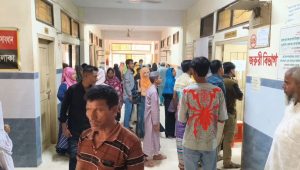
Sources say most of the nine upazilas in the district are experiencing supply disruptions, forcing many service users to return home empty-handed after visiting local health facilities.
Residents allege that field-level health workers have not been distributing supplies for a prolonged period. Many say even visits to union health centres have failed to ensure access to contraceptives.

“They do not come regularly, and even when we go to the health centre, we do not get them properly,” said a local woman, expressing frustration over the situation.
Another resident said irregular supply has also affected awareness among newly married couples, with many women unaware of government-provided family planning options due to the disruption in field outreach activities.
A frontline health worker, Rahima Begum, confirmed the shortage, saying the situation has severely affected service delivery.




“We currently have no pills, condoms, injections or long-term contraceptive methods. We are unable to provide supplies according to demand,” she said. “As a result, cases of unintended pregnancies are increasing at field level.”
Under the government programme, five main contraceptive methods are distributed free of cost: oral pills, injectable contraceptives, condoms, intrauterine devices (IUDs) and implants. These services are primarily used by low-income and marginalised communities.
According to the District Family Planning Office, the shortage has worsened since July 2024, when central procurement of contraceptive supplies reportedly came to a halt.
Officials, however, have described the situation as temporary and expressed optimism that supply will be restored soon.
Noakhali District Family Planning Office Deputy Director Abul Kashem Mohammad Aminul Islam, said procurement activities are underway.
“There is currently a logistical shortage or crisis, but we hope to overcome it soon. The procurement process is ongoing,” he said. “We expect to resolve the shortage of pills, injectables and condoms by August.”
Civil society representative SM Sahab Uddin said a large section of rural communities remains fully dependent on government supply, and any prolonged disruption could have serious public health consequences.
“If the supply is not restored quickly, it may have a significant adverse impact on rural public health and population control efforts,” he warned.