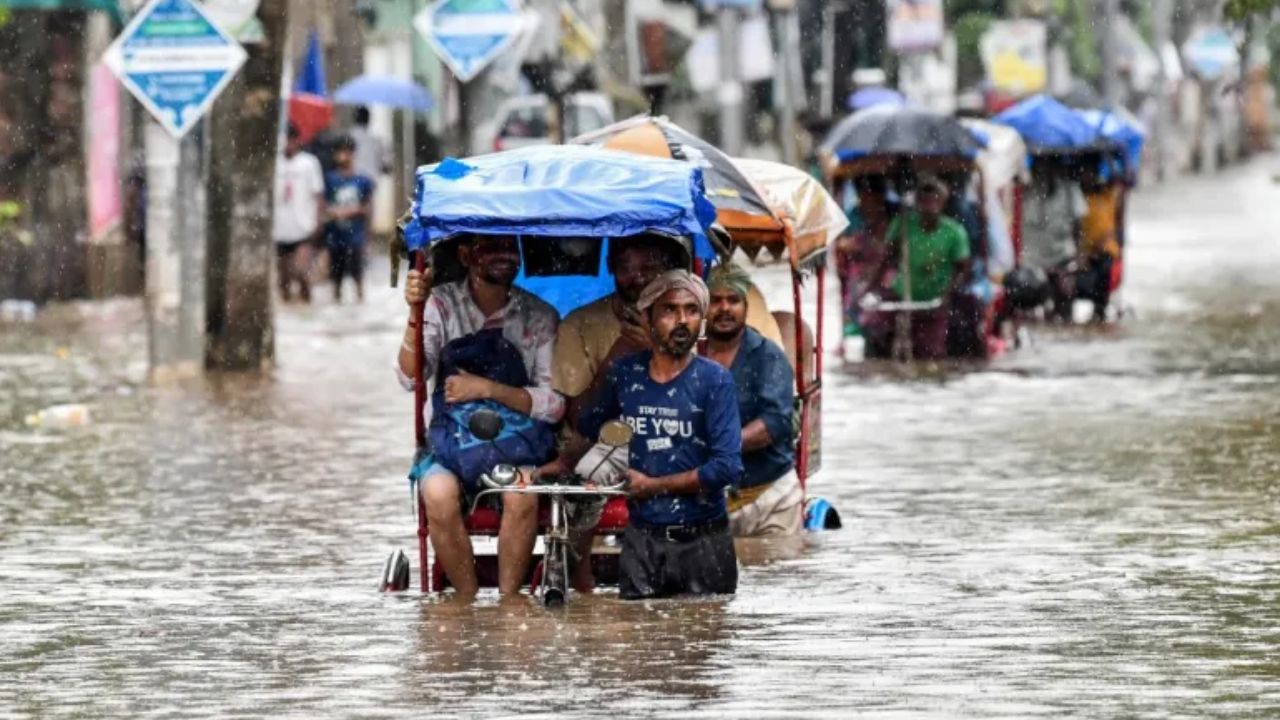



The northeast Indian state of Assam is facing its most severe deluge in years, with officials describing the current flooding as the worst the state has seen in six decades. Over the past four weeks, at least 68 people have lost their lives, with 58 of those fatalities occurring in the last week alone.
Almost 40 individuals remain missing, while government data indicates that more than 600,000 people have been affected across the state, reports BBC. On 21 July, a particularly devastating 24-hour window saw 21 deaths, with victims being swept away by floodwaters or killed in landslides and house collapses.
Assam Chief Minister Himanta Biswa Sarma noted that districts in Assam and neighbouring Nagaland received rainfall between 435 per cent and 490 per cent above normal levels during this period, causing rivers to rise with unprecedented speed. Minister Pijush Hazarika characterised the crisis as the state’s worst in sixty years.
Experts attribute the worsening flooding to a combination of factors: exceptionally heavy rainfall driven by climate change, upstream deforestation, and ageing embankments. Assam is naturally vulnerable, with nearly 40 per cent of the state classified as flood-prone.

It lies on the vast floodplain of Brahmaputra River, which is fed by more than 50 tributaries. As the river flows across the flat plains, it deposits silt and sand, which reduces its capacity to carry water and increases the likelihood of flooding during the annual monsoon.
Upper Assam has borne the brunt of the disaster, with districts such as Jorhat, Sivasagar, and Charaideo among the worst hit. In Jorhat, 18-year-old Saline Patro described how her home in the village of Seleng Sumoni Pathar was washed away within minutes after the Jhanji River overflowed on 19 July.




“The floods took everything from us,” she said from a relief camp, noting that her family could not even save a glass to drink water from.
In another harrowing account from Sivasagar district, Rekhamoni Gogoi and her seven-year-old son survived by spending 12 hours perched in a mango tree after floodwaters reached chest level in their village, Holang Katoni. The pair spent a night in total darkness without food or water before being rescued the following morning.
Chief Secretary Ravi Kotta said officials have been deployed to the worst-hit districts to expedite relief and restoration, with a priority on supplying essential materials and services.
Currently, tens of thousands of people remain displaced, with approximately 25,000 residing in relief camps.
Chief Minister Sarma confirmed that the government’s focus is now shifting towards rehabilitation, with ministers deployed across the state to coordinate recovery efforts.
However, for many like Patro, whose parents are daily wage workers, the future remains bleak. “I don’t know what we will do now,” she said. “It will take us years to build another [house]”.