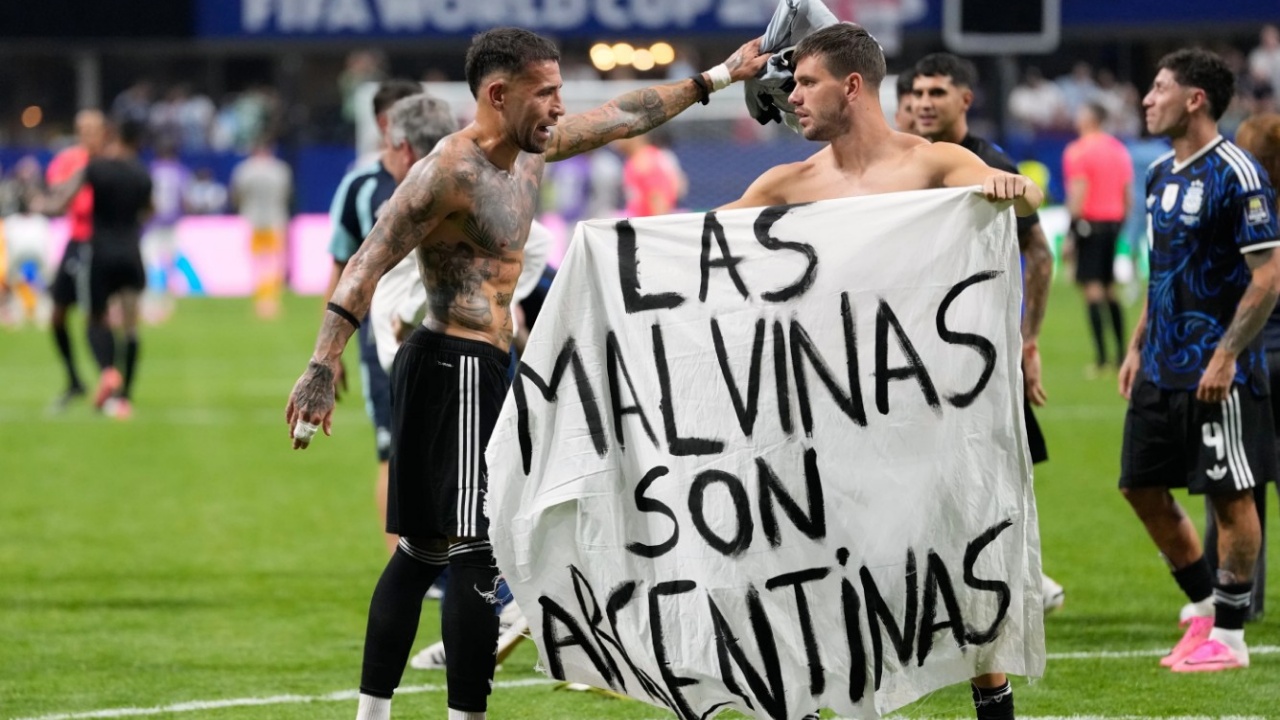

Argentina’s World Cup players received strong backing in Buenos Aires on Thursday after displaying a banner asserting sovereignty over the Falkland Islands following their semi-final victory over England, despite Britain’s call for FIFA to investigate the celebration.
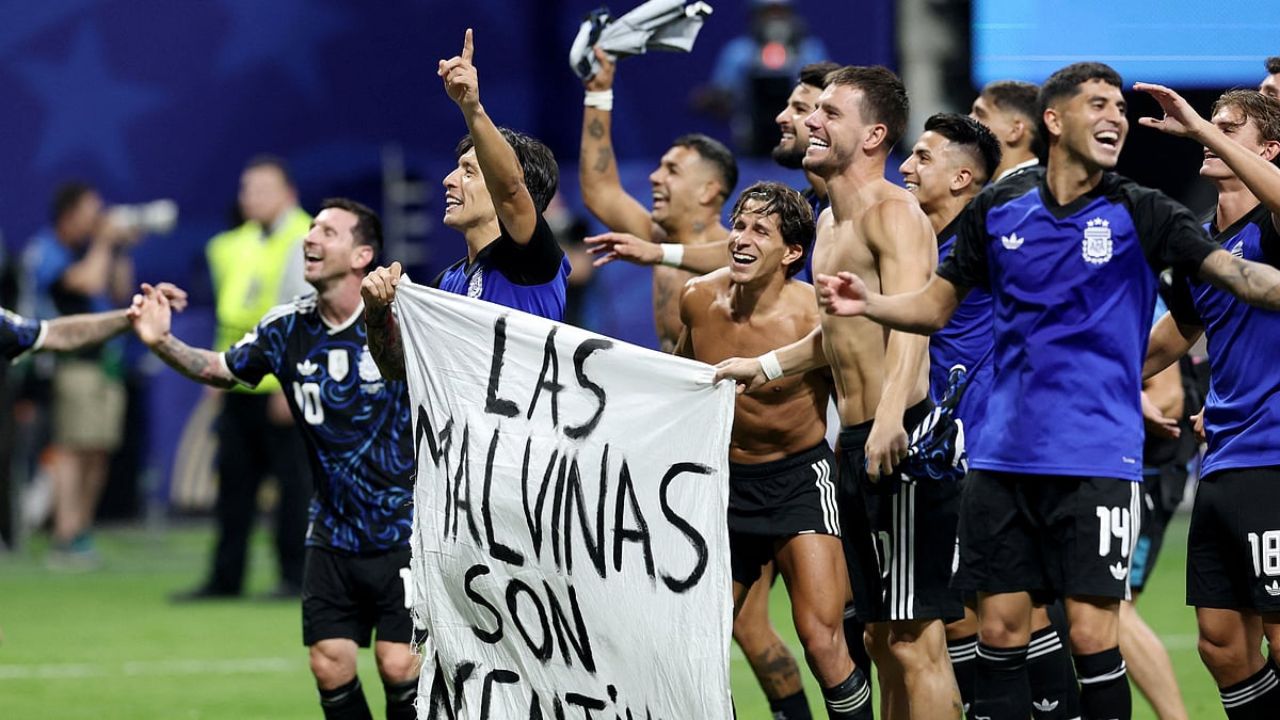
Several Argentina players held up a banner reading “Las Malvinas Son Argentinas” (“The Falklands are Argentine”) after Wednesday’s 2-1 victory in Atlanta. Reuters photographs showed the banner first being waved by supporters before midfielder Giovani Lo Celso collected it and celebrated with team-mate Lisandro Martinez in front of Argentina’s fans.
The celebration has attracted scrutiny because FIFA’s Stadium Code of Conduct prohibits political, offensive and discriminatory banners inside stadiums. FIFA has not announced any disciplinary action and declined to comment when contacted by Reuters.
Britain has urged football’s governing body to examine the incident. Business minister Peter Kyle told BBC Radio that FIFA should investigate, arguing that politics should remain separate from the World Cup.

Liberal Democrat leader Ed Davey also wrote to FIFA president Gianni Infantino, calling the banner offensive to the people of the Falkland Islands and urging the governing body to disqualify the players involved from Sunday’s World Cup final against Spain.
The reaction in Argentina, however, struck a very different tone.


Near a monument honouring Argentine soldiers killed during the 1982 conflict, many residents defended the players’ actions. Martin Aguirre, 30, welcomed the gesture despite the possibility of sanctions.
“It is very important that players, as public figures, give their opinion, especially on issues that are so sensitive for us,” Aguirre said. “That is why we really appreciate the gestures by Licha (Martinez) and Giovani Lo Celso, because even though they know they could face a sanction or some kind of problem over this, they still raised that flag.”
Federico Schenone also rejected claims that the celebration carried a political message.
“It was not a political gesture but a matter of history and legitimacy,” he said.
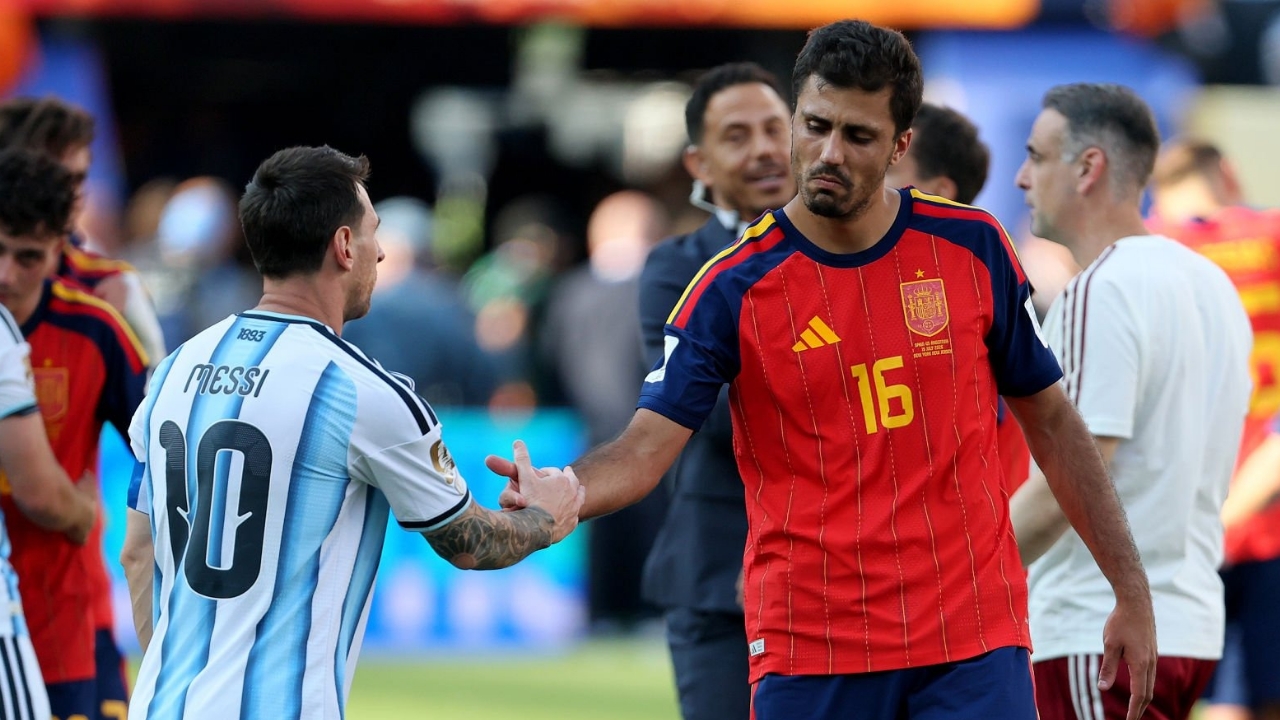
Argentina captain Lionel Messi did not directly address the banner after the match but acknowledged the historical significance surrounding the fixture.
“When you play a match of that magnitude, so many things come into play. History weighs on a game like that,” Messi said.
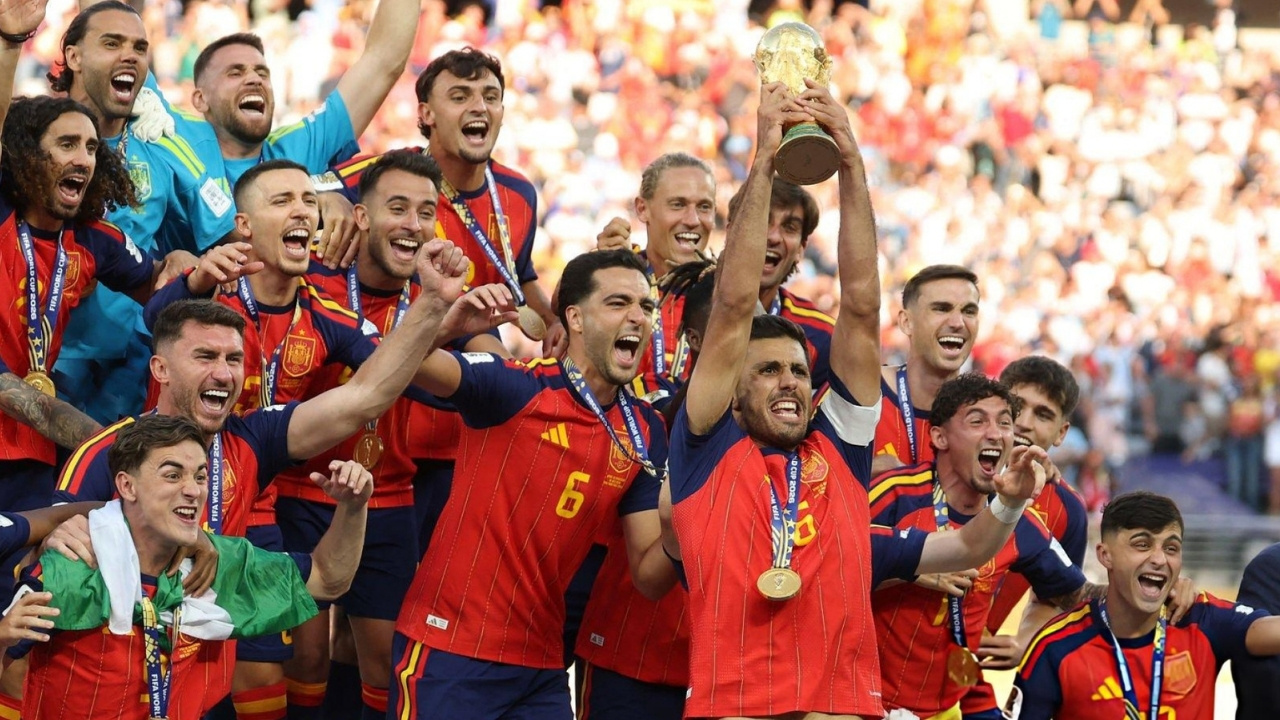
The dispute comes just days before Argentina face Spain in Sunday’s World Cup final in New York-New Jersey. FIFA has yet to indicate whether it will launch disciplinary proceedings, leaving the focus split between preparations for the final and the controversy surrounding the team’s post-match celebrations.