Argentina heads to the polls on Sunday in a high-stakes midterm election that could define the future of President Javier Milei’s administration.
The vote comes amid soaring inflation, currency instability, and growing anger over austerity alongside accusations that US President Donald Trump is interfering in the country’s politics, reports Guardian.
The election marks a crucial test for Milei, who swept to power in December 2023 promising to end Argentina’s chronic economic woes and usher in what he called a “new era of peace and prosperity.”
Two years later, the 55-year-old libertarian firebrand faces mounting challenges from corruption scandals involving close aides to a renewed plunge in the value of the peso.
Although Milei has managed to slow down triple-digit inflation, his government has been rocked by controversy. Allegations of misconduct have surfaced against his sister and chief of staff Karina Milei, while another top ally has been linked to an alleged drug trafficker.

The unrest reached a boiling point in August, when angry demonstrators hurled stones at the president during a public appearance. A month later, his party La Libertad Avanza, suffered a major defeat in the Buenos Aires provincial election, home to 40% of the population.
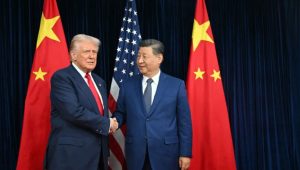
Despite these setbacks, Trump – one of Milei’s closest international allies has thrown his support behind him, offering a $40 billion bailout to stabilise Argentina’s fragile economy.
But Trump’s comments last week raised eyebrows when he warned that Washington could withdraw the aid if Milei performs poorly at the polls. “If he does not win, we are gone,” Trump said during Milei’s recent visit to the White House.




The remarks sparked outrage across Argentina’s political spectrum, with critics accusing Trump of overstepping diplomatic boundaries.
Itai Hagman, an economist and Peronist candidate running for re-election in Buenos Aires, said the US president’s comments amounted to “clear interference in Argentina’s internal affairs.”
He added that voters would “defend their sovereignty and democracy” by voting based on their own priorities, not foreign pressure.
Hagman described the vote as a referendum on Milei’s “libertarian anarcho-capitalist experiment,” arguing that austerity policies had brought “severe economic and social suffering” while delegating economic decision-making to “foreign officials.”
Milei’s allies, however, have urged patience. Gonzalo Roca, Freedom Advance’s top congressional candidate in Córdoba, said the government needed time to repair decades of damage.
“We cannot solve 100 years of problems in two years,” he said, while acknowledging that Milei’s reform plan demanded “effort and sacrifice.”
Analyst Gustavo Córdoba, co-director of the polling firm Zuban Córdoba, said public frustration was likely to translate into electoral backlash. His research found that about 60% of Argentinians were struggling to cover daily expenses, adding that many voters were prepared to “punish Milei for their hardship.”
In Washington, Benjamin Gedan, director of the Latin America Program at the Stimson Center, said the government’s promises of “shared prosperity” had failed to materialise.
“People feel that prosperity is always just out of reach,” he said, warning that a poor election result could trigger “another run on the peso” and deepen the economic crisis.
“He enjoyed a long political honeymoon despite painful budget cuts,” Gedan noted. “But even for a president relying on shock therapy, that period of goodwill was never going to last forever.”