


Home Minister Salahuddin Ahmed said the primary identity of all citizens residing within Bangladesh territory is “Bangladeshi.”
He claimed that there are no “indigenous” groups in the country, clarifying that everyone is a “resident” of Bangladesh. The minister further noted that the rights and opportunities of every citizen are equally protected under the Constitution.
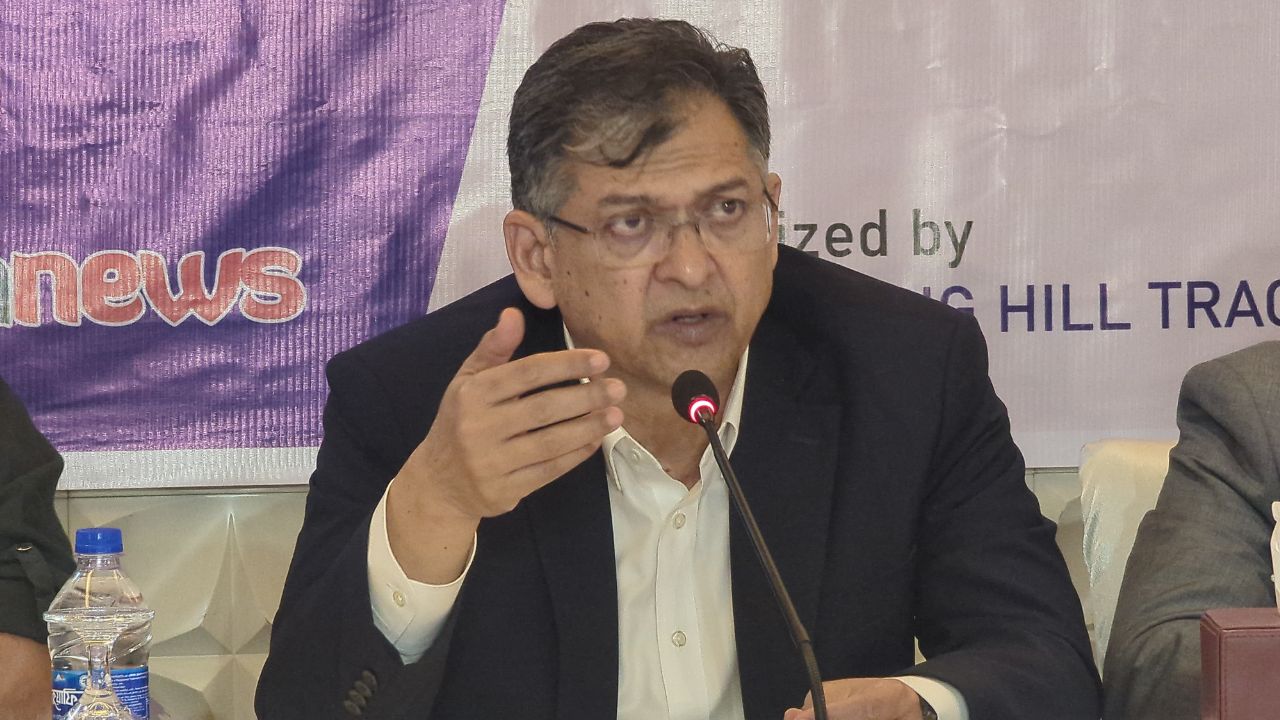
Salahuddin was speaking as the chief guest at a roundtable titled “Indigenous Identity is Irrelevant for Bangladesh,” organised by the Chittagong Hill Tracts Research Foundation (CHTRF) at a city hotel in Dhaka on Tuesday.
Presided over by CHTRF Chairman Mehedi Hasan Palash, the event was also attended by Information and Broadcasting Minister Zahir Uddin Swapon and State Minister for Cultural Affairs Ali Nawaz Mahmood Khayyam as special guests.

During his address, the home minister emphasised that all citizens within the borders of Bangladesh enjoy equal rights.
He highlighted that all political parties and stakeholders have reached a consensus through the “July National Charter,” a document of political understanding, which specifies that the identity of people at all levels of the territory shall be “Bangladeshi.”




Salahuddin described this national unity and political commitment as the foundation for protecting the country’s sovereignty and integrity.
Addressing the constitutional protections for disadvantaged groups, the minister added that the state is committed to the protection, development, and preservation of the religious, social, and cultural traditions of small ethnic groups, tribes, and various communities.
He noted that the state maintains special facilities and quota systems for the welfare of backward populations, women, and children, all of which are recognised in the Constitution.
Salahuddin cited examples of neighbouring multilingual and multi-ethnic states, observing that while hundreds of languages are prevalent in those countries, they have not granted state recognition to separate “indigenous” entities.
Instead, they have integrated disadvantaged groups into the mainstream by providing necessary facilities.
He further recalled that Bangladesh took a clear stance during the adoption of the United Nations Declaration on the Rights of Indigenous Peoples (UNDRIP) on 13 September 2007.
Bangladesh abstained from voting at that time, and many influential global powers also positioned themselves against it. Salahuddin clarified that the international declaration and ILO Convention 169 are not applicable to Bangladesh, nor is the country a signatory to them.
Other notable speakers at the roundtable included Member of Parliament Nilofar Chowdhury Moni; BNP Joint Secretary General and Administrator of Mymensingh Zila Parishad Emran Saleh Prince; Assistant to the Prime Minister (Political) Rashed Khan; BNP Chairperson’s Adviser Professor Sukomal Barua; NCP Chief Organiser (Northern Region) Sarjis Alam; former Adviser to the interim government Asif Mahmud Sajeeb Bhuiyan; Lieutenant General Abdullahil Aman Azmi (Retd); Major General (Retd) Fazle Elahi Akbar; Editor of Daily Bangladesh Maruf Kamal Khan; and Vice-Chancellor of Manarat University Professor Mohammad Abdur Rob.