The use of artificial intelligence (AI) in students’ writing and teachers’ instruction is increasing, creating new challenges in evaluating students’ work and safeguarding academic integrity.
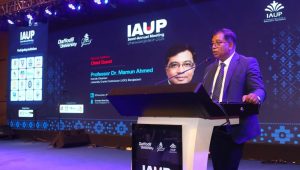
In this context, Professor Mamun Ahmed, chairman of the University Grants Commission of Bangladesh (UGC), has emphasised the importance of ensuring the responsible and ethical use of AI rather than prohibiting it.
He noted that despite the growing adoption of technology, human judgment, humanity, and ethics must remain central to education.
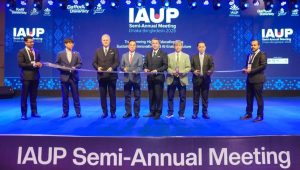
Mamun made these remarks as the chief guest at the inaugural ceremony of the two-day “12th BELTA International Conference 2026”, held on Friday at a private university campus in Aftabnagar, Dhaka.
Addressing the gathering, the UGC chairman said that students are taking the assistance of AI in their writing, making it no longer a question of whether technology will enter the classroom, but rather how to ensure its responsible, fair, and ethical use.

He called upon universities to initiate discussions on methods for evaluating student work and preserving academic integrity, while also stressing the need to ensure that students from institutions with fewer facilities do not fall behind in benefiting from technology.
Referring to the conference theme, “English Language Education in a Fractured World: Posthumanist Perspectives and Practices”, he observed that the world is currently navigating technological transformations alongside war, humanitarian crises, climate change, and inequality.
Mamun explained that AI is reshaping knowledge production, student writing, and teaching methodologies. According to the posthumanist perspective, education extends beyond the traditional teacher-student dynamic to encompass technology, digital platforms, learning materials, and the educational environment.




Highlighting the significance of English education, he said proficiency in English language is essential for connecting with global knowledge, research, and employment opportunities.
However, he added that alongside linguistic skills, students must develop critical thinking and communication capabilities.
He expressed optimism that the research and ideas generated at the conference would be utilised in university policy-making and classroom instruction.
Reiterating that ensuring the quality of higher education is a top priority for the UGC, Mamun highlighted the commission’s desire to encourage research that can meet the needs of society and produce skilled, ethical, and internationally capable students.
Achieving this, he noted, requires trained and research-oriented educators. He also praised the role of BELTA in enhancing teachers’ skills and promoting research.
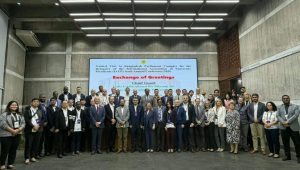
The two-day conference was jointly organised by the Department of English of East West University and the Bangladesh English Language Teachers Association (BELTA), drawing approximately 650 teachers, researchers, and language trainers from 13 countries.

The inaugural ceremony was chaired by Professor Mohammed Farashuddin, chairperson of the university’s Board of Trustees.
Professor M Ashik Mosaddik, acting vice-chancellor of East West University; Stephen Forbes, country director of British Council Bangladesh; and Scott Hartman, director of Public Engagement at the US Embassy in Dhaka, attended as special guests.
The convenors of the conference were Professor Ahmed Bashir, president of BELTA, and Associate Professor Akhtar Jahan, chairperson of the Department of English at East West University.
Keynote papers were presented by Jason Anderson from the University of Warwick in the UK, Molly McHarg from the US Department of State, and Obaidul Hamid from the University of Queensland in Australia.
The British Council and the US Embassy in Dhaka served as partner institutions for the event.