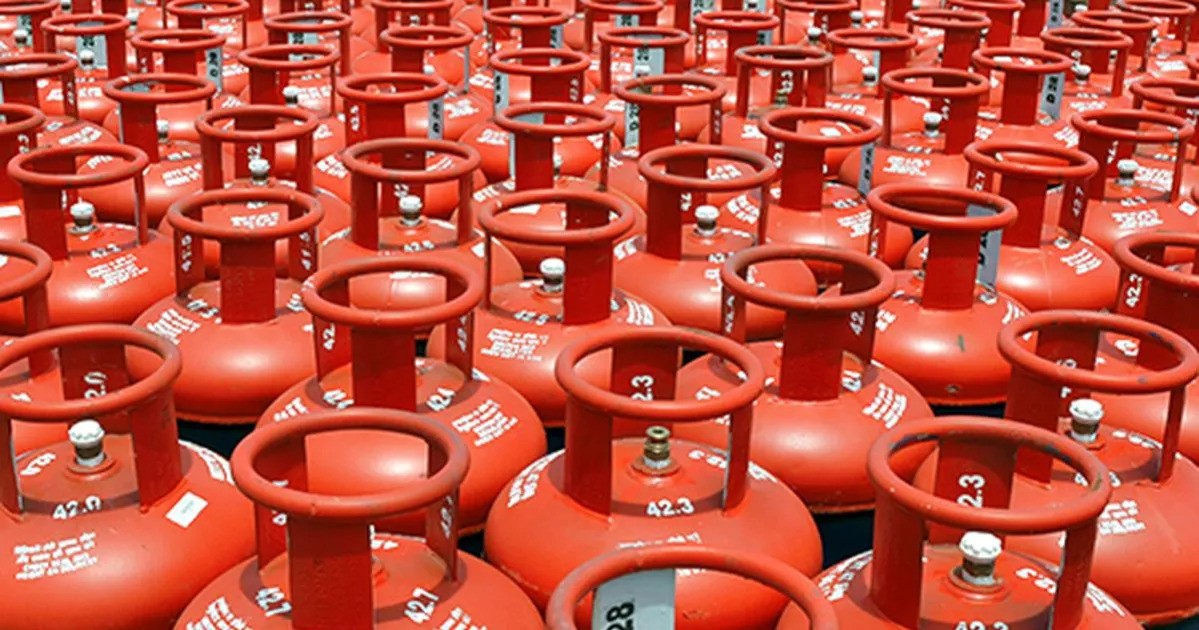

The country’s annual liquefied petroleum gas (LPG) demand is expected to double to 2.5 to 3 million tonnes by 2030, up from around 1.5 million tonnes currently, energy experts said at an event on Saturday.
They noted that industries, facing an acute gas crisis, are increasingly turning to LPG as a cleaner, more cost-effective alternative.
According to the experts, LPG consumption in the industrial sector has surged by 15% over the past two years.
The disclosure was made during a policy conclave organised by Daily Bonik Barta in collaboration with the LPG industry.
“In my opinion, LPG is the most effective choice right now due to its cost-effectiveness, cleaner burning, ease of transportation, conversion, and availability,” said energy expert Professor M Tamim, vice chancellor of Independent University Bangladesh.
According to him, only 12% of LPG in Bangladesh is used for industrial purposes now, a figure that can increase significantly to help resolve the industries’ fuel crisis.

Businesses reliant on natural gas can switch to LPG using conversion kits, while LPG can also be blended with natural gas to form synthetic natural gas for power supply, he said.
M Tamim emphasised that LPG remains the second most cost-effective fuel without subsidy, costing Tk2,234 per million BTU, compared to LNG’s Tk1,586-1,708 for the same energy output.
Although LNG is cheaper, its import process is complex and infrastructure-intensive, whereas LPG is easier to import, he said.




“LPG can contribute 200 million cubic feet in industrial use, 60 million cubic feet in domestic use, 125 million cubic feet as a substitute for CNG, and 10 million cubic feet for commercial applications every day,” M Tamim outlined a possible usage scenario.
Currently, LPG accounts for just 2% of Bangladesh’s energy mix.
Speakers at the event said Bangladesh needs over 4 billion cubic feet of natural gas per day, but local sources can only supply 1.75 billion cubic feet. The capacity to supply liquefied natural gas (LNG) is stuck at 1.1 billion cubic feet per day.
According to experts, the demand-supply gap of 1.6 billion cubic feet is expected to widen, with no chance to enhance capacity or supply overnight unless alternative sources, such as LPG, are tapped into.
Adviser urges reduction in LPG cylinder price
At the event, Energy Adviser Muhammad Fouzul Kabir Khan said the government is addressing the energy crisis on two fronts – by increasing LNG imports and exploring new reserves through Bangladesh Petroleum Exploration and Production Company Limited (Bapex).
He further explained, “The advantage of LPG is that it is easy to import. However, LPG companies must improve efficiency through better logistics to reduce costs.”
He urged companies to reduce the price of a 12 kg cylinder to around Tk1,000, from over Tk1,200.
However, businessmen present at the event contested this, stating that the price of cooking gas is regulated by the Bangladesh Energy Regulatory Commission (BERC), which keeps only 7% of the retail price for the companies.
“At the current pricing, everyone is barely managing to stay afloat. If they want to sell at a lower price, give us a 7% profit. We’ll import as much as they need,” said East Coast Group Chairman Azam J Chowdhury.
CEO of United Aygaz LPG Ltd Harun Octac expressed concerns about the high cost of LPG imports in Bangladesh, saying, “We are paying $50-60 more than India due to the lack of infrastructure.”
Bangladesh Petroleum Corporation (BPC) Chairman Amin Ul Ahsan announced plans for a new LPG terminal in Matarbari, which is expected to be completed in five years.
Consumers Association Bangladesh’s energy adviser Prof Dr M Samsul Alam called for a one-stop service from the regulatory commission to reduce bureaucracy and costs.
LPG Operators Association of Bangladesh President Mohammed Amirul Haque called for policymakers to hold public hearings before implementing updated prices and new regulations.