Anti-Corruption Commission (ACC) Chairman Mohammad Abdul Momen has urged the government to appoint officials of first secretary rank in those countries to bring back the money laundered abroad over the last 15 years.
“Over the past 15 years, funds have gone to countries with which we have limited contact, and even those links are difficult to activate,” he said.
He made the comment at a programme on the occasion of International Anti-Corruption Day at National Academy of Fine and Performing Arts (Shilpakala Academy) in Segunbagicha.
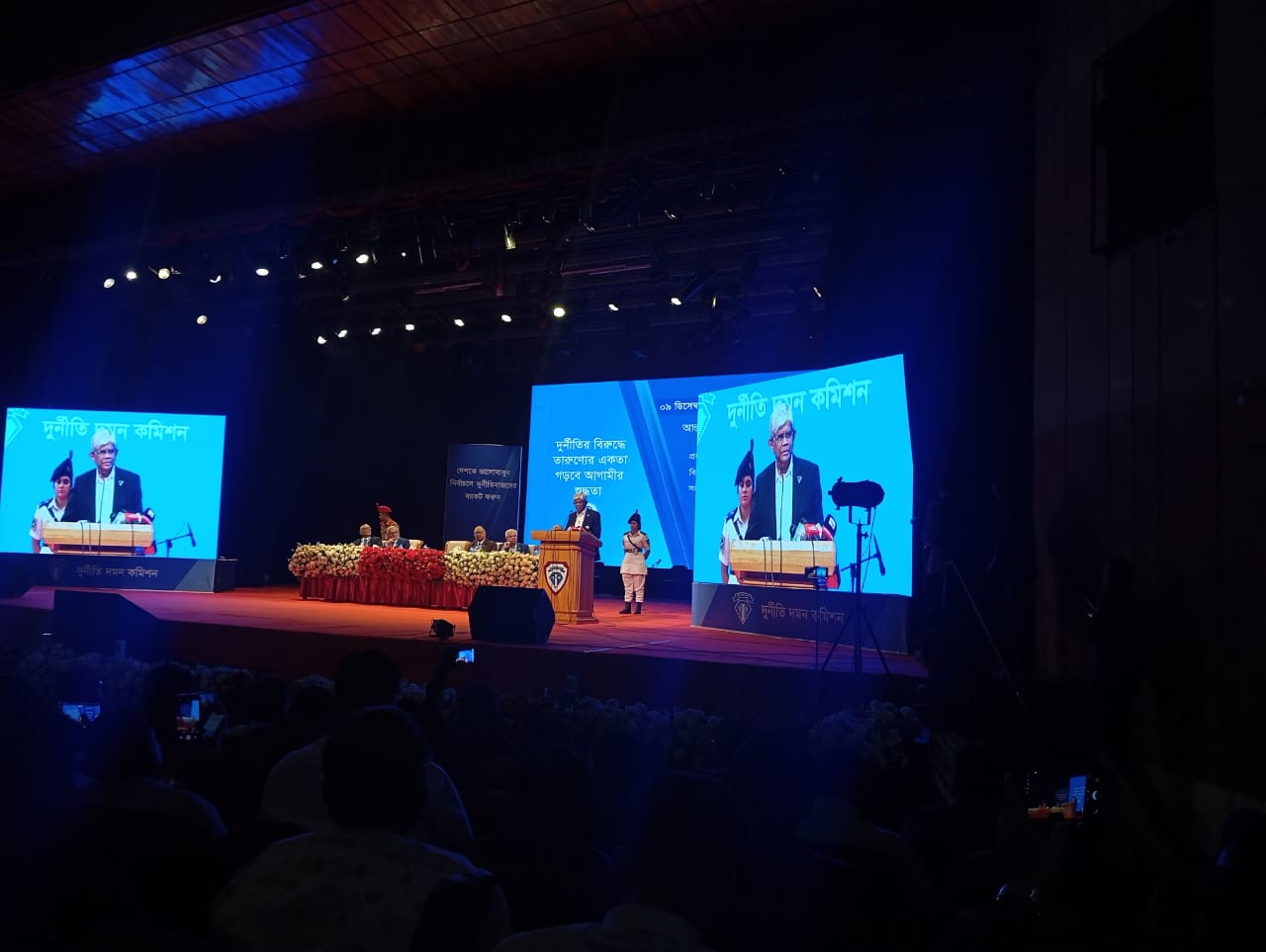
“Our hard‑earned money remains abroad as ‘dirty money’ and we do not have the manpower in those countries to recover or manage it,” he also said.

The discussion highlighted the ongoing difficulties the ACC faces in tracing and reclaiming the illicit wealth transferred abroad, emphasising the need for stronger international cooperation.
Momen said, “Earlier money used to come to Bangladesh from the Middle East and the United States. Now the reality is the opposite—funds flow out of Bangladesh to the US and other countries and later return in one way or another. These transactions also involve various types of ‘incentives.’ Such a large structure cannot be changed in a day, a month, or even a year.”




“Those who committed crimes were allowed to cross borders in exchange for crores of taka by the country’s political elites…. It is time to think on whether we should elect them,” he said.
Discrepancies were also found in the vehicle statement—two additional cars were included, one in the name of a then MP and the other in the name of a former state minister for youth, he said.
The ACC chief also said that if these irregularities had been detected at the time, her nomination would have been cancelled. Without the nomination, she could not have become an MP or prime minister. Even the question of whether her party would have come to power would have arisen.
Finance Adviser Salehuddin Ahmed who was present at the event as the chief guest said that transparency and accountability are major issues in the financial sector.He also said, “Corruption involving thousands of crores of taka has taken place, so what punishment can be given? Even if someone spends their entire life in prison, the damage to the country cannot be undone.”
He emphasised that corruption will not be reduced by punishment alone, it must also be resisted socially to curb corrupt practices.
In his speech as a special guest at the event, AK Enamul Haque, director general of the Bangladesh Institute of Development Studies, said, “We have seen that corruption has never been eradicated anywhere in the world through punishment alone. Social awareness must be built. In Bangladesh, there are 14 to 15 types of corruption. We are focusing only on bribery, while bribery is just one among many forms of corruption.”