


There was a time when wars seemed distant, confined to particular regions and separated by geography, politics, or ideology. Today, that distance has collapsed.
A missile launched in Eastern Europe can send energy prices soaring in South Asia. A blockade in the Red Sea can delay shipments bound for Latin America. Fighting in Sudan can trigger one of the world’s largest displacement crises, while conflict in the Middle East reverberates through financial markets thousands of kilometres away.
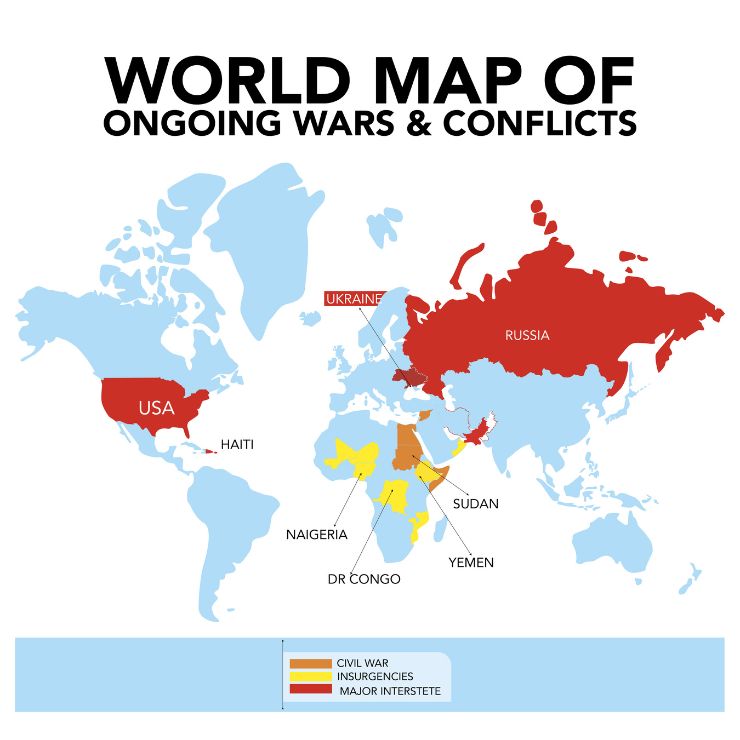
The map of the world has become a map of overlapping crises. From the battlefields of Ukraine to the deserts of Sudan, from Myanmar’s resistance strongholds to the volatile borderlands of Afghanistan and Pakistan, armed conflict has become one of the defining realities of the 2020s.
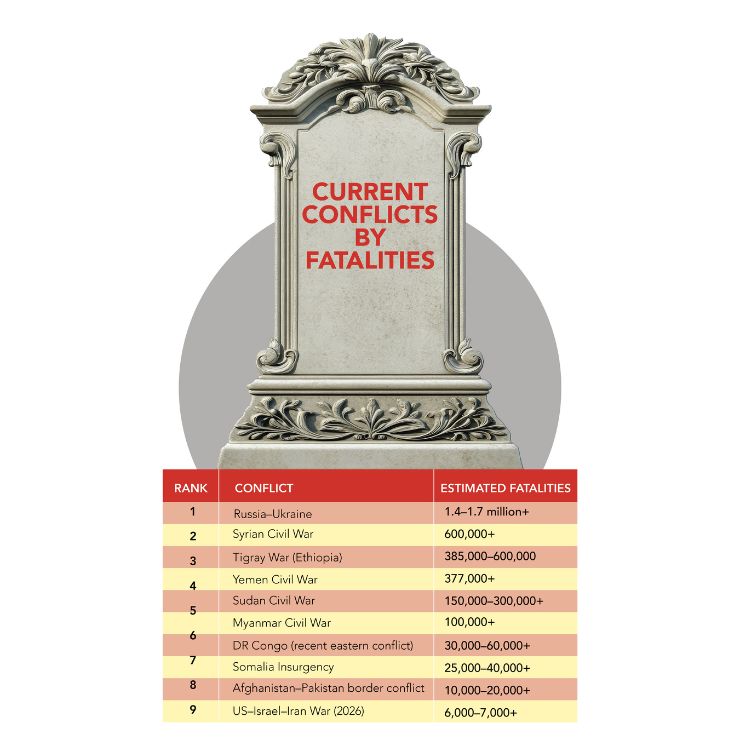
Some wars dominate international headlines. Others unfold with little attention despite claiming thousands of lives. The Russia-Ukraine war remains the largest interstate conflict in Europe since the Second World War.
Years after the first tanks crossed the border, the fighting has evolved into a prolonged war of attrition involving drones, long-range missiles, cyber operations, and vast military spending. Beyond the battlefield, the conflict has reshaped European security, disrupted food exports, driven up energy prices and accelerated a global arms race.
The Middle East, meanwhile, has entered one of its most volatile periods in decades. What began as separate flashpoints has expanded into a broader regional confrontation involving Iran, Israel, the United States, and armed groups operating across Lebanon, Iraq, and Yemen.

Shipping lanes, oil markets, and diplomatic alliances have all become part of the conflict’s wider theatre, demonstrating that national borders rarely confine modern wars.
Yet some of the world’s deadliest conflicts receive only intermittent attention. Sudan’s civil war has produced one of the largest humanitarian disasters on Earth. Entire cities have been devastated, millions have fled their homes, and famine threatens vulnerable communities.
In Myanmar, fighting between the military junta and resistance forces has spread across much of the country, displacing millions and deepening a political crisis with no clear resolution.
Eastern Democratic Republic of the Congo remains trapped in recurring violence involving armed groups, regional rivalries, and competition over mineral-rich territory.
Across the Sahel, insurgencies continue to destabilise Mali, Burkina Faso, and Niger, eroding state authority and fuelling one of the world’s fastest-growing security crises.




These conflicts differ in history and politics, but they increasingly share the same characteristics. Cheap drones now strike targets hundreds of kilometres away. Artificial intelligence assists surveillance and battlefield analysis.
Commercial satellite imagery, social media, and encrypted messaging have transformed the way wars are fought, documented, and debated.
The financial consequences are equally staggering. Global military expenditure has climbed to record levels, approaching $3 trillion annually. Governments are expanding defence budgets at a pace unseen in decades.
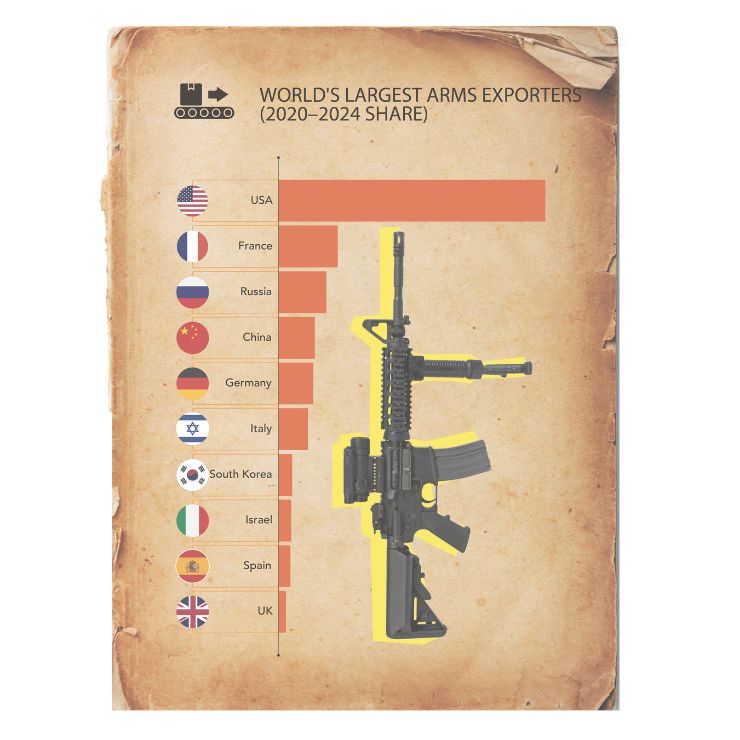
Arms manufacturers are operating with unprecedented demand as countries replenish stockpiles and modernise their militaries. The US remains the world’s largest arms exporter, while Europe has dramatically increased defence production following the war in Ukraine.
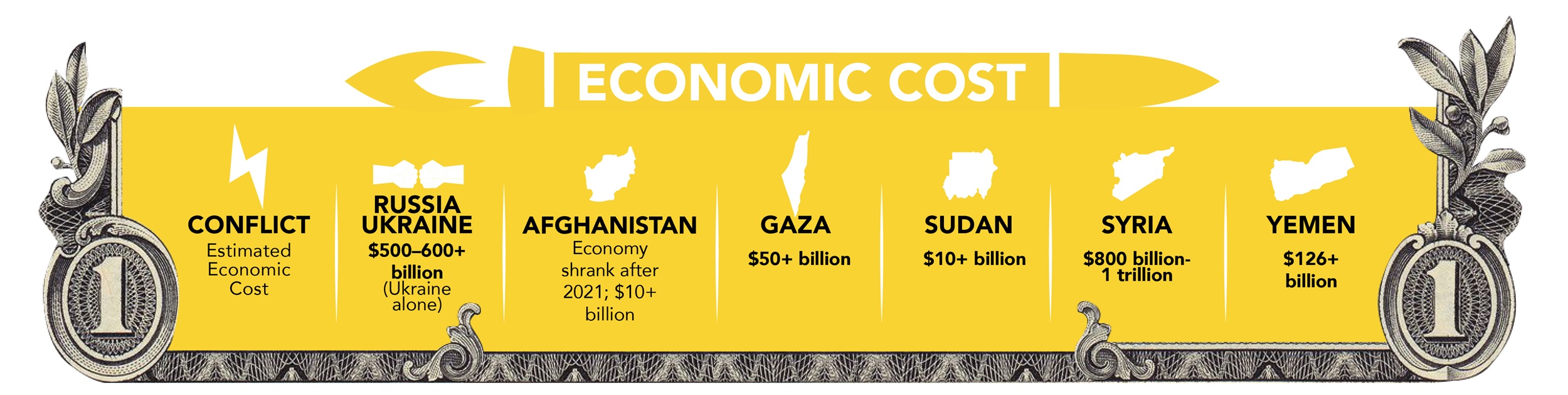
At the same time, the cost of rebuilding shattered societies continues to grow. Ukraine alone faces reconstruction needs measured in hundreds of billions of dollars. Syria’s economy has been hollowed out by more than a decade of war. Sudan’s infrastructure is collapsing.
Gaza’s rebuilding bill continues to rise as destruction spreads. These figures represent far more than damaged roads or bridges. They reflect schools that no longer exist, hospitals reduced to rubble, and generations whose futures have been interrupted.
The greatest burden, however, is borne not by governments but by civilians. According to the United Nations, forced displacement has reached historic highs, with well over 120 million people driven from their homes by conflict, persecution and violence.
Many have crossed international borders as refugees. Millions more remain displaced within their own countries, often living for years without stable housing, healthcare, or education.
Modern warfare is no longer defined solely by armies facing one another across front lines. Today’s conflicts increasingly target infrastructure, energy systems, communication networks, and supply chains.
They unfold simultaneously on battlefields, in cyberspace and across social media, where misinformation has become another weapon.
The result is a world in which no conflict remains truly local. Wars reshape migration patterns, alter commodity prices, influence elections, and redefine international alliances. They also test the capacity of global institutions that were designed for a different era.
Despite repeated diplomatic initiatives, ceasefires remain fragile, and peace negotiations often struggle to keep pace with rapidly evolving conflicts. As geopolitical rivalries deepen, the prospect of resolving one crisis is frequently complicated by the emergence of another.
The world map has not changed physically, but politically it is being redrawn in real time. Every shaded conflict zone represents more than territory under dispute. It marks disrupted lives, fractured economies, and uncertain futures.
In an age of interconnected crises, the true cost of war can no longer be measured only in kilometres gained or lost. It is measured in the growing number of places where peace has become the exception rather than the norm.