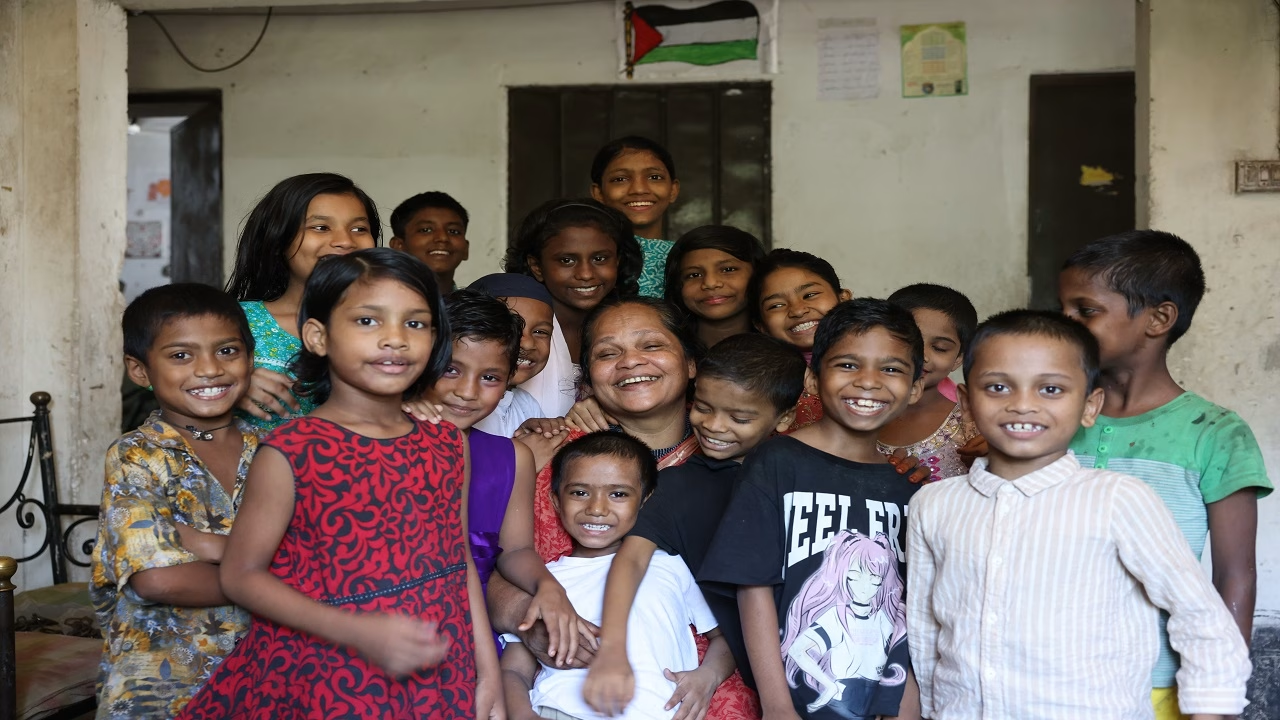

Entering a rented house in Mohammadpur, Dhaka, one is greeted by the sound of children’s laughter, a few crying and some calling out to one another. Some rush forward with books in hand, some back from school while others tug at the woman’s dupatta, calling her “Amma!”
In the middle of it all stands a woman – known to everyone as “Hazera Amma,” though not a single child in the house was born from her womb. Hazera Begum, born in 1971, has become a mother to many, although her own childhood was filled with neglect and hardship.
Having lost her family at an early age and suffering abuse at the hands of her stepmother, Hazera left home at the tender age of seven or eight. Forced to spend nights on the streets of the capital, she eventually became a sex worker.
As she walked through the dark paths of life, she witnessed countless children crying in neglect, hunger, and abandonment. Hidden behind her own tears, Hazera realised that her true battle was not for herself, but for these abandoned children.
This realisation ignited a new dream in her heart—one of sheltering and shaping the future of these neglected children.
In the early 2000’s, Hazera started working with the children of sex workers at a shelter called “Durjoy Nari Songho” that was supported by foreign aid. However, when the aid stopped in 2008, the shelters operations were halted.

Hazera did not give up. With her small savings and help from a few friends, she continued to stand by these children. In 2010, she founded the “Shishuder Jonno Amra” a rehabilitation centre, which initially began with just 25 children.
Some students from Jahangirnagar University also joined her efforts, offering significant support.
In 2012, the organisation registered under the Department of Social Services. Over time, the shelter expanded and now houses 45 children – 35 of whom are the offspring of sex workers, and 10 are from workers families or orphans.
Hazera is supported by three caregivers and one assistant to help manage the children. Till date, over 200 children have completed their education with the organisation’s support and are now working in various professions.


The children know Hazera not just as their mother, but also as a father figure. Shima (a pseudonym) says, “I never knew my real mother. Since childhood, Hazera Amma has been the one to shower me with love.”
Another young boy named Shuvo adds, “I never had three meals before, but Amma makes sure I eat well every day. I even go to school now.”
From dawn till dusk, Hazera runs around tending to the children’s needs—whether it’s rushing to the hospital when someone falls ill or crying tears of joy when a child shines in an exam. Despite not having children of her own, she has opened her heart to every child in her care.
However, her struggle is far from over. Every month, the expenses for the children’s food, education, healthcare, and rent amount to about Tk 2.50 lakh.
Much of the financial support comes from Amena Foundation, Khaled Mansur Trust, and other personal donations.
Some donors provide rice, others donate blankets, and some pay for educational expenses, but it is often not enough. Hazera says, “Managing so many children in a rentedhouse is incredibly difficult for me. If the government could provide a piece of land, I could build a permanent home for them. If people extend a hand, the children’s lives could be transformed.”
Moshiul Azam Mintu, Executive Director and General Secretary of the organisation, mentions, “An organisation called Right and Sight for Children (RSC) used to fund us, but they stopped providing support three months ago. This has affected everything – from food and educational supplies to medical care and eye examinations.”
He further says, “The organisation has been running for 15 years, and without proper funding, caring for so many children has become a huge challenge. We want the local community to step forward. With the rising rent and halted funding, we are in a real crisis.”
Many children in the shelter do not have birth certificates, causing complications when enrolling them in school or obtaining government services. Mintu says, “The identity crisis makes it crucial to simplify the process for birth registrations. This is vital for access to education, vaccinations, and obtaining National ID’s.”
Despite the challenges, Hazera Amma never allows hope to fade. None of the girls who grew up in her shelter have returned to sex work. Some are now working in garment factories, others are married, and some are pursuing higher education.
Many have even come back to help teach the younger children. Hazera says, “Their smiles erase all my fatigue. They are my strength.”
A mother to over a hundred children without giving birth, Hazera Begum emerges as a rare symbol of humanity in Bangladesh. But her struggle is far from over.
The shelter she founded, Shishuder Jonno Amra [We for the Children], fights a daily battle for survival – grappling with inadequate healthcare access, the uncertainty of rented housing, constant financial strain, and the absence of formal identity or recognition.
Despite facing numerous challenges, Hazera firmly holds the hands of her 45 children. Her belief is unwavering, “If the government extends its support and society shows a little empathy, these children too can write their own stories – stories of safety, light, and a brighter future.”