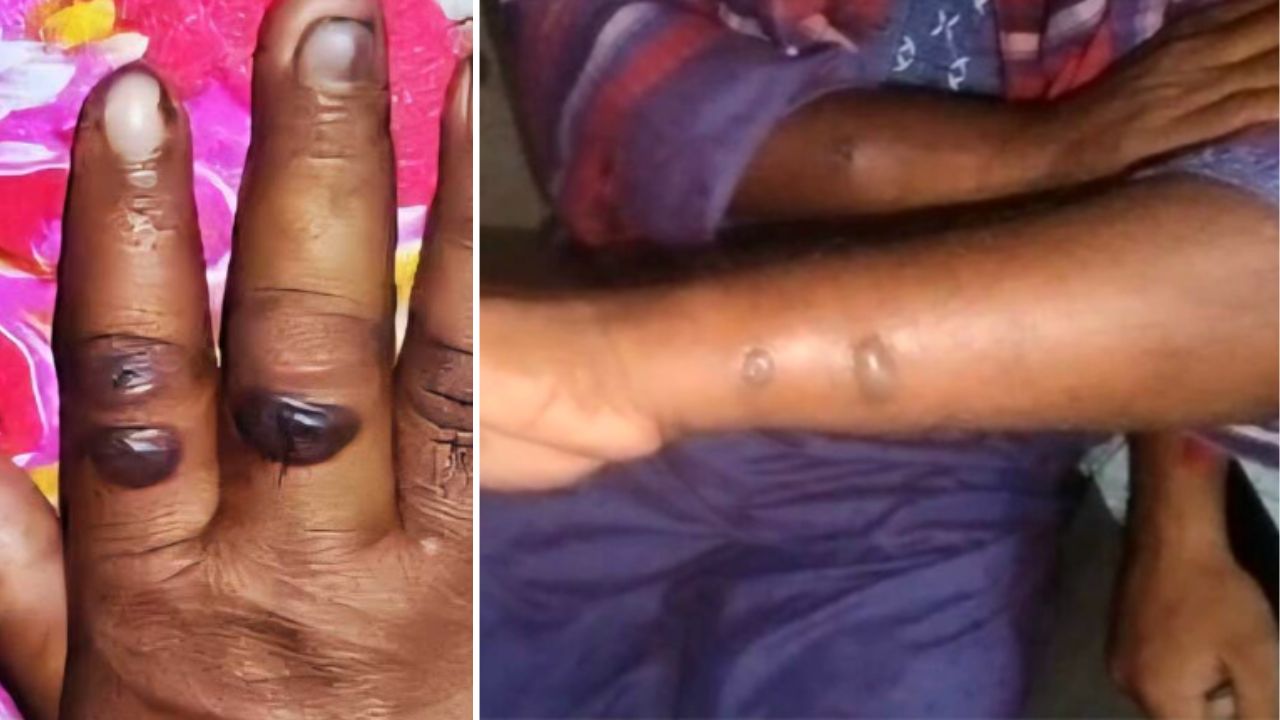

At least 11 individuals have developed symptoms of anthrax after butchering a cow infected with the disease in Kishamat Sadar village, Belka Union, Sundarganj Upazila, Gaibandha District. The affected individuals had handled the meat of the diseased animal, which led to the outbreak.
According to sources, seven of the victims sought treatment at a private clinic in Gaibandha city, while the rest received local treatment. The incident was reported on the Friday evening (3 October), when the patients visited the Rabeya Clinic and Nursing Home and Rabeya Diagnostic Centre in Gaibandha for medical assistance.
Among the severely affected were Mozza Mia, Mozzafar Mia, Shafiqul Islam, and Mahbubur Rahman.
Professor Dr Mohammad Manjurul Karim Prince, a dermatologist at Rangpur Medical College Hospital, treated the patients. He stated that the patients exhibited blisters, ulcers, fever, pain, and itching on their hands, faces, eyes, and various parts of their bodies, all of which are symptoms of anthrax.

He confirmed that the patients were given initial treatment and sent home but emphasised that anthrax is not contagious. Infection occurs when handling or slaughtering infected animals or their meat. With regular treatment, they are expected to recover.
According to local Union Parishad Member Mohammad Hafizar Rahman, on 27 September, a man named Mahbubur Rahman slaughtered a cow, and its meat was distributed among people. About 10 to 15 individuals were directly involved in the slaughtering and butchering process.




Four days later, many of these individuals developed blisters and sores on their bodies. Some sought local treatment, while others were later admitted to a clinic.
Dr Dibakar Biswas, the health and family planning officer of Sundarganj Upazila, reported that 4 to 5 people in the Kishamat Sadar village of Belka union of the upazila with anthrax symptoms visited the hospital on Thursday. After providing initial care, they were advised to seek further treatment at Gaibandha or Rangpur Medical College.
Dr Md Mozammel Haque, veterinary surgeon at Livestock and Veterinary Hospital in Sundarganj Upazila, confirmed that anthrax had previously been reported in the neighboring Pirgacha Upazila, which has now spread to Sundarganj.
Areas along the Ghagot and Teesta rivers, including Bamnadanga, Sarbananda, Tarapur, Belka, and the municipal area, have been identified as affected. Vaccination campaigns are ongoing in these areas.
He further clarified that people can get infected through slaughtering or handling infected animals, but anthrax does not spread through consuming meat.
Upazila Executive Officer (UNO) Raj Kumar Biswas announced that awareness campaigns have been launched to prevent anthrax. Meetings with the livestock department and local representatives are being held, and leaflets, loudspeaker announcements, and other awareness programmes are underway. Strict instructions have been given to avoid slaughtering infected animals.