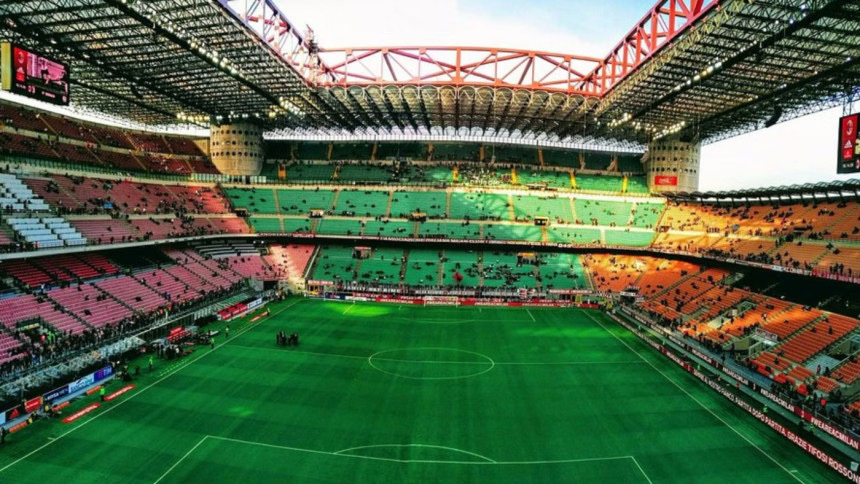



One of the world’s most famous football stadiums, the San Siro, is set to be demolished after Milan city hall approved its sale early Tuesday. The iconic venue, often called football’s La Scala, will be handed over to the city’s two football giants, Inter Milan and AC Milan.
Both clubs had threatened to leave the city if the sale was not approved, having explored alternative sites in nearby suburbs. After more than 11 hours of debate, city councillors voted 24 in favour and 20 against the sale, priced at 197 million euros ($231 million). The approval gives Inter and AC Milan ownership of the stadium and the adjacent land. The resolution was confirmed around 4:00am (0200 GMT) after discussions on multiple proposed amendments.
The clubs, both owned by American investment funds, and Milan’s mayor Giuseppe Sala secured the decision after years of uncertainty surrounding a 1.2-billion-euro redevelopment project. The purchase offer was first submitted in March 2025, following the abandonment of a previous plan in 2023 in which the land would have remained public.

If the sale is completed by 10 November, when a public building protection order preventing demolition comes into effect, Inter and AC Milan will gain control of over 28 hectares (70 acres) of public land in a densely populated area west of Milan. A modern 71,500-capacity stadium is planned for the site currently occupied by matchday car parking and a local park.




Once the new stadium is completed, the San Siro will be largely demolished to make way for new parkland, office space, and entertainment facilities. Designs will be overseen by architectural firms Foster and Partners and MANICA. The clubs will continue to play at the current San Siro, which can host up to 75,000 spectators, until 2031 when the new stadium is expected to be ready.
The approval came amid political tension. Councillors from the right-wing Forza Italia party abstained, while the hard-right League, Brothers of Italy, and several left-leaning councillors opposed the proposal. Critics have raised concerns about bypassing local democracy, the lack of detailed development plans for the new stadium, and the perceived low sale price for such prime real estate.
The decision also aligns with Italy’s preparations for Euro 2032, which it will co-host with Turkey. The Italian Football Federation (FIGC) must submit its five stadium selections to UEFA by October 2026, with redevelopment projects required to begin by March 2027. Currently, only Juventus’ Allianz Stadium in Turin meets UEFA’s criteria for the tournament.