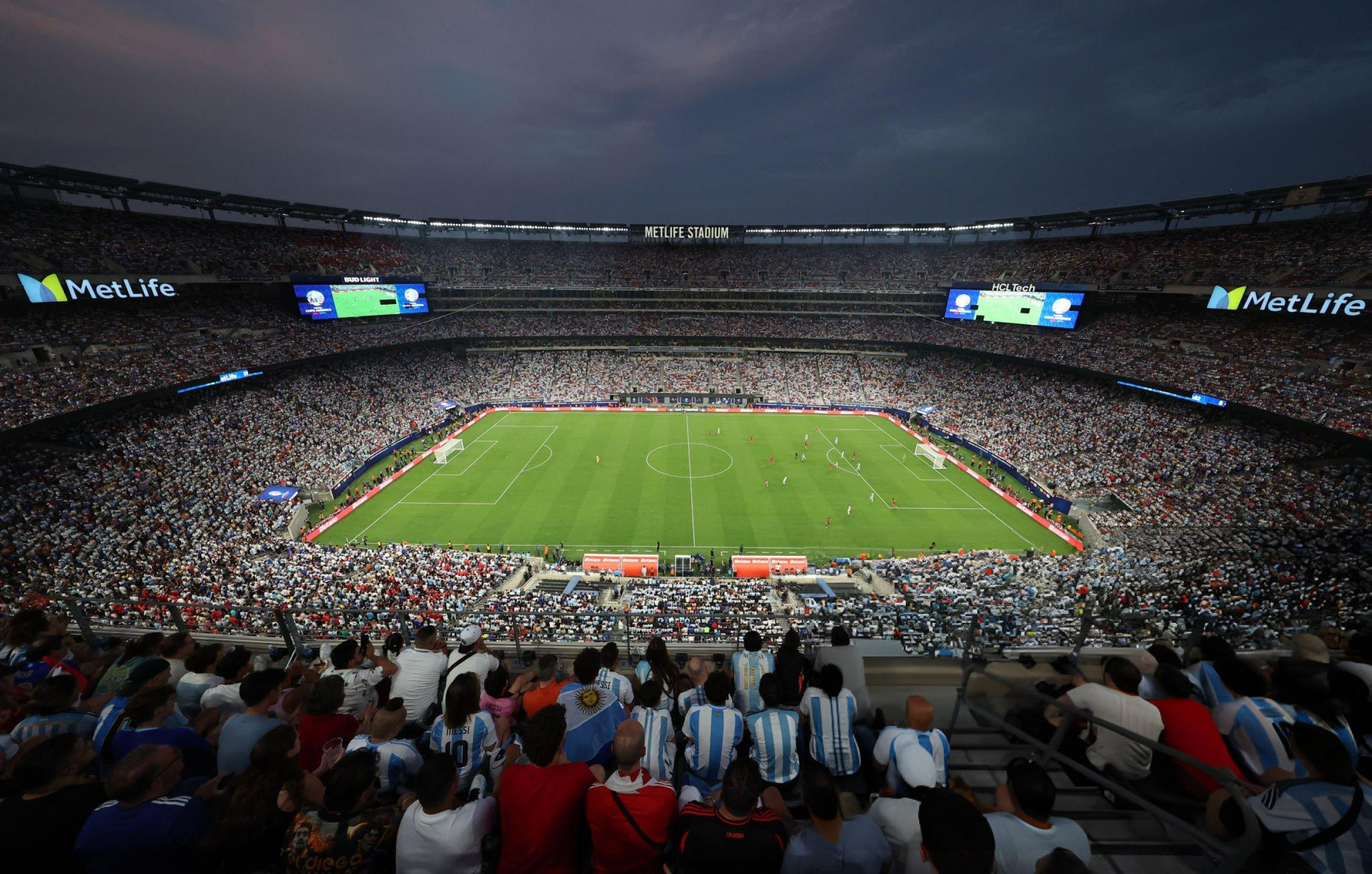

Global players’ union FIFPro has raised concerns about the risks of extreme heat during the 2026 World Cup, which will be staged across the United States, Mexico and Canada.
The warning comes in the wake of this year’s Club World Cup, held in June and July in the US, where many matches were played in soaring afternoon temperatures above 30C. FIFPro said the tournament served as “a wake-up call in the context of a warming planet”.
Alexander Bielefeld, FIFPro’s director of policy and strategic relations, said the World Cup schedule and venue choices may need to be reviewed to “better safeguard player health, protect fan well-being, and support optimal performance”.

The union also called for longer half-time intervals, more frequent cooling breaks, and raised the possibility of using air-conditioned stadiums. General secretary Alex Phillips confirmed “informal discussions” with organisers had taken place, but stressed “nothing concrete” had been agreed.
FIFPro’s report also underlined the strain on players following the Club World Cup. According to the findings, none of the analysed clubs’ players were able to take the minimum 28-day off-season break, while many entered the new campaign without the required four-week pre-season.




“This timing had a very negative impact on players’ rest periods and their preparation for the season,” Bielefeld noted.
Nottingham Forest and New Zealand striker Chris Wood, 33, said: “For us as players it’s vitally important that we have the recovery period to go again. Missing that is feasible over one or two seasons, but not for five or six.”
The report also drew attention to the growing number of minutes played by emerging stars. Barcelona’s Lamine Yamal, for instance, had already clocked over 8,000 minutes for club and country before turning 18 — far more than previous generational talents such as Andres Iniesta or Kylian Mbappé at the same age.
Darren Burgess, chair of FIFPro’s high-performance advisory network, cautioned: “Players are still growing and maturing until 24–25 years of age, and overexposure before then carries a serious injury risk.”
Wood added that balance was key: “When you’re young, you just want to play football. You don’t think about how your body is changing and growing. It’s about finding that balance by educating younger players about the risks.”