


Bangladesh’s garment industry faces a $4.8 billion financing shortfall in its transition to cleaner production, leaving nearly three-quarters of its estimated investment needs unmet between 2025 and 2029.
The sector requires about $6.6 billion over the five-year period to invest in environmentally sustainable production, but faces a funding gap equivalent to roughly 73 per cent of that requirement, according to analysis presented at a discussion in Dhaka on Thursday.
The findings highlight the financing challenge confronting garment manufacturers as they seek to reduce greenhouse gas emissions, improve energy efficiency and remain competitive in international markets.
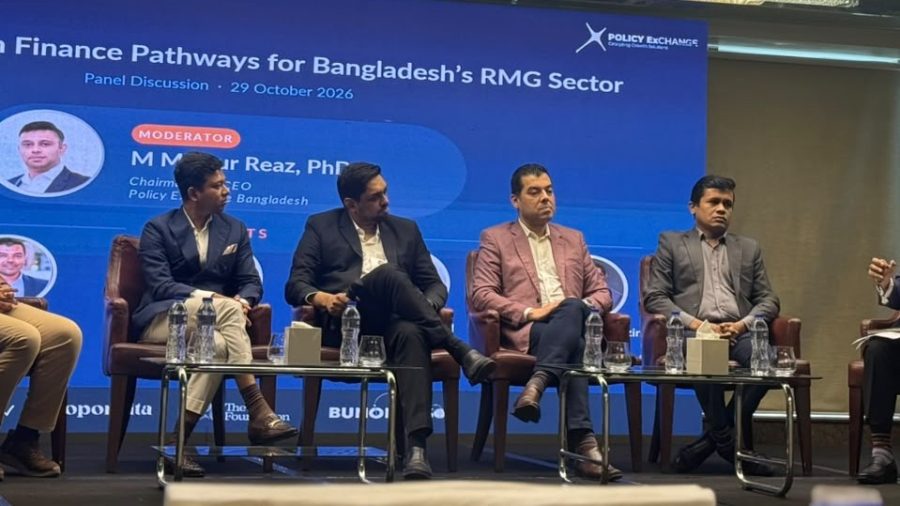
The figures were presented at a discussion titled “Unlocking Green Finance Pathways for Bangladesh’s RMG Sector”, jointly organised by LightCastle Partners and Policy Exchange Bangladesh at a hotel in Gulshan.
LightCastle Partners Principal Business Consultant Shoumik Shahriar presented the financing assessment, outlining barriers to accessing green investment and opportunities to mobilise additional capital.

Participants said smaller and medium-sized garment factories faced particular difficulties securing finance to upgrade production facilities and adopt cleaner technologies.
They called for simpler lending requirements, government-backed credit guarantees and stronger cooperation among banks, manufacturers, regulators and development partners.
The recommendations also included expanding sustainable financing, increasing the number of green factories and providing smaller manufacturers with greater access to financial and technical support.
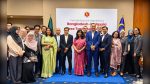



Ministry of Finance Additional Secretary Hasan Khaled Foisal said stronger public-private partnerships were needed to make sustainable financing more accessible to garment manufacturers.
The discussion also addressed Bangladesh’s energy security challenges and the need to reduce dependence on fossil fuels in garment production.
Speakers highlighted the government’s stated target of cutting greenhouse gas emissions by 50 per cent by 2030 and stressed the importance of investment in energy-efficient production.
They also called for measures to protect the livelihoods and welfare of women garment workers as factories move towards more sustainable production.
Policy Exchange Bangladesh Chairman M Masrur Riaz, Zalo Knitting Managing Director Nuria Lopez and Shasha Denims Managing Director Shams Mahmud were among the speakers.
Other participants included City Bank official Molla Karimul Islam, Infrastructure Development Company Limited Chief Investment Officer Nazmul Haque, European Union Delegation Programme Manager Taif Hossain and BRAC Bank’s Head of Environmental, Social and Governance and Sustainable Finance Tashmeem Muntazir Chowdhury.

LightCastle Partners Business Consultant Sakina Binte Belayet moderated the discussion.
The event was held under “Oporajita Phase 2: Just Transition for Women in the RMG Ecosystem”, an initiative supported by the H&M Foundation.
LightCastle Partners is implementing the programme under the title “Bunon 2030”, with The Asia Foundation serving as its principal coordinating organisation.
The programme aims to promote sustainable and inclusive growth in Bangladesh’s garment industry while protecting women’s livelihoods and welfare.