


Bangladesh has launched a national alliance to expand food fortification and tackle widespread vitamin and mineral deficiencies, as millions of people struggle to afford nutritious diets despite improvements in overall food security.
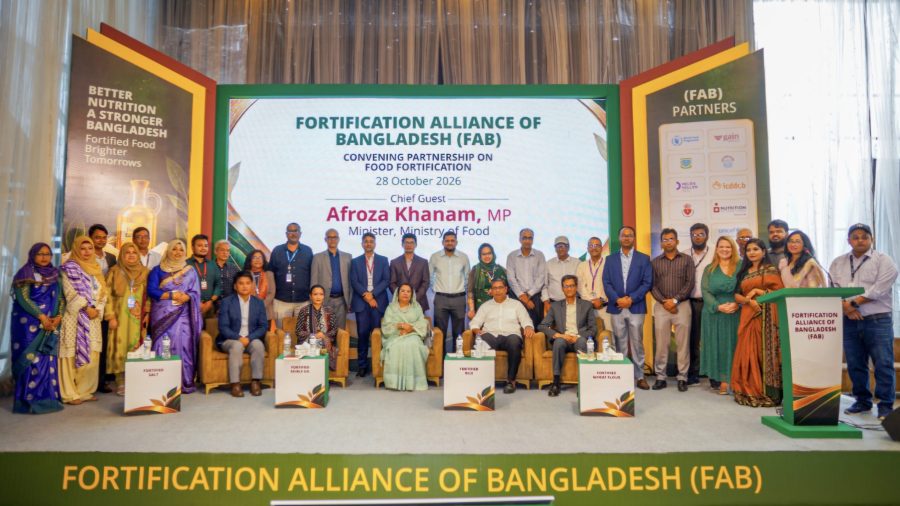
The Fortification Alliance Bangladesh (FAB), launched at Krishibid Institution Bangladesh in Dhaka on Wednesday, brings together government agencies, United Nations organisations, development partners, researchers and food manufacturers to strengthen the supply and quality of fortified foods.
The initiative comes as an estimated 2.56 crore people in Bangladesh cannot afford a nutritious and diversified diet, while around 1.6 crore face acute food insecurity.
An estimated 16 lakh children are expected to require treatment for acute malnutrition in 2026, according to figures cited at the launch.
The alliance aims to address hidden hunger, a condition in which people consume enough calories but lack essential vitamins and minerals needed for healthy growth and development.

Deficiencies in iron, zinc, vitamins A and B12, folate and iodine can impair children’s physical growth, learning and immunity while affecting adults’ health and productivity.
FAB will be chaired by the United Nations World Food Programme (WFP), with the Global Alliance for Improved Nutrition (GAIN) serving as co-chair.
Its priorities include improving implementation of national fortification policies, strengthening regulatory oversight, helping food producers meet quality standards and expanding access to affordable fortified products, particularly among vulnerable communities.




Food fortification involves adding essential vitamins and minerals to commonly consumed products such as salt, edible oil, rice and flour.
Bangladesh has already introduced universal salt iodisation to reduce iodine deficiency disorders and vitamin A fortification of edible oil. Fortified rice and wheat flour have also been identified as ways to deliver nutrients to large populations.
However, gaps in diet quality and access to nutritious foods remain significant, prompting efforts to improve coordination among regulators, food producers and development organisations.
Food Minister Afroza Khanam, speaking as chief guest, called for stronger cooperation among government agencies, development partners and manufacturers to ensure fortified foods meet safety and quality standards.
She also stressed the importance of making safe and nutritious products accessible to communities most affected by micronutrient deficiencies.
The alliance will support ministries and regulatory agencies in developing and implementing legislation, improving monitoring systems and strengthening compliance with fortification requirements.
It will also promote public-private partnerships, research, knowledge-sharing and consumer awareness, while advocating the inclusion of food fortification in national nutrition and development policies.

Members include WFP, the United Nations Children’s Fund (UNICEF), the World Health Organization (WHO), Helen Keller Intl, Nutrition International, GAIN, TechnoServe and icddr,b, alongside government institutions, universities, civil society groups and private businesses.
State Minister for Local Government, Rural Development and Co-operatives Mir Shahe Alam attended the launch.
Representatives from the ministries of Health and Family Welfare, Food and Industries also participated, alongside the Bangladesh Food Safety Authority, Bangladesh Small and Cottage Industries Corporation, Bangladesh Standards and Testing Institution and Directorate of National Consumer Rights Protection.
FAB intends to bring existing fortification initiatives under a coordinated national framework rather than operate them as separate programmes.
Its longer-term objective is to improve access to essential micronutrients through widely consumed foods, reducing nutritional deficiencies that affect public health, productivity and human development.